
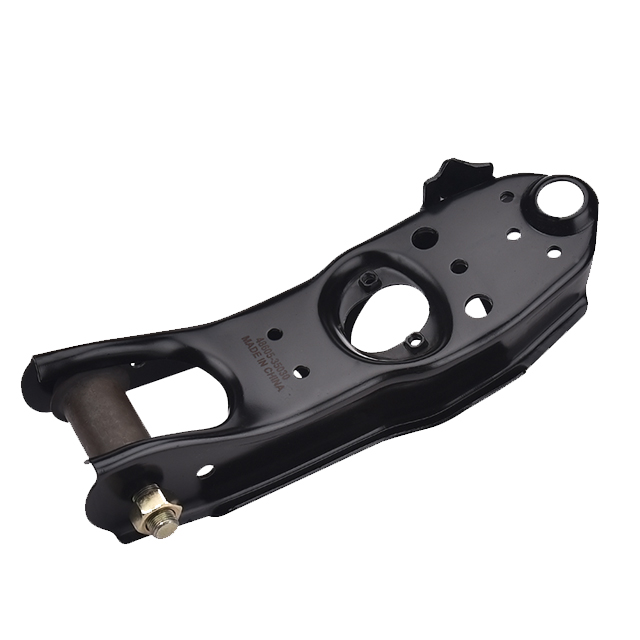
Abstrak
Bilangan lengan kawalan di dalam kenderaan bukan kuantiti tetap tetapi bergantung kepada senibina sistem penggantungan tertentu yang digunakan oleh pengilang. Pilihan reka bentuk ini mewakili keseimbangan yang disengajakan antara objektif prestasi, kos pembuatan, dan kekangan pembungkusan. Walaupun banyak kereta penumpang biasa menggunakan konfigurasi mudah dua atau empat lengan kawalan, Terutama dengan Macpherson Strut atau setups Double-Wishbone Asas, kiraan dapat meningkat dengan ketara. Kenderaan berprestasi tinggi dan mewah sering mengamalkan geometri penggantungan multi-pautan yang kompleks, yang mungkin mempunyai lima atau lebih pautan individu setiap sudut, berjumlah lapan atau lebih untuk gandar tunggal. Setiap pautan ini berfungsi sebagai lengan kawalan khusus, dengan teliti direkayasa untuk menguruskan pergerakan roda tertentu, seperti camber, caster, dan kaki, throughout the suspension's range of travel. Memahami kebolehubahan ini adalah asas untuk memahami dinamik kenderaan, mendiagnosis kesalahan penggantungan, dan membuat keputusan yang tepat mengenai pembaikan dan peningkatan prestasi. Siasatan ke atas kuantiti lengan kawalan sehingga membuka penjelajahan yang lebih mendalam ke dalam falsafah kejuruteraan automotif.
Takeaways utama
- Bilangan lengan kawalan berbeza dari dua hingga lebih lapan, Bergantung pada reka bentuk penggantungan.
- Struts Macpherson Gunakan satu lengan kawalan yang lebih rendah setiap roda, sementara tulang belakang berganda menggunakan dua.
- Penggantungan pelbagai pautan Gunakan tiga atau lebih lengan setiap roda untuk kawalan pengendalian yang tepat.
- Mengetahui berapa banyak senjata kawalan kereta yang membantu dalam mendiagnosis masalah penggantungan.
- Lengan kawalan yang dipakai dapat menyebabkan bunyi bising, stereng yang lemah, dan memakai tayar yang tidak sekata.
- Suspensi depan dan belakang boleh mempunyai konfigurasi lengan kawalan yang sama sekali berbeza.
- Penggantian lengan kawalan sering memerlukan penjajaran roda profesional berikutnya.
Jadual Kandungan
- Soalan asas: Berapa banyak senjata kawalan yang dimiliki oleh kereta?
- Membina semula lengan kawalan: Menyelam dalam anatomi
- Kisah dua sistem: MacPherson Strut vs. Double Wishbone
- Meneroka Geometri Penggantungan Lanjutan: Sistem multi-pautan
- Pelakon sokongan: Tali batang, Pautan penstabil, dan ensemble penggantungan penuh
- Apabila keadaan menjadi salah: Mendiagnosis lengan kawalan yang gagal
- Proses pembaikan dan penggantian: A Mechanic's Perspective
- Di luar asas -asas: Lengan kawalan prestasi dan selepas pasaran
- Konteks yang lebih luas: Mengawal lengan dalam jenis kenderaan yang berbeza
- Masa depan penggantungan: Sistem aktif dan bahan pintar
- Soalan yang sering ditanya (Soalan Lazim)
- Kesimpulan
- Rujukan
Soalan asas: Berapa banyak senjata kawalan yang dimiliki oleh kereta?
Ini adalah soalan yang kelihatan, di permukaannya, untuk menuntut yang sederhana, Jawapan berangka. Namun, untuk bertanya "Berapa banyak senjata kawalan yang dimiliki oleh kereta?" adalah untuk memulakan perjalanan ke tengah -tengah kejuruteraan automotif dan falsafah reka bentuk. Tidak ada nombor tunggal yang berlaku untuk semua kenderaan, dengan cara yang sama bahawa tidak ada jawapan tunggal untuk apa yang menjadikan lukisan cantik. The quantity of control arms is a direct consequence of a vehicle's intended purpose, aspirasi prestasinya, dan realiti ekonomi pengeluarannya. Jawapan untuk komuter bandar yang rendah hati akan sangat berbeza dengan kereta sukan yang berfokus pada trek, and understanding why that is the case reveals much about the intricate dance between physics and function that defines a car's character.
Menghilangkan mitos satu nombor
Marilah kita terlebih dahulu mengetepikan idea kiraan sejagat. Jawapan yang paling mudah, yang digunakan untuk sejumlah besar kenderaan pasaran massa, adalah empat. Ini biasanya melibatkan satu lengan kawalan yang lebih rendah untuk setiap dua roda depan dan satu lengan kawalan yang lebih rendah untuk setiap dua roda belakang. Walau bagaimanapun, ini adalah penyimpangan kasar. Banyak kereta pacuan roda depan dengan penggantungan belakang yang lebih mudah mungkin hanya mempunyai dua lengan kawalan secara total untuk setiap roda depan. Sebaliknya, Sedan berprestasi tinggi moden dari pengeluar Jerman mungkin mempunyai lima lengan yang berbeza, atau pautan, mengawal gerakan roda belakang tunggal. Dalam kes ini, Kereta boleh mempunyai sepuluh lengan kawalan di gandar belakang sahaja, ditambah lengan di gandar depan, Membawa jumlahnya kepada dua belas atau lebih. Soalannya, oleh itu, bukan "berapa banyak," tetapi sebaliknya, "Sistem penggantungan jenis apa yang digunakan oleh kereta, Dan apakah sistem itu berusaha untuk mencapai?"
Konfigurasi biasa: Dua atau empat lengan kawalan
Untuk sebahagian besar dunia automotif, Jawapannya berkisar sekitar dua atau empat. Let's consider the most common suspension type in modern cars: The Macpherson Strut, yang digunakan untuk penggantungan depan pada majoriti kenderaan di jalan raya hari ini. Reka bentuk ini elegan dalam kesederhanaan dan keberkesanan kosnya. Ia menggabungkan penyerap kejutan dan spring gegelung menjadi satu "strut" unit dan hanya memerlukan satu, biasanya berbentuk L atau berbentuk A, lengan kawalan bawah untuk mencari bahagian bawah hab roda (J.D.. Kuasa, 2021). Bahagian atas hab terletak oleh strut itu sendiri, yang berputar di gunung atasnya. Jadi, untuk kereta dengan penggantungan depan Macpherson Strut, anda akan menemui dua lengan kawalan yang lebih rendah di bahagian depan.
Sekiranya kereta ini mempunyai penggantungan belakang yang mudah, seperti rasuk kilasan (biasa dalam kereta pacuan roda depan ekonomi), ia mungkin tidak mempunyai lengan kawalan tradisional di belakang sama sekali. Dalam senario ini, kereta mempunyai dua lengan kawalan. Jika, Walau bagaimanapun, kereta itu mempunyai penggantungan belakang bebas, Ia mungkin menggunakan persediaan strut Macpherson yang sama atau reka bentuk berbilang pautan yang mudah, sering menambahkan dua lagi lengan kawalan ke belakang, membawa jumlah kepada konfigurasi yang sangat biasa dengan empat. Persediaan empat lengan ini memberikan keseimbangan perjalanan yang baik, pengendalian yang boleh diramalkan, dan kos pembuatan yang berpatutan, Menjadikannya sebagai landasan utama industri.
Mengapa kiraan berbeza: Soal reka bentuk penggantungan
Variasi bilangan lengan kawalan adalah gambaran langsung dari kerumitan dan matlamat reka bentuk penggantungan. The fundamental job of a suspension system is to manage the orientation of the wheel relative to the road and the car's body. An engineer's primary concerns are the angles of the wheel, Dikenali sebagai Camber, caster, dan kaki.
- Camber adalah kecondongan menegak roda. Camber negatif (bahagian atas roda condong ke dalam) dapat meningkatkan cengkaman semasa menikam.
- Caster adalah kecondongan ke hadapan atau mundur dari paksi stereng. Caster Positif membantu dengan kestabilan stereng dan pengusiran diri.
- Kaki adalah arah roda yang ditunjuk antara satu sama lain, seperti melihat ke bawah kaki anda sendiri. "Toe-in" bermaksud mereka menunjukkan sedikit ke dalam.
Mudah, Sistem lengan kawalan tunggal seperti Macpherson Strut menawarkan kawalan terhad ke sudut-sudut ini apabila roda bergerak ke atas dan ke bawah. Untuk mendapatkan kawalan yang lebih tepat, Jurutera mesti menambah lebih banyak mata mencari. Di sinilah sistem double-wishbone dan multi-link dimainkan, Dan dengan mereka, peningkatan jumlah lengan kawalan. Setiap lengan tambahan, atau pautan, memberikan satu lagi titik kekangan, allowing the engineers to dictate exactly how the wheel's camber, caster, dan kaki berubah semasa menikam dan ketika memukul lebam. Ketepatan ini adalah apa yang memisahkan pengendalian sedan keluarga dari supercar.
Membina semula lengan kawalan: Menyelam dalam anatomi
Sebelum kita dapat menghargai perbezaan antara sistem penggantungan, Kita mesti terlebih dahulu mengembangkan pemahaman intim mengenai lengan kawalan itu sendiri. Untuk memikirkannya hanya sebagai bar logam adalah kehilangan keanggunan dan tujuannya. Lengan kawalan penggantungan adalah pautan berengsel dalam sistem penggantungan, a critical member that connects the vehicle's chassis or subframe to the steering knuckle or hub carrier, yang memegang roda. Ia bertindak seperti tuas, membenarkan roda berputar secara menegak, absorbing the imperfections of the road surface while maintaining the wheel's correct position. Let us imagine it as a limb in the car's mechanical anatomy; Peranannya adalah asas seperti femur di kaki manusia.
Apa itu lengan kawalan penggantungan, Betul?
Pada terasnya, Lengan kawalan adalah komponen tegar dengan sekurang -kurangnya dua mata pivot. Satu titik, biasanya menggunakan getah fleksibel atau poliuretana, attaches to the vehicle's frame. Sambungan ini membolehkan lengan berayun ke atas dan ke bawah. Titik lain, yang melekat pada buku jari stereng, hampir selalu menjadi bola bersama. Bola bersama bertindak seperti galas sfera, Sama dengan bahu manusia atau sendi pinggul, Membenarkan pemasangan roda bukan sahaja bergerak ke atas dan ke bawah dengan lengan tetapi juga untuk menghidupkan kiri dan kanan untuk stereng.
Bentuk lengan ditentukan oleh kekuatan yang mesti dikendalikan. Bentuk yang paling biasa ialah "A-Arm" atau "Wishbone," yang mempunyai asas yang luas di bingkai dengan dua bushings dan penaper ke satu titik untuk sendi bola di roda. Bentuk segitiga ini sememangnya kuat dan sangat baik untuk menentang kekuatan depan dan pasukan ke sisi yang mengalami roda semasa pecutan, brek, dan menikam. Reka bentuk lain wujud, seperti "I-Arm" (pautan lurus) atau "l-lengan" (digunakan dalam banyak sistem strut Macpherson), Tetapi prinsip pautan tegar dengan pivot tetap sama.
Komponen teras: Bushings dan Ball Sendi
Jiwa lengan kawalan tidak terletak di badan logamnya, Tetapi dalam titik sambungannya: bushings dan bola bersama. Ini adalah komponen yang haus dan sering menjadi alasan lengan kawalan perlu diganti.
Bushings: Ini adalah wira senyap penggantungan. Bushing lengan kawalan biasanya silinder getah atau poliuretana yang terbungkus dalam lengan logam, pressed into the mounting points of the arm that connect to the car's frame. Tugas mereka dua kali. Pertama, mereka mesti cukup teguh untuk mencari lengan dan mencegah pergerakan yang tidak diingini, memastikan pengendalian yang stabil. Kedua, mereka mesti cukup fleksibel untuk menyerap bunyi, getaran, dan kekasaran (NVH) Dari jalan, menghalangnya daripada dihantar ke kabin. Duality ini adalah perdagangan kejuruteraan yang berterusan. Kereta perlumbaan menggunakan bushings yang sangat keras untuk ketepatan dengan mengorbankan keselesaan, Walaupun kereta mewah menggunakan bushings yang lebih lembut untuk perjalanan mewah, kadang -kadang dengan mengorbankan pengendalian tajam.
Sendi Bola: Sekiranya sesendal adalah tulang rawan, sendi bola adalah sendi yang menyatakan. Ia terdiri daripada stud bola logam yang tertutup di soket logam, dengan pelincir dan boot getah pelindung. Reka bentuk ini membolehkan lancar, putaran pelbagai paksi. The ball joint on a control arm allows the steering knuckle to pivot for steering while also accommodating the up-and-down arc of the control arm's movement. Beberapa lengan kawalan mempunyai bola bersama bersepadu dan tidak boleh diservis, sementara yang lain mempunyai sendi bola yang boleh diganti yang boleh ditekan atau digerakkan.
Bahan dan Pembuatan: Dari keluli dicap ke aluminium palsu
The material and manufacturing process of a control arm speaks volumes about the vehicle's design priorities.
- Stamped Steel: Ini adalah kaedah yang paling biasa dan kos efektif. Dua atau lebih kepingan keluli lembaran dicap ke dalam bentuk U dan kemudian dikimpal bersama untuk membentuk kosong, lengan yang kuat. Ini adalah kerja keras industri automotif, dijumpai berjuta -juta kereta sehari -hari.
- Besi tuang: Untuk aplikasi tugas berat seperti trak dan beberapa kereta penumpang yang lebih tua, lengan kawalan sering dibuat dari besi tuang. Kaedah ini menghasilkan komponen yang sangat kuat dan tahan lama, Tetapi ia juga sangat berat. Berat yang tidak disokong oleh mata air (berat badan yang tidak jelas) Adakah musuh pengendalian dan kualiti menunggang yang baik, Oleh itu, jurutera cuba meminimumkannya.
- Aluminium palsu: Ini adalah pilihan premium. Penempaan melibatkan membentuk billet pepejal aloi aluminium di bawah tekanan yang besar. Proses ini menyelaraskan struktur bijirin logam, mengakibatkan komponen yang lebih kuat dan lebih ringan daripada yang sama atau setara dicap (Mazzella, 2023). Anda akan mendapati lengan kawalan aluminium palsu pada kereta prestasi dan kenderaan mewah di mana mengurangkan berat badan yang tidak jelas dan peningkatan kekuatan adalah yang paling utama. Yang rumit, Pandangan yang diukir dari penggantungan multi-pautan aluminium yang dipalsukan selalunya merupakan karya seni perindustrian.
| Ciri | Lengan kawalan keluli dicap | Lengan kawalan besi tuang | Lengan kawalan aluminium palsu |
|---|---|---|---|
| Proses pembuatan | Logam lembaran setem dan kimpalan | Menuangkan besi cair ke dalam acuan | Membentuk billet aluminium pepejal di bawah tekanan |
| Berat | Sederhana | Berat | Cahaya |
| Kekuatan | Baik | Sangat tinggi | Cemerlang (Nisbah kekuatan-ke-berat yang tinggi) |
| Kos | Rendah | Sederhana | Tinggi |
| Permohonan biasa | Kereta penumpang arus perdana, Crossovers | Trak, SUV, Kenderaan tugas berat | Kereta prestasi, Kenderaan mewah, Evs |
| Rintangan kakisan | Miskin (Memerlukan salutan pelindung) | Sederhana | Cemerlang |
Kisah dua sistem: MacPherson Strut vs. Double Wishbone
Untuk benar -benar memahami mengapa bilangan lengan kawalan berbeza, Kita mesti meneliti dua reka bentuk penggantungan bebas yang paling asas: Macpherson Strut dan Double Wishbone. Mereka mewakili dua jawapan yang berbeza untuk masalah geometri yang sama, masing -masing dengan set kelebihan dan kompromi yang berbeza. Memikirkan perbezaan mereka membantu kita memahami keutamaan kereta yang mereka pakai.
The Macpherson Strut: Kesederhanaan dan kecekapan
Dibangunkan oleh Earl S. Macpherson pada akhir 1940 -an, Reka bentuk ini telah menjadi sistem penggantungan depan yang dominan untuk kenderaan yang dihasilkan secara besar-besaran kerana kesederhanaan yang cemerlang. Seperti yang kita sentuh sebelum ini, ia menggunakan lengan kawalan tunggal yang lebih rendah untuk mencari bahagian bawah hab roda. Titik locating atas adalah gunung atas pemasangan strut itu sendiri, which attaches directly to the car's body structure.
Genius reka bentuk ini terletak pada apa yang dihapuskan. Ia menghilangkan keperluan untuk lengan kawalan atas, menjimatkan kos, berat badan, dan, secara penting, ruang. Sifat padat Macpherson Strut membolehkan lebih banyak ruang di teluk enjin, Kelebihan kritikal untuk enjin yang dipasang melintang yang terdapat di kebanyakan kereta pacuan roda depan. Walau bagaimanapun, Kesederhanaan ini dilengkapi dengan kompromi kinematik. Apabila penggantungan memampatkan, the strut's angle relative to the body changes, which in turn causes the wheel's camber angle to change. This change is not always ideal for maximizing the tire's contact patch with the road during hard cornering, which can limit ultimate grip.
The Double Wishbone: The Gold Standard for Performance
The double-wishbone suspension, also known as an A-arm suspension, predates the MacPherson strut and remains the preferred choice for vehicles where performance is a top priority. Seperti namanya, it uses two "wishbone" or "A-shaped" control arms to locate the wheel hub—one upper arm and one lower arm. The steering knuckle is connected to the outer ends of these two arms via ball joints.
This dual-arm setup creates a much more stable and controllable system. By carefully choosing the lengths and pivot points of the upper and lower arms, engineers can precisely dictate the wheel's motion. Typically, the upper control arm is shorter than the lower one. This simple geometric trick causes the top of the wheel to pull inward as the suspension compresses (during cornering, contohnya), creating what is called "negative camber gain." This helps keep the tire's tread flat against the road surface even as the car's body rolls, maximizing grip and stability when it is needed most. This superior control over wheel geometry is why you will find double-wishbone suspensions on Formula 1 cars, high-end sports cars, and many luxury sedans and SUVs.
Comparative Analysis: Which System is "Better"?
The question of which system is "better" is misguided; the correct question is "better for what purpose?" A MacPherson strut is unequivocally better for creating an affordable, spacious, and competent family car. A double-wishbone system is unequivocally better for creating a vehicle with the highest possible levels of mechanical grip and handling precision. It is a classic engineering trade-off between cost-effectiveness and ultimate performance.
The table below summarizes the key distinctions, helping to clarify why a manufacturer might choose one over the other. This choice directly determines whether a given axle on a car will have two control arms (MacPherson) or four (double wishbone).
| Characteristic | MacPherson Strut Suspension | Double Wishbone Suspension |
|---|---|---|
| Number of Control Arms | One (lebih rendah) per wheel | Two (upper and lower) per wheel |
| Kelebihan utama | Low cost, simple design, space-efficient | Superior handling, excellent camber control |
| Primary Disadvantage | Less precise camber control during travel | Higher cost, more complex, requires more space |
| Permohonan biasa | Most mainstream sedans, hatchbacks, and crossovers | Kereta prestasi, luxury sedans, many trucks/SUVs |
| Ride Height Sensitivity | Changes to ride height significantly alter geometry | Geometry is less sensitive to ride height changes |
| Servicing Complexity | Generally simpler and cheaper to service | More components (arms, bushings, Sendi bola) to wear |
Meneroka Geometri Penggantungan Lanjutan: Sistem multi-pautan
While the double-wishbone system offers excellent control, the pursuit of perfection in automotive dynamics led engineers to an even more sophisticated solution: the multi-link suspension. To the untrained eye, a multi-link setup can look like a baffling tangle of metal rods. But to an engineer, it is a canvas for creating the perfect ride and handling characteristics. It represents a move away from using a single, large A-arm to using several smaller, individual links to perform the same locating function.
The Rise of Multi-Link Suspensions
The term "multi-link" is a broad category rather than a single specific design. It generally refers to an independent suspension that uses three or more lateral arms (which function as control arms) and at least one longitudinal arm. A five-link suspension is a very common type, especially for the rear axle of premium vehicles. The key idea is to de-couple the forces acting on the wheel. In a double-wishbone setup, the single large upper arm has to manage both side-to-side (lateral) and front-to-back (longitudinal) forces simultaneously. In a multi-link system, these jobs can be assigned to separate links. This separation gives engineers an almost uncanny level of control.
How Multi-Link Systems Use More Control Arms for Precision
Let's consider a typical five-link rear suspension. Each of the five arms, atau pautan, has a specific job:
- A forward lower arm might primarily control longitudinal forces, preventing the wheel from moving forward or backward during acceleration and braking.
- A rearward lower arm might primarily control the wheel's toe angle.
- An upper camber link would dictate how the camber angle changes as the suspension compresses.
- Another upper link might work in concert with the camber link to define the axis of rotation.
- A fifth link (often the toe link) provides the final degree of precision, often designed to create a small amount of passive rear-wheel steering ("compliance steer") that can enhance stability during aggressive maneuvers.
By adjusting the length and pivot points of each of these five links, engineers can fine-tune the suspension's behavior with incredible nuance. They can design it so that under hard braking, the wheel toes in slightly to improve stability. They can design it to gain the perfect amount of negative camber during cornering while minimizing undesirable changes in toe. This is why the question of "how many control arms does a car have" becomes so complex with these systems. Each of those five links is, functionally, a control arm. So a car with a five-link rear suspension has ten control arms on the rear axle alone.
Real-World Examples: Audi, BMW, and the Pursuit of Perfect Handling
German luxury brands have been pioneers and champions of multi-link suspension technology. For decades, the rear axles of cars like the BMW 3 Series, Mercedes-Benz C-Class, and Audi A4 have featured sophisticated five-link designs. This is a primary reason these cars are lauded for their blend of a comfortable, compliant ride over bumps with sharp, stabil, and engaging handling on a winding road. The multi-link setup allows the suspension to be soft and forgiving for vertical movements (bumps) but incredibly stiff and precise for lateral movements (cornering). It is this ability to separate and optimize for conflicting demands that makes the complexity and cost of a multi-link system worthwhile for manufacturers in the premium and performance segments of the market. It is the ultimate expression of control in a passive suspension system.
Pelakon sokongan: Tali batang, Pautan penstabil, dan ensemble penggantungan penuh
A vehicle's suspension is not a solo performance by the control arms; it is a symphony played by an entire orchestra of components. While control arms form the foundational string section, managing the primary movements of the wheels, other critical parts like tie rods and stabilizer links are the brass and woodwinds, adding essential control over steering and body motion. To understand the complete picture of how a car connects to the road, we must appreciate these supporting actors.
The Role of the Tie Rod End in Steering
The tie rod is the component that makes steering possible. It is a slender rod that connects the vehicle's steering gear (the rack and pinion in most modern cars) to the steering knuckle at the wheel. When you turn the steering wheel, the steering gear pushes or pulls the tie rod, which in turn pivots the knuckle and points the wheel in the desired direction. The part of this assembly that connects to the knuckle is the tie rod end, which contains a small ball joint—often called a tie rod ball—to allow for the combined pivoting motions of steering and suspension travel.
It is crucial to understand that the tie rod acts as another link in the front suspension geometry. Its length and pivot points are just as critical as those of the control arms for determining the car's handling characteristics, specifically the "toe" angle. A worn tie rod end can lead to a host of problems, including a loose or vague feeling in the steering wheel, clunking noises when turning, dan, most commonly, rapid and erratic tire wear. It works in direct partnership with the control arm; the control arm dictates the wheel's vertical position and camber, while the tie rod dictates its direction.
The Stabilizer Link (Pautan Bar Sway): Taming Body Roll
When a car goes around a corner, centrifugal force causes the body of the car to lean, or "roll," toward the outside of the turn. While a small amount of roll is natural, excessive body roll can feel unsettling to the driver and can compromise the suspension's ability to keep the tires planted on the road. This is where the stabilizer bar, also known as an anti-roll bar or sway bar, comes in. It is a simple torsion spring—a U-shaped metal bar that connects the left and right suspension assemblies.
The stabilizer link (or sway bar link) is the component that connects the end of the stabilizer bar to a mounting point on the suspension, often on the lower control arm or the strut body itself. When one wheel compresses more than the other (as happens during cornering), the stabilizer link pushes or pulls on the end of the stabilizer bar. This twists the bar, and its spring action resists the twisting, effectively transferring some of the compressive force to the opposite wheel. This resistance to twisting is what limits body roll and keeps the car flatter during turns. A broken or worn stabilizer link will often make its presence known with a sharp clunking or rattling sound when driving over bumps, particularly when one wheel hits a bump before the other.
How These Components Work in Concert with Control Arms
Imagine driving through a sweeping right-hand turn. As you initiate the turn, the tie rods, responding to your steering input, pivot the front wheels. As cornering forces build, the car's body begins to roll to the left. The left suspension compresses, and the right suspension extends. The upper and lower control arms on the left side guide this compression, ideally increasing negative camber to maximize the tire's contact patch. Simultaneously, the left stabilizer link pushes up on the end of the stabilizer bar. This twists the bar, causing the right stabilizer link to pull down on the right suspension, resisting the body roll and keeping the car more level.
Throughout this entire dynamic event, the control arms, tie rods, and stabilizer links are in a constant, coordinated dance. A failure in any one of these components compromises the entire system. A worn control arm bushing can cause the wheel's alignment to shift during the corner, a worn tie rod end can make the steering feel imprecise, and a broken stabilizer link can lead to excessive and sloppy body roll. A healthy suspension is a holistic system where every component performs its role flawlessly.
Apabila keadaan menjadi salah: Mendiagnosis lengan kawalan yang gagal
Like any mechanical component subjected to constant stress, getaran, and environmental exposure, control arms and their associated parts eventually wear out. A failing control arm is not just a matter of degraded comfort; it is a serious safety concern that can profoundly affect a vehicle's stability and control. Learning to recognize the symptoms—the subtle whispers and loud complaints of a worn suspension—is a vital skill for any responsible vehicle owner. It is the car's way of telling you that its foundational connection to the road is compromised.
Petunjuk pendengaran: The Clunks, Pops, and Groans
Your ears are often the first diagnostic tool to detect a problem. Worn suspension components create a distinct vocabulary of sounds that can help pinpoint the issue.
- Clunking atau mengetuk: This is the most common symptom. A sharp "clunk" or a dull "knock" when driving over bumps, berlubang, or even uneven pavement often points to worn control arm bushings or a worn ball joint. The sound is caused by metal-on-metal contact as the excess play in the worn component allows for abrupt movement.
- Popping or Snapping: A sharp "pop" sound when turning the steering wheel, particularly at low speeds like when parking, can indicate a failing ball joint that is binding and then releasing under load.
- Groaning or Creaking: A low-pitched groaning or creaking sound, almost like an old door hinge, that occurs as the suspension moves up and down can be a sign of dry, worn-out control arm bushings or a dry ball joint that has lost its lubrication.
Visual Inspection: What to Look For
If you hear suspicious noises, a visual inspection can often confirm your diagnosis. With the vehicle safely supported, you can look for clear signs of wear and tear. A bright flashlight is your best friend for this task.
- Cracked or Deformed Bushings: Inspect the rubber bushings where the control arm mounts to the frame. The rubber should be intact and firm. Look for any visible cracks, tearing, or signs that the rubber is separating from its metal sleeve. Kadang-kadang, the bushing can become so worn that the inner metal sleeve is visibly off-center.
- Torn Ball Joint Boots: Every ball joint is protected by a small, flexible rubber boot that holds in grease and keeps out dirt and water. If this boot is torn or missing, the joint is contaminated. It is only a matter of time before the joint wears out completely. You may also see grease seeping from the torn boot.
- Excessive Play: This is the definitive test. With the wheel off the ground, you can try to move the wheel to check for play. For a lower ball joint, placing a long pry bar under the tire and lifting can reveal vertical movement in the joint. For bushings and tie rods, grabbing the wheel at the 3 dan 9 o'clock positions and trying to wiggle it can reveal play. Any perceptible clunking or movement indicates a worn part.
- Bent or Damaged Arm: While less common, a severe impact with a curb or a large pothole can physically bend or crack a control arm. Any visible damage to the arm itself necessitates immediate replacement.
| Symptom | Description | Likely Cause(s) |
|---|---|---|
| Clunking Over Bumps | A distinct metallic knock or clunk when the suspension articulates. | Worn control arm bushings, worn ball joint, worn stabilizer link. |
| Pemandu mengembara | The vehicle drifts or "wanders," requiring constant steering correction. | Worn control arm bushings allowing alignment to shift, worn tie rod ends. |
| Steering Wheel Vibration | A shimmy or vibration felt in the steering wheel, especially at speed. | Worn/loose ball joint, out-of-balance tires (often caused by alignment issues from worn parts). |
| Pakai tayar yang tidak sekata | Inner or outer edges of the tires are wearing much faster than the center. | Worn ball joints or bushings causing incorrect camber or toe alignment. |
| Creaking or Groaning | A noise like a creaky door when going over speed bumps or turning. | Dry or worn ball joints, dry or worn control arm bushings. |
Kesan riak: How a Bad Control Arm Affects Other Parts
A worn control arm does not exist in isolation. Its failure creates a ripple effect that can cause premature wear and damage to other, often more expensive, components. Because a worn bushing or ball joint allows for uncontrolled movement, it throws off the vehicle's wheel alignment. This constant state of misalignment forces the tires to scrub against the pavement, leading to rapid and uneven tire wear. A brand new set of tires can be ruined in just a few thousand miles by a single bad control arm.
Tambahan pula, the shock and vibration that the worn bushing is no longer absorbing are transmitted to other parts. The wheel bearings, hujung batang pengikat, and even the shock absorbers themselves are subjected to higher impact loads, accelerating their own demise. Ignoring a clunking control arm is a false economy; it almost always leads to a much larger and more expensive repair bill down the road.
Proses pembaikan dan penggantian: A Mechanic's Perspective
When diagnosis confirms a faulty control arm, replacement is the only recourse. The procedure itself can range from a relatively straightforward afternoon project for a skilled DIYer to a complex, multi-day affair best left to a professional technician. The approach depends heavily on the type of suspension, the specific arm in question, and the tools available. Embarking on this repair is a commitment to restoring the vehicle's safety and integrity.
Is This a DIY Job? Assessing the Complexity
The feasibility of a DIY control arm replacement hinges on a few key factors.
- Suspension Type: Replacing a lower control arm on a front MacPherson strut suspension is often the most accessible of these jobs. It typically involves disconnecting the outer ball joint from the steering knuckle, unbolting the stabilizer link, and removing two bolts holding the inner bushings to the subframe.
- Complexity Increases: The difficulty ramps up significantly with double-wishbone and multi-link systems. An upper control arm can be buried deep in the engine bay or wheel well, requiring the removal of other components just to access its mounting bolts. A full rear multi-link suspension rebuild is a formidable task, requiring careful marking of all components and a systematic approach to disassembly and reassembly.
- Special Tools: Many steps require specialized tools. A ball joint separator (or "pickle fork") is often needed to break the tapered fit of the ball joint stud. Heavy-duty sockets and breaker bars are necessary for the large, high-torque bolts. Perhaps most critically, pressing old bushings out and new ones in without damaging the arm requires a hydraulic press, a tool not found in most home garages. For this reason, it is often more practical and cost-effective to replace the entire control arm assembly, which comes pre-fitted with new bushings and a new ball joint.
- Rust: The single greatest adversary in any suspension work is corrosion. In regions where roads are salted in winter, bolts can become seized solid, turning a simple unbolting procedure into a battle with penetrating oil, panas, and impact wrenches.
For the home mechanic with a good toolset, a service manual, and a healthy dose of patience, replacing a common lower control arm is achievable. Walau bagaimanapun, for complex multi-link systems or in cases of heavy corrosion, the expertise and specialized equipment of a professional shop are invaluable.
The Importance of Quality Replacement Parts
This cannot be overstated: the suspension is not an area to cut corners on part quality. A control arm is a safety-critical component. A failure of a low-quality arm or ball joint at highway speed can be catastrophic. When sourcing a replacement, it is crucial to choose a part from a reputable manufacturer that meets or exceeds OEM (Pengilang peralatan asal) specifications.
A high-quality part, like a durable lengan kawalan penggantungan, will be manufactured from the correct grade of steel or aluminum, with proper welds and forging techniques. The bushings will be made from a durable rubber compound that can withstand years of stress and exposure, and the ball joint will be built with hardened components and a robust boot to ensure a long service life. While a cheaper, unbranded part may save a few dollars upfront, it often leads to a premature failure, meaning you will be doing the same labor-intensive job all over again in the near future. Investing in quality is an investment in safety, longevity, dan ketenangan fikiran.
The Crucial Final Step: Penjajaran roda
Replacing a control arm, or any major suspension component, will invariably alter the vehicle's wheel alignment angles. Even if you are meticulously careful, it is impossible to get the new component installed in the exact same position as the old, worn part. Driving a car with incorrect alignment after a suspension repair is not optional; it is mandatory.
A professional wheel alignment is the final, non-negotiable step in the process. Using a sophisticated laser alignment rack, a technician will measure the camber, caster, and toe angles of all four wheels and adjust them back to the precise specifications set by the vehicle manufacturer. Skipping this step will result in poor handling, a crooked steering wheel, dan, most damagingly, rapid and severe tire wear that will quickly negate any savings from the repair itself. A proper alignment ensures that all the hard work of the repair translates into a car that drives straight, handles predictably, and is safe for the road.
Di luar asas -asas: Lengan kawalan prestasi dan selepas pasaran
For the automotive enthusiast, the factory suspension is not an endpoint but a starting point. The aftermarket offers a vast array of upgraded control arms designed not just for replacement but for enhancement. These components are engineered to push the boundaries of performance by offering adjustability, increased strength, and reduced weight, allowing a driver to tune their vehicle's handling to their specific needs, whether for a spirited weekend drive or a competitive track day.
Adjustable Control Arms: Tuning Your Suspension
One of the most powerful tools in the suspension tuner's arsenal is the adjustable control arm. Factory control arms have fixed lengths and pivot points, locking in the alignment geometry. Adjustable arms, Walau bagaimanapun, allow for the modification of these parameters.
- Adjustable Camber: Many aftermarket upper control arms, particularly for double-wishbone suspensions, feature a sliding ball joint mount or an adjustable-length design. This allows the user to increase negative camber far beyond the factory settings. Extra negative camber can dramatically improve cornering grip by keeping the tire flatter on the pavement during body roll, although excessive camber can lead to increased inner tire wear during straight-line driving.
- Adjustable Caster: Some adjustable arms or related components allow for changes to the caster angle. Increasing positive caster can improve high-speed stability and steering feel, making the car feel more planted and responsive.
- Adjustable Length (for Multi-Link): In multi-link suspensions, replacing fixed-length factory links with adjustable ones gives a tuner ultimate control. This allows for fine-tuning of characteristics like bump steer (how the toe angle changes with suspension travel) and anti-squat/anti-dive geometry (how the suspension resists pitching during acceleration and braking).
This level of adjustability transforms the suspension from a static system into a dynamic one that can be optimized for different tracks, tire compounds, or driving styles.
Upgrading for Strength and Weight Savings
Beyond adjustability, aftermarket control arms often offer significant improvements in material and construction.
- Tubular Steel: Instead of stamped steel, many performance arms are constructed from welded DOM (Drawn Over Mandrel) tubular steel. This creates a much stronger and more rigid arm than the factory equivalent, reducing flex under high cornering loads and providing more precise suspension location.
- Billet and Forged Aluminum: For the ultimate in performance, you can find aftermarket control arms machined from solid billets of aluminum or forged like their high-end OEM counterparts. These offer the best of both worlds: they are incredibly strong and rigid while being significantly lighter than steel components. Reducing unsprung weight is a holy grail of suspension tuning, as a lighter wheel and suspension assembly can react to road imperfections more quickly, improving both grip and ride quality.
- Upgraded Bushings and Joints: Performance control arms almost always replace soft factory rubber bushings with stiffer polyurethane bushings or even spherical metal bearings (Sendi Heim). Polyurethane reduces deflection for more direct feedback and precise alignment control, at the cost of increased noise and vibration. Spherical bearings offer the ultimate in precision with zero deflection, but they transmit significant harshness and require more frequent maintenance, making them suitable primarily for dedicated race cars.
Considerations Before Modifying Your Suspension
Embarking on the path of suspension modification requires careful thought. There is no such thing as a free lunch in vehicle dynamics. Stiffening the suspension with harder bushings will make the car feel more connected and responsive, but it will also make the ride harsher and transmit more road noise into the cabin. Aggressive alignment settings that are perfect for the racetrack will cause rapid tire wear on the street. It is a process of making deliberate compromises to tailor the car to a specific purpose. It is also critical to use components from reputable brands and ensure they are installed correctly. A poorly designed or installed aftermarket part can make the car handle unpredictably and can be less safe than the original factory equipment.
Konteks yang lebih luas: Mengawal lengan dalam jenis kenderaan yang berbeza
The principles of suspension geometry are universal, but their application varies dramatically across the vast landscape of vehicle types. The demands placed on the suspension of a one-ton pickup truck are fundamentally different from those on a lightweight electric city car. Examining how control arm design is adapted for these different roles provides a richer understanding of engineering as a practice of problem-solving.
Trucks and SUVs: Built for Durability
For trucks and larger body-on-frame SUVs, durability and load-carrying capacity are the paramount concerns. Their suspension systems are built to withstand heavy payloads, towing stresses, and potential off-road abuse.
- Front Suspension: Many modern trucks and SUVs use a double-wishbone front suspension. Walau bagaimanapun, the components are massively oversized compared to those on a passenger car. The control arms are often made of thick cast iron or forged steel to handle the immense forces generated by a heavy vehicle. The bushings and ball joints are similarly robust. This heavy-duty construction ensures longevity and safety under demanding conditions.
- Rear Suspension: Traditionally, trucks used a simple, rugged solid rear axle with leaf springs. This setup is incredibly durable and excellent for handling heavy loads but offers poor ride quality and handling. In recent years, many modern pickup trucks (like the Ram 1500) and most SUVs have transitioned to independent rear suspensions, often using multi-link designs with robust control arms to provide a much more comfortable ride and stable handling without completely sacrificing towing and hauling capability.
Electric Vehicles: New Challenges and Designs
The rise of electric vehicles (Evs) has introduced new challenges and considerations for suspension design. The single heaviest component in an EV is the battery pack, which is typically a large, flat slab mounted in the floor of the vehicle.
- Weight Management: This massive weight, and its low placement, means that EV suspensions must be incredibly strong to support the load, yet finely tuned to provide a comfortable ride. You will often find robust forged aluminum control arms and sophisticated multi-link systems, even on non-performance models, simply to manage the high vehicle mass effectively.
- Packaging: With no engine, transmission tunnel, or exhaust system to package around, engineers have more freedom in some areas but new constraints in others (like placing drive motors at each axle). This can influence the choice and placement of control arms and other suspension links.
- Noise, Vibration, and Harshness (NVH): The near-silent operation of an electric powertrain means that other noises, like road and suspension noise, become much more apparent. This places a greater emphasis on the design of control arm bushings and other isolation components to prevent noise from being transmitted into the quiet cabin.
Commercial Vehicles: The Heavy-Duty Approach
At the extreme end of the spectrum are commercial vehicles like semi-trucks and buses. Di sini, the priority is absolute durability, reliability, and maximum load capacity over millions of miles.
- Simplicity and Strength: The suspensions on these vehicles are marvels of heavy-duty engineering. They often use incredibly thick, solid steel "I-beam" front axles and multi-leaf spring packs in the rear. While some modern buses and motorcoaches use more sophisticated independent front suspensions with massive control arms and air springs for better ride quality, the majority of the commercial fleet relies on simpler, time-tested designs.
- Serviceability: For a commercial fleet, downtime is lost revenue. Oleh itu, suspension components are designed to be as simple and as easy to service as possible, even if it comes at the expense of ride comfort or handling precision. The control arms and links used are built not for finesse but for brute strength and longevity.
Masa depan penggantungan: Sistem aktif dan bahan pintar
For over a century, automotive suspension has been a passive affair. Engineers design a fixed geometry with springs and dampers to provide the best possible compromise for all conditions. But we are on the cusp of a revolution where suspensions can think, adapt, and react in real-time. The future of the control arm and its related systems is not static but active and intelligent.
From Passive to Active: The Evolution of Control
The journey toward active suspension has been gradual. It began with adaptive dampers that could change their stiffness based on driver selection (mis., "Comfort" or "Sport" mode). The next step was semi-active systems, which use sensors to read the road surface and adjust damper stiffness hundreds of times per second to provide a smooth ride while firming up instantly for a corner or bump.
The true holy grail is a fully active suspension. Instead of traditional springs and dampers, these systems use powerful hydraulic or electromagnetic actuators at each wheel. These actuators can actively lift or push down on a wheel, completely counteracting body roll, dive, and squat. In such a system, the role of the control arms remains to locate the wheel, but they are now part of a system that can change its geometry and apply forces in real-time. This technology, once confined to experimental prototypes and Formula 1 cars in the early 1990s, is beginning to appear on ultra-high-end luxury vehicles, offering an unprecedented combination of cloud-like ride comfort and sports-car-flat handling.
The Potential of Smart Materials in Suspension Components
Beyond active actuation, the very materials used to build suspension components are becoming smarter. Research is being conducted into:
- Magneto-rheological (ENCIK) Bushings: Similar to MR fluid used in some semi-active dampers, these bushings could be filled with a fluid that changes from liquid to near-solid in the presence of a magnetic field. This would allow a control arm bushing to be soft and compliant for cruising but instantly become stiff and rigid during hard cornering, offering the best of both worlds without compromise.
- Advanced Composites: While forged aluminum is the current lightweight champion, carbon fiber and other composite materials offer the potential for even greater weight savings and strength. A carbon fiber control arm could be just as strong as a steel one at a fraction of the weight, further reducing unsprung mass and improving suspension response. The primary barrier at present is the high manufacturing cost and complexity.
- Self-Sensing Components: In the future, a control arm might not just be a dumb piece of metal. By embedding fiber optic sensors or piezoresistive materials directly into the arm, it could become a part of the car's nervous system. It could sense the exact forces and stresses it is under in real-time and report this data back to an active suspension controller or a diagnostic system, predicting its own failure long before it becomes a problem.
What the Next Decade Holds for Suspension Technology
The next decade will likely see a cascade of these advanced technologies from the highest echelons of the automotive world down into more mainstream vehicles. As the cost of sensors, processors, and advanced materials decreases, features that seem exotic today will become commonplace. The simple, passive control arms that have served us well for a century will become the platforms for increasingly intelligent systems. The answer to "how many control arms does a car have?" may one day be supplemented by the question, "and how smart are they?" This evolution promises a future of vehicles that are safer, more comfortable, and more engaging to drive than ever before.
Soalan yang sering ditanya (Soalan Lazim)
1. Jadi, what is the simplest answer to how many control arms does a car have? For the most common passenger cars, the answer is typically either two (on the front axle only) or four (one for each wheel). This usually corresponds to vehicles with a MacPherson strut front suspension and either a simple beam axle or a basic independent setup in the rear.
2. Can I drive my car with a broken control arm? It is extremely dangerous and strongly advised against. A broken or severely worn control arm can lead to a partial or complete loss of steering control. The wheel can shift dramatically, potentially causing it to contact the fender or other components, which could lead to an accident. If you suspect a broken control arm, you should have the vehicle towed to a repair shop.
3. What is the difference between an upper and a lower control arm? In a double-wishbone suspension, the lower control arm is typically longer and mounts to the bottom of the steering knuckle, while the shorter upper control arm mounts to the top. They work together to control the wheel's geometry. In a MacPherson strut system, there is only a lower control arm.
4. Berapa kos untuk mengganti lengan kawalan? The cost varies widely depending on the vehicle, the specific arm, and labor rates. A single lower control arm for a common domestic sedan might cost between $300 dan $700 untuk bahagian dan buruh. For a luxury German vehicle with a complex aluminum multi-link suspension, replacing a single arm could cost well over $1,000, and a full rear suspension rebuild could be several thousand dollars.
5. Do I need to replace control arms in pairs? While not always strictly necessary, it is often recommended. Suspension components on both sides of the vehicle experience similar wear. If the left control arm has failed due to age and mileage, the right one is likely not far behind. Replacing them in pairs ensures balanced handling and prevents you from having to do the same job on the other side shortly after.
6. What are the main parts of a control arm assembly? A typical control arm assembly consists of the arm itself (the rigid body), one or more bushings that mount to the vehicle's frame, and a ball joint that connects to the steering knuckle. Many aftermarket arms are sold as a complete assembly with these components pre-installed.
7. Does replacing a control arm require a wheel alignment? Ya, secara mutlak. Replacing a control arm disturbs the vehicle's suspension geometry. A four-wheel alignment is a mandatory final step after the repair to ensure the car tracks straight, mengendalikan dengan betul, and does not cause premature tire wear.
8. How long do control arms last? Tidak ada jangka hayat tetap, kerana ia sangat bergantung pada keadaan memandu, iklim, and the quality of the original parts. Dalam keadaan yang ideal, Mereka boleh bertahan untuk 100,000 batu atau lebih. Walau bagaimanapun, in areas with poor roads or heavy salt use in winter, bushings and ball joints can wear out much sooner, sometimes in as little as 50,000 ke 60,000 batu.
Kesimpulan
The inquiry into the number of control arms on a car serves as an entry point into a far deeper appreciation for the complexities of automotive engineering. We have seen that there is no singular answer, but rather a spectrum of designs, each tailored to a specific purpose. From the elegant efficiency of the two-arm MacPherson strut system to the uncompromising precision of a ten-plus-arm multi-link arrangement, the count is a direct reflection of a vehicle's intended balance between cost, comfort, and performance.
Understanding the role of these critical components—and their partners like the tie rod ball and stabilizer link—empowers an owner to better interpret their vehicle's behavior, diagnose potential issues, and make informed decisions about maintenance and repair. The clunks, vibrations, and wandering steering that signal a worn suspension control arm are not mere annoyances but communications about the health of the vehicle's very foundation. By heeding these signs and appreciating the intricate dance of the components that connect us to the road, we move beyond being mere operators of our vehicles and become more engaged, knowledgeable, and safer drivers. The control arm is more than a piece of metal; it is a pivotal link in the dynamic relationship between car, driver, and the road ahead.
Rujukan
- 10secondracing.com. (2023, Ogos 17). What are suspension control arms? What do they do? How do they work?. https://10secondracing.com/blogs/automotive-suspension-system-technical-articles/what-are-suspension-control-arms-what-do-they-do-how-do-they-work
- autoparts.com. (2023, Januari 1). Understanding suspension control arms: What they are, how they work, and when to replace them.
- carparts.com. (2025, Februari 4). Apa yang dilakukan oleh senjata kawalan?.
- deltonatire.com. (2023, Ogos 8). Suspension simplified: Everything you need to know about control arms. https://www.deltonatire.com/Blog/ArticleID/33/Suspension-Simplified-Everything-You-Need-to-Know-About-Control-Arms
- jiahangaero.com. (2025, April 9). What does a control arm do in a car? | Functions, jenis & maintenance guide. https://www.jiahangaero.com/What-Does-a-Control-Arm-Do-in-a-Car-id44476936.html
- jdpower.com. (2021, Januari 8). What is a control arm on a car?. https://www.jdpower.com/cars/shopping-guides/what-is-a-control-arm-on-a-car
- zgcarparts.com. (2025, April 14). Panduan komprehensif untuk senjata kawalan kenderaan. https://www.zgcarparts.com/media/a-comprehensive-guide-to-vehicle-control-arms.html