
Abstrak
Determining the cost of a vehicle's control arm replacement involves a multifaceted analysis extending beyond the price of the part itself. This examination investigates the financial implications of replacing a suspension control arm in 2025, a figure that varies significantly based on several interdependent variables. The total expense is a composite of the component's cost and the labor required for installation. Key determinants of this cost include the vehicle's make, model, and year, with luxury and performance vehicles commanding higher prices. The choice between Original Equipment Manufacturer (OEM) parts and aftermarket alternatives presents another critical cost variable, as do the materials used, such as stamped steel, cast iron, or aluminum. Labor rates, which differ by geographic region and the repair facility's nature, contribute substantially to the final bill. Tambahan pula, the scope of the repair—whether a single component or a full assembly with integrated ball joints and bushings is replaced—and the necessity of subsequent services like wheel alignment, are integral to a comprehensive cost assessment.
Takeaways utama
- Jenis Kenderaan adalah pemacu kos utama; luxury cars have more expensive parts.
- Aftermarket parts offer savings, but OEM guarantees a perfect fit and quality.
- Labor costs can often exceed the part's price, varying by location.
- A full control arm assembly replacement is costlier but often more durable.
- Understanding how much is a control arm requires budgeting for wheel alignment.
- Replacing related parts like a tie rod ball simultaneously can save future costs.
- Early diagnosis of wear symptoms prevents more extensive and expensive damage.
Jadual Kandungan
- The Role of the Control Arm in Vehicle Dynamics
- Dissecting the Costs: How Much Is a Control Arm?
- 5 Key Factors Influencing Control Arm Replacement Costs
- Symptoms of a Failing Control Arm: Listening to Your Vehicle
- The Replacement Dilemma: DIY vs. Professional Installation
- A Global Look at Control Arm Costs: US, Eropah, and Asia
- Soalan yang sering ditanya (Soalan Lazim)
- Final Thoughts on Budgeting for Suspension Health
- Rujukan
The Role of the Control Arm in Vehicle Dynamics
To truly grasp the financial question of "how much is a control arm," one must first develop an appreciation for the part's profound role in the life of a vehicle. Think of a car's suspension system as its musculoskeletal structure. It is a complex network of components working in concert to manage the immense forces generated by a moving vehicle interacting with an imperfect world. Dalam sistem ini, the control arm functions much like the bones in your own arm, providing a structural link and a pivot point for movement.
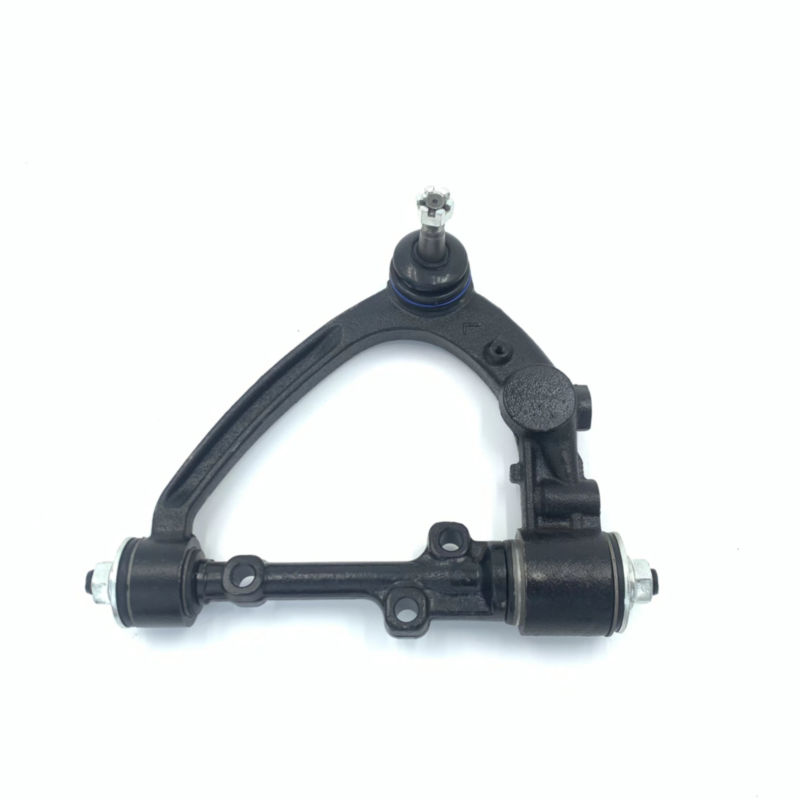
A lengan kawalan penggantungan is a hinged link that connects the vehicle's chassis to the steering knuckle or hub—the assembly that holds the wheel. This connection is not rigid; it is designed to pivot, allowing the wheel to move vertically in response to bumps, dips, and undulations in the road surface. This vertical travel is what provides ride comfort. Tanpa itu, every road imperfection would transmit a jarring shock directly into the cabin. Simultaneously, the control arm must hold the wheel assembly securely in its proper alignment, ensuring the vehicle tracks straight and responds predictably to steering inputs (Speedway Motors, 2024).
Most modern vehicles use an independent suspension, meaning the movement of one wheel does not directly affect the wheel on the opposite side. In these systems, you will typically find at least one lower control arm and, in many designs like the double-wishbone suspension, lengan kawalan atas juga. The interplay between these upper and lower arms dictates how the wheel's angle, or camber, changes as the suspension compresses and rebounds. This dynamic geometry is fundamental to maintaining the tire's contact patch with the road during cornering, which is the very source of grip and stability.
The control arm itself is not a solitary actor. It is part of a small ensemble. At its connection points, you will find bushings—typically made of rubber or polyurethane—which absorb vibrations and allow for smooth pivoting. At the wheel end, you will almost always find a ball joint, a spherical bearing that functions like a human hip joint, allowing the steering knuckle to pivot in multiple directions for steering. Selalunya, a control arm is sold as an assembly, with new bushings and a ball joint pre-installed. This is connected to a larger network including the stabilizer link, which manages body roll, and the tie rod, which translates steering wheel movements into the turning of the wheels. The health of a control arm directly impacts the function and longevity of these adjacent parts.
Dissecting the Costs: How Much Is a Control Arm?
When you receive a quote for a control arm replacement, the total figure can be broken down into two primary categories: the cost of the part and the cost of the labor. It is the interplay between these two, influenced by a host of factors, that determines the final amount on your invoice. The price for the physical control arm can range from as little as $50 for a simple aftermarket part for a common economy car to over $500 for a complex, lightweight aluminum OEM part for a European luxury sedan.
Labor represents the other half of the equation. A mechanic's time is valuable, and this job requires skill, specialized tools, and a bay lift. Labor for a single control arm replacement typically takes between 1.5 ke 3 jam. With hourly labor rates in the United States ranging from $80 ke atas $200, the labor cost alone can easily be $120 ke $600 or more per arm.
The table below provides a generalized estimate of part costs to help you frame your expectations. These figures are illustrative and can fluctuate based on the specific vehicle and supplier.
| Kelas kenderaan | Aftermarket Part Cost (oleh lengan) | OEM Part Cost (oleh lengan) |
|---|---|---|
| Economy (mis., Honda Civic, Toyota Corolla) | $50 – $150 | $120 – $300 |
| Mid-Size Sedan (mis., Ford Fusion, Nissan Altima) | $75 – $200 | $180 – $400 |
| SUV/Crossover (mis., Toyota RAV4, Ford Explorer) | $90 – $250 | $220 – $550 |
| Truck (mis., Ford F-150, Ram 1500) | $100 – $300 | $250 – $600 |
| Mewah/Prestasi (mis., BMW 3 Series, Audi A4) | $150 – $400 | $350 – $800+ |
It is often recommended to replace control arms in pairs (both left and right sides) to maintain balanced handling and suspension wear. While this doubles the part cost, the labor may not fully double, as some procedural steps overlap. Always factor in the cost of a wheel alignment, as this is a non-negotiable step after the replacement to ensure safety and prevent premature tire wear.
5 Key Factors Influencing Control Arm Replacement Costs
The variation in cost for what seems like a standard repair can be perplexing. Walau bagaimanapun, by examining the five primary factors that shape the final price, a clear picture emerges. These elements work together to create the broad price spectrum you encounter when seeking a quote.
1. Kenderaan membuat, Model, dan tahun: The Automotive Hierarchy of Cost
The single most significant factor in determining how much a control arm will be is the vehicle itself. There is an established hierarchy in the automotive world. Parts for luxury brands like BMW, Mercedes-Benz, and Audi are engineered to higher tolerances, often use more advanced materials, and are produced in lower volumes than parts for mass-market vehicles like a Toyota Camry or a Ford Focus. This results in a substantially higher cost for the part itself.
Sebagai contoh, a lower control arm for a 10-year-old Honda Civic might cost $70 for an aftermarket part. The equivalent OEM part for a 5-year-old BMW 5 Series could easily be $400 atau lebih. The complexity of the suspension design also plays a part. A simple MacPherson strut system, common in economy cars, uses a single lower control arm that is relatively simple to access and replace. In contrast, a sophisticated multi-link suspension found in performance and luxury cars may have several individual links, each with its own bushings and ball joints, making the parts more expensive and the labor more intensive. The vehicle's year matters as well; parts for very new models might be scarce and expensive, while parts for very old or rare cars can also be difficult to source.
2. Part Quality and Material: OEM, Selepas pasaran, and Performance Tiers
Once you know which part your car needs, you face a choice: Pengilang peralatan asal (OEM), aftermarket, or performance-grade?
- OEM Parts: These are identical to the parts your vehicle was built with at the factory. They guarantee a perfect fit, expected performance, and original material quality. Walau bagaimanapun, they are almost always the most expensive option.
- Aftermarket Parts: These are made by companies other than the original manufacturer. The quality can range from equal to or even exceeding OEM standards to dangerously inferior. Reputable aftermarket brands provide a cost-effective alternative that can save you 30-60% on the part cost. Exploring a catalog of high-quality aftermarket control arm assemblies can reveal excellent value. The risk lies in choosing a low-quality part that may fail prematurely or not fit correctly, leading to more labor costs.
- Performance Parts: Bagi peminat, performance control arms offer features like adjustable lengths for custom alignments or stiffer polyurethane bushings for more responsive handling. These are typically more expensive than OEM and may result in a harsher ride, making them unsuitable for a daily driver focused on comfort (CarbonXTrem, 2025).
The material of the control arm also affects its price and performance.
| Material | Primary Characteristics | Permohonan biasa | Cost Level |
|---|---|---|---|
| Stamped Steel | Formed from sheets of steel; lightweight and cost-effective to produce. | Most economy and mid-size cars. | Rendah |
| Besi tuang | Heavier and more robust; excellent strength and durability. | Trak, SUV, and older heavy-duty vehicles. | Medium |
| Cast/Forged Aluminum | Lightweight and strong with excellent corrosion resistance; reduces unsprung weight for better handling. | Prestasi, luxury, and modern vehicles focused on efficiency. | Tinggi |
The choice of material is not just about cost; it is about the vehicle's intended performance characteristics. An aluminum control arm contributes to a more responsive suspension, a quality highly valued in a sports car (Supreme Suspensions, 2022).
3. Labor Rates and Geographic Location: The Human Element of Cost
The cost of labor is a major component of the total repair bill. This cost is determined by the mechanic's hourly rate multiplied by the book time for the job. Labor rates vary dramatically based on two things: location and the type of shop.
- Geographic Location: A repair shop in a major metropolitan area like New York City or Los Angeles will have higher overhead (rent, taxes, wages) than a shop in a rural town. Consequently, their hourly rates will be higher. Dalam 2025, you can expect rates from $80/hour in low-cost areas to over $220/hour at dealerships in expensive cities.
- Type of Shop: A dealership will almost always have the highest labor rates, justified by their brand-specific training and tools. An independent repair shop that specializes in your vehicle's brand (mis., a German auto specialist) will be slightly less expensive but still command a premium. A general-purpose independent shop or a chain store will typically offer the most competitive rates.
The complexity of the job also dictates the hours billed. A simple lower control arm on a common car might take 1.5 jam. A more complex upper control arm on an all-wheel-drive luxury SUV, which may require removing other components like the strut assembly, could take 3-4 jam.
4. Scope of the Repair: Single Part vs. Full Assembly
When a control arm fails, it is often one of its sub-components—a bushing or a ball joint—that has worn out. Dalam beberapa kes, it is possible to press out the old bushing or ball joint and install a new one. This is a labor-intensive process that requires a hydraulic press. While the individual parts are very cheap (a bushing might be $15), the labor can make this approach more expensive than simply replacing the entire control arm assembly.
Most mechanics and savvy DIYers opt to replace the entire control arm assembly, yang disertakan dengan sesendal baharu dan sambungan bebola baharu telah dipasang. This approach offers several advantages:
- Saves Labor Time: It is much faster to unbolt an old arm and bolt in a new one than it is to press components in and out.
- Ensures Quality: It replaces all related wear items at once, restoring the geometry and feel of a new component.
- Reduces Risk: It eliminates the risk of damaging the control arm itself while pressing a new bushing or joint into place.
While the assembly is more expensive than a single bushing, the savings in labor and the peace of mind it provides often make it the more economical choice in the long run.
5. Associated Repairs and "While You're In There" Jobs
A control arm replacement rarely happens in a vacuum. The most critical associated task is a four-wheel alignment. Replacing a control arm fundamentally changes the suspension geometry. Driving without an alignment afterward is unsafe, will cause the vehicle to pull to one side, and will destroy your tires in short order. An alignment will add $100 ke $250 to the final bill.
Tambahan pula, a failing control arm can put extra stress on other suspension parts. While the mechanic has the suspension disassembled, it is wise to inspect related components. This is the perfect time to replace a worn stabilizer link or a tie rod end. The parts are relatively inexpensive, and the additional labor to replace them at the same time is minimal compared to doing it as a separate job later. This "while you're in there" approach can save you a significant amount of money and hassle down the road. A worn tie rod ball, for instance, can mimic some symptoms of a bad control arm, and a thorough inspection is needed to diagnose the true culprit (SLR Speed, 2025).
Symptoms of a Failing Control Arm: Listening to Your Vehicle
Your vehicle often communicates its problems through a language of sounds, perasaan, and visual cues. Learning to interpret this language can help you identify a failing control arm early, potentially preventing a more dangerous situation or more costly collateral damage. The symptoms are often subtle at first but will grow more pronounced over time.
One of the most common auditory signals is a clunking or knocking noise. You will typically hear this when driving over bumps, berlubang, or uneven road surfaces. The sound is the result of excessive play in a worn ball joint or a deteriorated bushing. The metal-on-metal contact that was once cushioned now creates a distinct, unsettling thud that emanates from a corner of the vehicle. You might also hear a creaking or groaning sound when turning the steering wheel or as the suspension compresses when you get in or out of the car.
Beyond sounds, you will feel the degradation in the vehicle's handling. Wandering or vague steering is a primary indicator. If you find yourself constantly making small corrections to the steering wheel to keep the car tracking straight on the highway, a worn control arm bushing could be the cause. The compromised component is allowing the wheel to shift its alignment dynamically, making the car feel unstable and disconnected from your inputs. This can be particularly noticeable in crosswinds or on grooved pavement.
Another tactile symptom is getaran. You may feel a shudder or vibration through the steering wheel, terutamanya pada kelajuan tertentu. This is often caused by a worn ball joint that can no longer hold the wheel assembly steady, allowing it to oscillate slightly as it rotates.
Visually, the most telling sign is haus tayar tidak rata. A bad control arm will throw the wheel's alignment angles—specifically camber and caster—out of specification. A common result is excessive wear on the inner or outer edge of a tire. If you run your hand over the tread and it feels smooth on one side but feathered or worn down on the other, it is a strong indication of a persistent alignment problem rooted in a worn suspension component (Steve's Automotive Specialists, 2025). During a visual inspection, you might also be able to see a torn or cracked bushing or a leaking boot on a ball joint.
The Replacement Dilemma: DIY vs. Professional Installation
Faced with a repair bill that can climb into the hundreds or even thousands of dollars, many vehicle owners contemplate performing the replacement themselves. The prospect of saving significantly on labor costs is tempting, but it is a decision that requires an honest assessment of one's skills, tools, and tolerance for a challenging and potentially dangerous job.
The do-it-yourself route is achievable for the experienced home mechanic. The primary benefit is cost savings. You pay only for the parts and perhaps a few specialized tools you might need to purchase or rent. The satisfaction of completing a complex repair yourself is also a powerful motivator. Walau bagaimanapun, the path is fraught with challenges.
Pertama, you need the right tools. A basic socket set will not suffice. You will need a robust set of wrenches and sockets, a heavy-duty torque wrench capable of handling high torque specifications (often over 100 ft-lbs), a breaker bar for stubborn bolts, a ball joint separator (often called a "pickle fork") or a press-type separator, and heavy-duty jack stands to safely support the vehicle.
Kedua, the job can be physically demanding and time-consuming. Bolts on suspension components are exposed to the elements and are often seized with rust. Breaking them loose can require immense force and penetrating oil. The process of separating the ball joint from the steering knuckle is notoriously difficult and can be frustrating without the right technique and tool. A job that takes a professional two hours could take a DIYer an entire weekend.
The most significant consideration is safety. The vehicle must be securely supported on jack stands—never work under a car held up only by a jack. More critically, some suspension designs require the compression of a coil spring to remove the control arm. A compressed coil spring contains a tremendous amount of energy. If the spring compressor tool were to slip or fail, the spring could release with explosive and potentially lethal force.
Opting for a professional installation eliminates these risks. A certified mechanic has the experience, the specialized tools (like a hydraulic lift and a wall-mounted press), and the knowledge to complete the job efficiently and safely. They can correctly diagnose which components need replacement and can spot other potential issues you might miss. While the cost is higher, you are paying for expertise, keselamatan, and a warranty on the work. After the professional replacement, the shop will perform the mandatory wheel alignment, ensuring your vehicle is safe to drive immediately. For most drivers, the peace of mind and guaranteed result of a professional repair outweigh the potential savings of a DIY attempt.
A Global Look at Control Arm Costs: US, Eropah, and Asia
The cost of automotive repair is not a globally uniform figure. It is subject to local economic conditions, parts availability, and labor market dynamics. Understanding these regional differences can provide valuable context for drivers in the United States, Eropah, and East Asia.
In the United States, the market is characterized by a wide range of choices, from inexpensive aftermarket parts to premium OEM components. Seperti yang dibincangkan, labor rates vary significantly by state and urban density. The total cost for a common sedan could be anywhere from $300 ke $700 oleh lengan. For trucks and SUVs, this can rise to $400-$900. The strong DIY culture also means that many owners will attempt the repair themselves to save on labor.
Dalam Eropah, particularly in countries like Germany and the United Kingdom, there is a strong preference for OEM or high-quality OEM-equivalent parts from brands like Lemförder or TRW. The cost of parts for domestic European brands (Volkswagen, BMW, Renault) can be more reasonable than in the US, but parts for imported American or Japanese cars may be more expensive. Labor rates are generally high, especially at main dealerships. A typical replacement at an independent shop in Germany might range from €350 to €800 per arm, termasuk bahagian, buruh, and the required TUV inspection compliance. The emphasis on quality and vehicle inspection standards often discourages the use of the cheapest aftermarket options.
Dalam East Asia, the cost landscape is different again. Dalam Japan, contohnya, the "shaken" (vehicle inspection) system mandates that cars are kept in excellent condition. This drives a strong market for high-quality OEM parts for domestic brands like Toyota, Honda, and Nissan. Labor at dealerships is meticulous and can be expensive, though independent shops offer more competitive rates. A replacement could cost between ¥40,000 and ¥90,000 per arm. Dalam South Korea, with its dominant domestic brands Hyundai and Kia, OEM parts are readily available and relatively affordable. The repair costs are generally lower than in the US or Europe. In other parts of Asia, the market for aftermarket parts is vast, with a wide spectrum of quality and price, making it possible to perform repairs very cheaply, though not always with the best long-term results.
Soalan yang sering ditanya (Soalan Lazim)
1. How much is a control arm replacement on average? Dalam 2025, the average cost for a single control arm replacement in the United States is between $400 dan $1,000. This wide range accounts for the part itself ($50-$500+) and labor ($200-$600+), plus the mandatory wheel alignment ($100-$250).
2. Is it safe to drive with a failing control arm? It is not recommended. A worn control arm compromises your ability to steer accurately and can lead to a loss of control. Dalam senario terburuk, a complete failure of a ball joint or the arm itself can cause the wheel to detach from the vehicle, resulting in a serious accident.
3. Do I need to replace both the left and right control arms at the same time? Ia sangat disyorkan. Suspension components wear at a similar rate. Replacing them in pairs ensures that the handling remains balanced and predictable. An old arm on one side and a new arm on the other can create unstable driving dynamics.
4. Berapa lama kawalan lengan biasanya bertahan? The lifespan of a control arm varies greatly with driving conditions and vehicle type. Under normal conditions, many last between 90,000 ke 150,000 batu (Kira -kira 145,000 ke 240,000 kilometer). Walau bagaimanapun, frequent driving on rough roads, through potholes, or in harsh climates with road salt can cause them to fail much sooner (Steve's Automotive Specialists, 2025).
5. Is a wheel alignment always necessary after replacing a control arm? Ya, secara mutlak. Replacing a control arm disconnects and reconnects major suspension pivot points, which guarantees that the vehicle's alignment will be out of specification. Driving without a proper alignment will result in poor handling, ciri pemanduan yang tidak selamat, and rapid, haus tayar tidak rata.
6. Can I just replace the bushings instead of the whole control arm? Technically, Ya. Walau bagaimanapun, it is often not cost-effective. The labor required to press out old bushings and press in new ones can be extensive, sometimes costing more than replacing the entire pre-assembled control arm. An assembly also replaces the ball joint, ensuring all wear items are new.
7. What is the difference between an upper and a lower control arm? In a double-wishbone or multi-link suspension, the lower control arm typically bears the vehicle's weight via the spring, while the upper control arm primarily maintains the wheel's alignment. Their shapes and mounting points are different, and they are not interchangeable. Single-arm designs (MacPherson strut) only have a lower control arm (, 2025).
Final Thoughts on Budgeting for Suspension Health
The inquiry into the cost of a control arm opens a window into the broader philosophy of vehicle maintenance. It is rarely a simple transaction for a single part. Sebaliknya, it is an investment in the safety, comfort, and dynamic integrity of your vehicle. The final figure on an invoice is a narrative of choices: the decision between the guaranteed fit of an OEM part versus the value of a quality aftermarket one; the selection of a trusted mechanic whose labor rate reflects their expertise; and the foresight to address related wear items, like a stabilizer link or tie rod ball, during a single, efficient repair session.
Understanding the function of the suspension control arm and the factors that dictate its replacement cost empowers you as a vehicle owner. It transforms you from a passive recipient of a repair bill into an active participant in the care of your machine. You can now recognize the early warnings—the subtle clunks and the gentle pull of the steering wheel—not as annoyances, but as communications. By addressing these symptoms promptly, you maintain control not only of your vehicle's path on the road but also of your long-term maintenance budget.
Rujukan
Pasukan Penyelidik CarParts.com. (2025). Apa yang dilakukan oleh senjata kawalan? Carparts.com.
Custom Precisions. (2025). Panduan muktamad untuk bahagian penggantungan kereta. CustomProc.
McCollough, J. (2024). Front suspension geometry explained | Caster camber toe. Speedway Motors. https://www.speedwaymotors.com/the-toolbox/front-suspension-geometry-explained-caster-camber-toe/143481
SLR Speed. (2025). What is a tie rod? A technical breakdown of this essential steering component. https://slrspeed.com/blogs/news/what-is-a-tie-rod-a-technical-breakdown-of-this-essential-steering-component
Steve's Automotive Specialists. (2025). Signs of Toyota suspension component wear and repair tips.
Supreme Suspensions. (2022). A guide to the different kinds of control arms. https://www.supremesuspensions.com/blogs/news/a-guide-to-the-different-kinds-of-control-arms
CarbonXTrem. (2025). How to modify your car suspension for better street performance.