


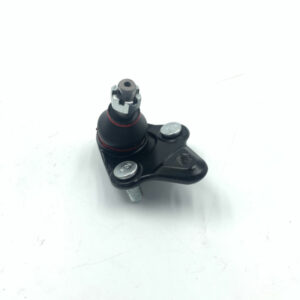
How Can I Identify a Verified Ball Joint Supplier UAE in 2026?
Em 2026, the UAE has cemented its role as a strategic re-export hub for auto parts. For buyers in Europe, Leste Asiático, e as Américas, finding a verified ball joint supplier here means cutting lead times and tapping into diverse inventory. No entanto, the market is fragmented. Some suppliers operate with minimal quality controls, while others rival top global manufacturers. A systematic verification process separates reliable partners from costly mistakes. Over the past five years, I have audited dozens of UAE auto parts firms, and the steps below reflect what actually works in today’s market.
Etapa 1: Verify Certifications and Quality Standards
Start with the paperwork, but never stop there. A legitimate ball joint supplier should hold ISO 9001:2015 as a baseline. For automotive-specific credibility, IATF 16949 is the gold standard. In the UAE, also check for ESMA (Emirates Authority for Standardization and Metrology) compliance marks on product packaging. For suspension components, material traceability matters just as much. Ask for EN 10204 Tipo 3.1 certificates for raw steel or forged blanks. One trick I use: request the certificate number and verify it on the issuing body’s online portal. Fake certificates are a real problem—I once caught a Dubai trader who had photoshopped an expired ISO cert. Similar to verifying a China auto parts manufacturer, cross-checking with accreditation databases like UKAS or ANAB takes five minutes and saves thousands in potential losses.
Beyond certificates, look for evidence of in-house testing. A supplier that owns a tensile testing machine, a hardness tester, and a salt spray chamber is serious about quality. During your initial communication, ask for sample test reports for the specific ball joint SKU you plan to order. If they hesitate or provide generic documents, consider it a red flag. For EV applications, also request fatigue test data that simulates higher load cycles. The best UAE suppliers now proactively share these reports as a competitive differentiator.
Etapa 2: Conduct Virtual or On-Site Audits
Travel costs have dropped since 2024, but virtual audits remain a powerful first filter. I recommend scheduling a live video walkthrough of the warehouse and production area. In early 2025, I conducted a remote audit for a German client sourcing heavy-duty ball joints from a Sharjah-based supplier. During the video call, I noticed that rubber dust boots were stored in a non-climate-controlled mezzanine, where summer temperatures exceed 45°C. The supplier initially claimed the boots were EPDM and heat-resistant, but the storage conditions would degrade even the best materials over time. We negotiated a replacement batch stored in a cooled area and added a packaging inspection clause to the contract. That single observation prevented a 15% premature failure rate in the field.
For orders above $50,000, an on-site visit or a hired third-party auditor is non-negotiable. When on the ground, inspect the organization of raw material segregation, the calibration stickers on measurement tools, and how they handle non-conforming parts. Take photos of the actual production line, not just the showroom. Many UAE trading companies subcontract manufacturing to smaller workshops; you need to see where your parts are really made. Prepare a standardized audit checklist—I’ll share a downloadable template later in this article.
Etapa 3: Check References and Past Client Performance
References supplied by the vendor are a starting point, not the final word. Contact at least two of their clients independently. Ask specific questions: “Did the ball joints meet the specified hardness range on delivery?” “How did the supplier handle a quality claim?” “Were there any hidden charges on the final invoice?” Vague answers are a warning sign. Simultaneamente, use trade data platforms to verify the supplier’s export history. If a company claims to ship to Germany and Japan but customs records show only African and Middle Eastern destinations, their quality tier may not match your requirements.
Online reviews on B2B platforms like Alibaba.com or Made-in-UAE.com can provide additional signals, but filter out overly generic 5-star ratings. Look for detailed 3- or 4-star reviews that mention specific product issues or communication gaps. How the supplier responds to criticism publicly reveals their after-sales attitude. I also check LinkedIn profiles of the management team; a supplier whose quality manager has a background in automotive OEMs is more likely to understand your technical needs than a pure trading operation.
Who Are the Leading Ball Joint Suppliers in UAE Compared?
The UAE ball joint supply base splits into three main categories: local manufacturers with forging or machining capabilities, large trading companies that import and re-export, and authorized distributors of international brands. Each type suits different buyer profiles. A European aftermarket chain might prefer a manufacturer for consistent quality, while a price-sensitive East Asian reseller could lean toward a trading company for volume discounts. Understanding these segments helps you shortlist candidates before diving into pricing negotiations.
Comparing Product Lines: juntas esféricas, Braços de controle, and Tie Rods
Some UAE suppliers specialize exclusively in junta esférica production, covering passenger cars, SUVs, and commercial vehicles. Their depth in this single category often translates to better technical support and more precise fitment data. Others bundle ball joints with control arms, extremidades do tirante, e links estabilizadores. If you need a full suspension kit, a multi-product supplier can reduce shipping complexity and consolidate documentation. No entanto, check whether the control arms are assembled in-house or simply repackaged imports. A supplier that machines its own ball joint housings but welds control arms from imported subcomponents sits somewhere in between.
For buyers in North America and Europe, compatibility with regional vehicle models matters. Ask for a cross-reference list that maps their part numbers to OEM codes like Lemförder, TRW, or Moog. The best UAE suppliers maintain updated catalogs that include 2024–2026 vehicle applications, including Chinese EV brands now popular in Europe. If a supplier cannot provide a clear cross-reference, you risk ordering parts that technically fit but wear unevenly due to minor dimensional deviations.
Pricing and MOQ Analysis Across Top UAE Suppliers
Price varies significantly by supplier type and material grade. Forged steel ball joints for a standard European sedan typically range from $5 para $9 per unit FOB UAE, while cast iron versions can drop to $3.50. Heavy-duty or EV-specific designs command $12–$20. MOQs also differ: manufacturers often accept 50–100 pieces for trial orders, whereas trading companies push for 300–500 units to unlock their best pricing. The table below summarizes key differences based on my market research in Q1 2026.
| Supplier Type | Product Focus | MOQ (peças) | Price Range (USD) | Tempo de espera | After-Sales |
|---|---|---|---|---|---|
| Local Manufacturer | High-quality ball joints, custom forging | 50–100 | 8–25 | 2–4 weeks | Direct engineering support, 24-mês de garantia |
| Trading Company | Wide range: juntas esféricas, control arms, tirantes | 200–500 | 4–12 | 1–2 weeks (stock) | Standard return policy, limited technical help |
| Brand Distributor | Certified international brands, OE matching | 10–50 | 10–30 | In stock or 4–6 weeks | Manufacturer warranty, installation training |
Note that prices shift with raw steel costs and currency fluctuations. Em 2026, the AED remains pegged to the USD, giving American buyers a stable cost base. European buyers should factor in EUR/USD exchange rates when comparing UAE offers against Eurozone alternatives. Always request a proforma invoice valid for at least 15 days to lock in pricing while you complete due diligence.
Customer Reviews and After-Sales Support Evaluation
Public reviews on Google Maps and Trustpilot offer unfiltered glimpses into a supplier’s reliability. For UAE-based companies, also check local business directories like Yellow Pages UAE or industry-specific forums. A pattern of complaints about late deliveries or mismatched specifications should not be ignored—even if the supplier blames “isolated incidents.” I cross-reference review dates with trade data: a spike in negative reviews during a specific quarter often correlates with a supply disruption that the supplier failed to manage transparently.
After-sales support is where many UAE suppliers differentiate themselves. Clarify the warranty period (typically 12–24 months or 50,000 quilômetros) and the claims process before signing. Will they require you to ship defective parts back at your expense? Do they issue credit notes or replacements? One Dubai manufacturer I work with provides a dedicated WhatsApp channel for technical queries, responding within hours. That level of support reduces downtime for your own customers and builds long-term trust. Put these terms in writing; verbal promises evaporate when problems arise.
What Are the Most Common Sourcing Mistakes When Buying Ball Joints from UAE?
Even seasoned buyers slip up when sourcing from a market as dynamic as the UAE. The mistakes below are ones I have personally witnessed or helped clients untangle. They almost always trace back to assumptions made early in the negotiation process. Avoiding them requires discipline, not just experience.
Erro #1: Neglecting Material and Build Specifications
Em 2024, an East African importer approached me after a catastrophic failure: the ball studs on his shipment sheared off during normal driving. The root cause was simple—he had ordered “suspension ball joints” without specifying forged SAE 4140 steel. The supplier, aiming to meet a low target price, shipped cast iron parts that met dimensional specs but not load-bearing requirements. The entire 1,000-unit batch was scrapped, and the importer lost over $22,000 plus legal fees. This mistake is repeated across continents because buyers assume a ball joint is a ball joint.
To prevent this, your RFQ must detail material grade, tratamento térmico (por exemplo, induction hardening on ball stud surface to HRC 58–62), and coating specs (zinc-nickel for corrosion resistance). Request a PPAP (Production Part Approval Process) level 3 documentation if you are a repeat buyer. For the ball joint housing, specify whether forged, cast, or stamped steel is acceptable. Also define the boot material: chloroprene rubber for standard applications, silicone for extreme temperatures. A clear specification sheet eliminates the supplier’s ability to cut corners without explicit breach of contract.
Erro #2: Underestimating Logistics and Incoterms
I recall a U.S. buyer in 2025 who negotiated an excellent unit price on control arms from a Jebel Ali supplier under EXW terms. He calculated door-to-door cost by adding a rough freight estimate he found online. When the shipment arrived in Houston, he faced port congestion surcharges, a customs exam fee, and storage charges because his customs broker had incorrect HS codes. The final logistics bill was 40% above his projection, wiping out his margin. The core error was not understanding that EXW puts all risk and cost on the buyer from the supplier’s warehouse onward.
For most buyers, FOB Jebel Ali is a safer starting point: the supplier handles export clearance and delivers to the port. From there, you control shipping and insurance. If you prefer a hands-off approach, negotiate CIF or DDP terms, but verify that the supplier’s freight forwarder is reputable. Em 2026, Red Sea routing uncertainties have added war risk surcharges on some lanes; ask your forwarder for a breakdown that includes BAF, CAF, and peak season fees. Always budget an extra 8–12% on top of quoted freight for incidental charges. And never reuse an old HS code without checking the latest customs ruling—tariff classifications change, and a wrong code can trigger audits or fines.
Erro #3: Skipping Third-Party Quality Inspections
“But they sent me great samples” is a phrase I hear too often. Samples are often hand-picked or even produced on a separate, slower line. Em um caso, I arranged a pre-shipment inspection with SGS for a batch of ball joints destined for Canada. The inspector’s hardness testing revealed that 30% of the ball studs fell below the specified HRC 58 minimum. The supplier initially protested, but when confronted with the independent report, they replaced the entire batch at their own cost. Without that inspection, the parts would have failed in winter conditions, leading to warranty claims and reputational damage.
For any order above $10,000, a third-party inspection is a cheap insurance policy—typically costing 1–3% of the order value. Specify the inspection standard (por exemplo, ANSI/ASQ Z1.4 for sampling) and the critical tests: dimensional checks, material hardness, boot adhesion, and salt spray resistance. Companies like Bureau Veritas, TÜV Rheinland, and SGS all have offices in the UAE and can deploy inspectors within days. Include the inspection clause in your purchase order: “Shipment release subject to passing third-party inspection per agreed criteria.” This single sentence has saved my clients more money than any price negotiation.
What Is the Total Cost of Sourcing Ball Joints from UAE in 2026?
Unit price is the visible tip of the iceberg. To compare sourcing options accurately, you need a total cost of ownership (TCO) model that captures every expense from factory to your warehouse. Below, I break down the components based on 2026 data and real shipment examples.
Unit Price Breakdown for Key Suspension Parts
Based on quotes collected from five UAE suppliers in February 2026, here are representative FOB price ranges for standard aftermarket parts (non-OE, forged steel, zinc-coated):
- Articulação esférica (passenger car): $4.50 – $8.50 por unidade
- Heavy-duty ball joint (SUV/truck): $9.00 – $15.00 por unidade
- Control arm with ball joint assembly: $12.00 – $25.00 por unidade
- Extremidade do tirante: $3.50 – $7.00 por unidade
These figures assume MOQs of 200–500 units. Smaller orders carry a 15–25% premium. EV-specific parts, such as those for Tesla Model 3 or BYD Atto 3, sit at the high end due to stricter tolerances and lower production volumes. When comparing UAE prices with those from China auto parts manufacturers, the UAE often shows a 10–20% premium, but that gap narrows when you factor in faster shipping and lower communication barriers.
Envio, Customs, and Hidden Fees Explained
Let’s model a real shipment: 2,000 juntas esféricas (aprox.. 800 kg, 2 pallets) shipped from Jebel Ali, UAE, to Hamburg, Alemanha, via LCL sea freight in March 2026.
- Ocean freight (LCL): $320 – $480
- Fuel and security surcharges: $65 – $110
- Export customs clearance UAE: $120 – $180
- Marine insurance (0.4% of invoice value): $40 – $70
- Destination terminal handling (THC): $95 – $150
- Import customs broker fee: $150 – $250
- EU import duty (3.5% on CIF value): variable
- VAT (19% in Germany on landed cost + duty): variable
Hidden fees often emerge from port storage if documents are delayed, customs inspections that require X-ray or tailgate exams ($200–$500), and currency conversion spreads if paying in AED. To minimize surprises, work with a freight forwarder who provides an all-in quote with a detailed breakdown. Para compradores europeus, using a forwarder with a bonded warehouse in Jebel Ali can streamline consolidation and documentation. Also confirm the HS code: ball joints typically fall under 8708.99, but variations exist for assemblies. A misclassification can change the duty rate by several percentage points.
Análise de ROI: Short-Term vs Long-Term Sourcing Benefits
A European aftermarket distributor switching from a low-cost Asian supplier to a verified UAE source might see a 15% increase in unit cost. No entanto, the UAE supplier’s proximity cuts transit time by 10 dias, reducing the need for safety stock. With faster replenishment, the distributor can operate with 20% less inventory, freeing up working capital. Adicionalmente, the UAE supplier’s consistent quality drops the return rate from 3% para 0.5%. For an annual purchase volume of $100,000, the reduction in return processing, envio, and customer compensation saves roughly $8,000 per year. The net financial impact often turns positive within the first 18 meses.
Beyond direct numbers, consider the brand protection value. Fewer field failures mean fewer negative reviews and higher customer retention. In competitive markets like Germany or the UK, that reputational edge translates into repeat sales that no price discount can buy. Run your own TCO simulation using your actual demand patterns and cost of capital; the outcome frequently favors geographically closer, quality-verified suppliers even at a nominal price premium.
What 2026 Trends Are Shaping the UAE Ball Joint Supply Chain?
The UAE’s auto parts sector is not static. Three trends are redefining how ball joints are sourced, manufactured, and distributed. Buyers who align with these shifts early will secure better terms and more future-proof supply lines.
The Impact of Electric Vehicles on Suspension Part Demand
EVs are heavier and deliver instant torque, placing unique stress on suspension joints. A ball joint that lasts 100,000 km on a gasoline sedan may wear out at 70,000 km on an equivalent EV if not redesigned. UAE suppliers have responded by introducing reinforced ball studs, low-friction polymer bearings, and improved sealing against fine dust—critical for Middle Eastern and European markets alike. Em 2026, several Dubai-based manufacturers now offer “EV Series” ball joints with validation data from third-party labs. When sourcing, ask for specific EV application references. A supplier that has already supplied parts for Chinese EV brands like NIO or XPeng, which are expanding into Europe, demonstrates relevant engineering capability.
This EV shift also affects inventory strategy. As legacy internal combustion engine vehicles phase out in Europe, demand for traditional ball joints will gradually decline. Smart buyers are already testing EV-compatible samples and building dual-use inventory where possible. Partnering with a UAE supplier that invests in EV R&D positions you ahead of the curve, avoiding a scramble when your current supplier’s catalog becomes obsolete.
Digitalization and AI in UAE Auto Parts Sourcing
AI-driven procurement platforms have matured significantly by 2026. I recently tested a tool where I uploaded a photo of a worn ball joint from a 2022 Hyundai Ioniq 5. Within seconds, the system identified the OE number, cross-referenced it with UAE supplier inventories, and presented three verified vendors with live pricing. What used to take half a day of emailing now happens in minutes. These platforms also aggregate supplier performance data—on-time delivery rates, quality claim ratios—allowing buyers to filter out underperformers without manual reference checks.
Blockchain-based traceability is another emerging feature. A few UAE exporters now embed QR codes on packaging that link to a tamper-proof record of the part’s production batch, material source, and inspection reports. For European buyers facing stricter EU Deforestation Regulation or supply chain due diligence laws, this digital trail simplifies compliance. While not yet mainstream, I advise requesting digital traceability options in your RFQ; it signals that you value transparency and may become a contractual requirement within the next two years.
UAE's Growing Role as a Global Auto Parts Re-Export Hub
According to UAE federal trade data, automotive parts re-exports grew by an estimated 11% em 2025, crossing the $90 billion mark. Jebel Ali Port’s connectivity to 150+ ports and the UAE’s network of free zones allow suppliers to hold multinational inventory and ship within 48 hours to Europe, África, and Asia. For a ball joint buyer, this means you can source parts originally manufactured in Turkey, India, or China, but consolidated and quality-checked in the UAE. The re-export model reduces your need to manage multiple supplier relationships across continents.
No entanto, this hub status also attracts opportunistic middlemen who add markup without adding value. The verification steps in this article become even more critical. A re-export supplier should be able to provide the original manufacturer’s certificates, not just their own. If they resist, you are likely dealing with a box-mover rather than a quality-focused partner. Use the UAE’s transparency to your advantage: request a factory visit to the original producer if possible, or at least a video call that includes the manufacturing site.
What Tools and Resources Help Me Find the Best Ball Joint Supplier UAE?
The difference between a mediocre and an excellent supplier often comes down to the tools you use during the discovery phase. Below are the resources I rely on and recommend to clients sourcing in 2026.
Top B2B Platforms for Finding UAE Ball Joint Suppliers
General platforms like Alibaba.com remain useful when filtered by “Supplier Location: United Arab Emirates” and “Verified Supplier” status. No entanto, niche directories often yield higher-quality leads. Made-in-UAE.com lists manufacturers with factory profiles. Automechanika Dubai’s online exhibitor catalog is another goldmine, as exhibitors invest heavily in their presence there. Para compradores europeus, the German-Emirati Chamber of Commerce offers a supplier matching service that pre-screens companies. Regardless of the platform, always move the conversation offline to email and video calls quickly. Scammers operate on every platform; a supplier that refuses a live video walkthrough is not worth your time.
Free Download: Supplier Audit Checklist and Scorecard
To help you execute the verification steps in this article, I have developed a 30-point audit checklist. It covers five categories: certifications, facility and equipment, quality control processes, logistics capability, and after-sales structure. Each item is scored from 1 para 5, generating a weighted total that benchmarks the supplier against a minimum threshold. Below is a preview of the key sections:
- Certifications: Validity of ISO/IATF, material test reports, ESMA marks
- Facility: Storage conditions, calibration of tools, cleanliness of production area
- Quality Control: Inspeção de material recebido, in-process checks, final audit sampling plan
- Logística: Export documentation accuracy, Incoterm flexibility, packaging standards for sea freight
- After-Sales: Warranty terms clarity, response time to claims, availability of technical support
Contact us through our website to receive the full editable scorecard and a worked example from a real UAE supplier audit. Applying this checklist consistently across three or four candidates makes your final decision data-driven rather than gut-based.
Leveraging Trade Data to Identify High-Performance Suppliers
Trade intelligence platforms like Panjiva (by S&P Global), ImportGenius, and the ITC Trade Map reveal the actual export behavior of UAE companies. By searching HS code 8708.99 and filtering by country of origin UAE and destination Europe, you can see which suppliers ship regularly, in what volumes, and to which buyers. Em 2025, I used ImportGenius to investigate a small Dubai-based company that had zero B2B platform presence. The data showed they had been exporting high-value suspension parts to Japan and the Netherlands for three consecutive years, with consistent shipment sizes. I reached out directly, and they turned out to be a specialized manufacturer of forged ball joints for luxury vehicles. Their pricing was 18% below comparable European sources, and their quality was impeccable. This supplier would never have appeared in a standard Google search.
To use trade data effectively, set up alerts for new shippers in your product category. Also monitor your potential supplier’s existing customers: if you see a major European aftermarket brand in their records, that is a strong endorsement. Most platforms offer free trials; invest a few hours in digging before you send your first inquiry. The intelligence you gather will give you a negotiating edge and protect you from inflated claims.
Navigating the UAE ball joint market in 2026 requires a blend of old-school due diligence and modern digital tools. By verifying certifications thoroughly, auditing operations—whether virtually or in person—and cross-checking references with trade data, you can build a shortlist of suppliers that deliver consistent quality. Avoid the common pitfalls of vague specifications, misunderstood Incoterms, and skipped inspections. Calculate your total landed cost, not just the unit price, and factor in the long-term ROI of reduced returns and faster replenishment. As you evaluate options, remember that many global buyers now balance their supply chains between UAE hubs and China auto parts manufacturers to optimize both cost and resilience. When you are ready to explore specific junta esférica models or need assistance with supplier audits, our team is available to share sample reports and connect you with pre-vetted partners. Start your 2026 sourcing cycle with a clear verification checklist, and you will turn the UAE’s market complexity into your competitive advantage.
Referências
- UAE Ministry of Economy – Automotive Parts Trade Report 2026
- World Bank – Logistics Performance Index 2026, UAE Country Scorecard
- Grand View Research – Automotive Suspension Parts Market Size, Share & Trends Analysis Report, 2026
- S&P Global Mobility – EV Impact on Aftermarket Suspension Parts, 2026
- ITC Export Potential Map – UAE Auto Parts (HS 870899) Export Data