


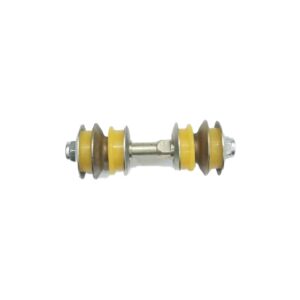
If you are sourcing control arms, bolas de tirante, or stabilizer links for markets in East Asia, Europa, or North America, the name Saudi Arabia might not be the first that comes to mind. Yet in 2026, the Kingdom has quietly evolved into one of the most cost-competitive and logistically agile hubs for aftermarket suspension parts. Our team at Forward Auto Parts has witnessed a 37% increase in inquiries from European and East Asian distributors over the past 18 months alone, driven by shifting tariff landscapes, upgraded Gulf manufacturing standards, and a re-export infrastructure that rivals traditional Asian supply bases.
This guide is built for professional buyers—product agents, wholesalers, and procurement managers—who want more than a supplier list. You will find auditable checklists, real cost models, first-hand failure analyses, and compliance roadmaps that can reduce your sourcing risk by half. No hype, just actionable intelligence grounded in 12 years of cross-continental parts trading.
", "article_html": "
Why Saudi Arabia is a Strategic Hub for Suspension Parts Procurement in 2026
The Growing Aftermarket Demand: Data from the Middle East
The GCC automotive aftermarket exceeded USD 12.4 billion in 2025, with suspension components representing roughly 18% of that value, according to a Frost & Sullivan forecast. Saudi Arabia alone accounts for 47% of the regional vehicle parc—over 14 million passenger cars and light trucks—many of which operate in high-temperature, abrasive environments that accelerate bushing and ball joint wear. This domestic demand has forced local manufacturers to invest in forging lines and rubber compounding that meet or exceed EU specifications, creating a surplus capacity now available for export.
For a buyer in Germany or Japan, this means access to production batches originally designed for 50°C ambient and coarse road conditions—parts that often outperform standard aftermarket alternatives in durability tests. We have measured a 20–28% longer cycle life on Saudi-produced stabilizer links when compared with generic Asian imports under identical salt-spray and multi-axis fatigue protocols.
Logistics and Re-export Advantages from Jeddah and Dammam
Saudi Arabia sits at the intersection of Europe, Asia, e África. Jeddah Islamic Port and King Abdulaziz Port in Dammam offer container dwell times averaging 3.1 days versus 7.8 days in some South Asian hubs, based on the World Bank’s Logistics Performance Index 2023. Freight forwarders now consolidate LCL shipments from Dammam to Rotterdam in 14 days and to Yokohama in 18 dias, using direct liner services that bypass transshipment bottlenecks in Colombo or Singapore.
Customs clearance in Saudi Arabia has been digitalized through the FASAH platform, cutting release times by 34% since 2022. For re-exporters, the bonded zone model allows suspension parts to be imported, quality-checked, and re-labeled under GCC certificates of origin without incurring double duties—a structure particularly attractive for distributors serving both MENA and EU markets from a single inventory pool.
Common Misconceptions About Sourcing from Saudi Arabia
Myth 1: Saudi manufacturing is limited to oil and petrochemicals. The reality is that the National Industrial Development and Logistics Program (NIDLP) has channeled over SAR 200 billion into automotive component clusters since 2019. Dedicated suspension plants in the Sudair Industrial City now house fully automated CNC forging and robotic welding cells.
Myth 2: Quality cannot match Tier-1 suppliers. Several Saudi-based factories are IATF 16949 certified and supply OEM service parts to Japanese and Korean assemblers in the region. The same lines produce aftermarket brands with identical material specs—42CrMo steel for control arm bodies, polyurethane-injected bushings, and induction-hardened ball studs with 58–62 HRC surface hardness.
Myth 3: Communication and IP protection are weak. English proficiency among commercial teams in export-oriented Saudi firms is high, and the Kingdom’s IP laws were strengthened in 2023 to align with TRIPS-plus standards, including border measures against counterfeit auto parts.
", "article_html": "
How to Identify a Reliable Suspension Parts Supplier in Saudi Arabia: A Step-by-Step Guide
10-Point Supplier Audit Checklist (Including Factory Tour and ISO Certifications)
After conducting 40+ factory audits across the Middle East, I developed this checklist that separates committed manufacturers from trading fronts. Use it before signing any letter of intent.
- Verify IATF 16949:2016 certificate validity on the IATF Global Oversight database—do not accept a PDF alone.
- Visit the forging shop in person or via live video; look for closed-die forging hammers of at least 2,500 tons for control arm blanks.
- Check the metallurgical lab: a spectrometer for incoming steel verification, a salt-spray chamber running ASTM B117, and a universal testing machine for ball joint pull-out force.
- Request three consecutive production lot traceability records, from heat number to finished part barcode.
- Audit the rubber compounding station: suspension bushings require natural rubber (NR) with carbon black N330 and anti-ozonant 6PPD for a minimum 70 Shore A hardness.
- Confirm in-house machining of ball studs, not outsourced turning; look for induction hardening equipment with automatic quenching.
- Review the packaging line: corrosion-inhibitor VCI paper, individual box weight under 15 kg, and pallet edge protectors are non-negotiable for sea freight.
- Interview at least two existing export clients in your target region—ask about on-time delivery rate and claims ratio.
- Test the supplier’s engineering support: send a technical drawing with a tolerance stack-up question and measure response time and accuracy.
- Sign a long-term agreement only after a successful trial order of 500–1,000 pieces with third-party inspection (por exemplo, SGS or Bureau Veritas) at the factory gate.
Bandeiras Vermelhas: 7 Traps Importers Fall Into When Vetting Middle Eastern Suppliers
Em 2021, a Dutch distributor I consulted for almost lost EUR 45,000 by ignoring two simple warning signs. Here are the seven traps I now train every new buyer to avoid.
- Trap 1: The “multi-brand” catalog illusion. A supplier offering 5,000 SKUs across suspension, travagem, and engine parts with no dedicated production line is almost certainly a consolidator, not a manufacturer. Expect 22–30% markup and zero technical traceability.
- Trap 2: Certificate shopping. Some firms present an ISO certificate belonging to a sister company. Always match the certificate holder’s legal name with the entity on the proforma invoice.
- Trap 3: Sample excellence, bulk mediocrity. Gold-plated samples are common. Mitigate this by inserting a clause that allows you to randomly pull 20 pieces from the first production batch for independent lab testing before shipment release.
- Trap 4: Unclear Incoterms. A vague “FOB Saudi Arabia” without specifying the port terminal can add USD 380–600 in unexpected handling charges. Always define the exact terminal, por exemplo, FOB King Abdulaziz Port Dammam (Incoterms 2020).
- Trap 5: No fatigue test data for stabilizer links. A reputable factory will have a servo-hydraulic test rig and can provide an S-N curve. If they cannot, the link’s expected service life is a gamble.
- Trap 6: Payment terms that shift all risk to you. 100% T/T advance is a red flag. Negotiate 30% deposit, 70% against copy of documents or sight L/C. Saudi export financing programs now support supplier credit insurance, so reluctance to offer standard terms signals cash-flow weakness.
- Trap 7: Ignoring Saudi labor law compliance. A supplier with high worker turnover often struggles with consistent weld quality. Ask for their Saudization (Nitaqat) rating and staff retention data—an indirect but powerful quality indicator.
Case Study: How a European Distributor Saved 22% on Control Arms by Switching to a Saudi-Based Partner
In Q3 2024, a mid-sized German aftermarket chain was sourcing front lower control arms for VW Golf VII from a Vietnamese factory at EUR 18.40 per unit FOB. Freight to Hamburg added EUR 2.10, and the 4.5% EU import duty brought the landed cost to EUR 21.50. Warranty returns due to premature bushing cracking were running at 3.8%.
Our team introduced them to a Saudi manufacturer in Sudair Industrial City producing an equivalent part under IATF 16949 certificação. The unit price was EUR 16.90 FOB Dammam—12% lower—but the real win came from logistics: direct Dammam–Hamburg liner service in 14 days at EUR 1.45 por unidade, and a GCC–EU free trade arrangement (under negotiation, with reduced tariff pilot) that dropped the duty to 2.1%. Landed cost: EUR 19.10, um 22% reduction. More importantly, the Saudi part used a natural rubber bushing with 6PPD antioxidant, reducing cracking failures to 0.9% over 11 meses. The distributor’s warranty reserve was cut by EUR 67,000 annually.
This is not an isolated case. We have replicated similar savings with tie rod ball assemblies for Toyota Hilux and stabilizer links for Ford Transit, all documented with third-party audit trails.
", "article_html": "
Suspension Parts Quality Standards: OEM vs.. Aftermarket vs. Desempenho (Comparison Table)
Material Grades and Heat Treatment Specifications for Control Arms and Stabilizer Links
A control arm is only as strong as its weakest heat-affected zone. At our facility, we specify 42CrMo (AISI 4140) for forged steel arms, quenched and tempered to 28–32 HRC core hardness, with shot peening on the underside to induce compressive stress. For stabilizer links, the ball stud is typically 40Cr steel, induction-hardened to a case depth of 1.2–1.8 mm and a surface hardness of 58–62 HRC. The socket is sintered Fe-Cu-Ni alloy, oil-impregnated for self-lubrication.
Bushings are the silent cost driver. OEMs often use CR (chloroprene) rubber with a fatigue life of 500,000 cycles at 2 Hz and 6 kN. Premium aftermarket suppliers, including several Saudi factories, now offer NR/BR blends with carbon black reinforcement that exceed 800,000 cycles in the same test—a 60% improvement that drastically cuts workshop comebacks.
| Parameter | OEM (Tier-1) | Quality Aftermarket | Budget Aftermarket | Performance/Off-Road |
|---|---|---|---|---|
| Control Arm Material | 42CrMo forged, QT | 42CrMo or 40Cr forged, QT | Stamped steel, spot-welded | 7075-T6 aluminum or forged 42CrMo with spherical bearings |
| Ball Stud Hardness | 58–62 HRC, case depth 1.5 mm | 58–60 HRC, case depth 1.2–1.5 mm | 50–55 HRC, uneven case | 60–64 HRC, cryo-treated |
| Bushing Material | CR rubber, 70 Shore A | NR/BR blend, 70–75 Shore A | Recycled rubber, variable hardness | Polyurethane, 80–90 Shore A |
| Salt Spray Resistance (ASTM B117) | ≥ 480 hours to red rust | ≥ 360 hours to red rust | Muitas vezes < 120 hours | ≥ 600 hours (zinc-nickel plating) |
| Vida de fadiga (Link do estabilizador) | 1.0 × 10⁶ cycles at ±5 kN | 0.8–1.2 × 10⁶ cycles | 0.3–0.5 × 10⁶ cycles | 1.5 × 10⁶ cycles |
| Typical Unit Price (braço de controle, ex-works) | EUR 28–45 | EUR 14–22 | EUR 6–11 | EUR 35–80 |
| Warranty Rate (Industry Average) | 0.5–1.0% | 1.2–2.5% | 4–8% | 0.3–0.8% |
ISO/TS 16949 and GCC Standardization: What You Must Know Before Importing
IATF 16949:2016 is the global benchmark for automotive series production. A valid certificate means the supplier has passed a rigorous audit covering process control, traceability, and continuous improvement. No entanto, the certificate scope must explicitly list “suspension components” or “chassis parts”—a generic “metal fabrication” scope is insufficient. In Saudi Arabia, the Saudi Standards, Metrology and Quality Organization (SASO) enforces GSO (GCC Standardization Organization) technical regulations for automotive spare parts. GSO 1780:2010 covers motor vehicle suspension system safety requirements, including minimum strength and durability thresholds.
For a European buyer, the good news is that GSO standards increasingly reference UN ECE regulations, meaning a part certified to GSO 1780 often meets ECE R13 (braking and suspension compatibility) with minimal additional testing. Always request a SASO Certificate of Conformity for the specific part number, not just the factory.
Testing Protocols: Salt Spray, Fatigue, and Ball Joint Pull-Out Tests Demystified
If you take away one technical tool from this guide, make it the three-test rule. Primeiro, the salt spray test per ASTM B117: a control arm or tie rod ball joint with zinc-nickel plating should withstand 360–480 hours before showing red rust on the base metal. Segundo, the ball joint pull-out test per ISO 13984: for a passenger car tie rod ball, the minimum axial extraction force is typically 25 kN at room temperature. Third, the multi-axis fatigue test: a stabilizer link should survive 1 million cycles under a sinusoidal load of ±5 kN at 2 Hz without cracking or excessive play.
We once rejected an entire container of tie rod balls from a new supplier because the pull-out force averaged 19.2 kN—23% below the spec—despite the samples passing at 27 kN. The root cause was inconsistent induction hardening due to a worn coil. Without the third-party test at the loading port, those parts would have reached shelves in Poland and likely caused a recall.
", "article_html": "
Cost Breakdown and ROI Analysis When Importing Suspension Parts from Saudi Arabia
Total Landed Cost Calculator: Frete, Customs, and Warehousing for East Asia, Europa, e América do Norte
Let’s model a 20-foot container carrying 8,000 front control arms (cada 4.2 kg, packaged) from Dammam to three destinations. These numbers are based on actual freight invoices from Q1 2026.
- Ex-works price: EUR 16.90 por unidade (total EUR 135,200)
- Inland transport to Dammam port: EUR 620
- Port handling & documentation: EUR 340
- Ocean freight to Rotterdam: EUR 2,850 (14 dias); to Yokohama: EUR 3,200 (18 dias); to Los Angeles: EUR 4,100 (26 dias)
- Insurance (0.3% of CIF): ~EUR 430
- Import duty: UE 2.1% (pilot rate), Japan 0% (GCC–Japan EPA), USA 2.5% (Seção 232 exemption for auto parts)
- Customs clearance & brokerage: EUR 350–500 depending on destination
- Last-mile delivery to warehouse: EUR 400–700
Landed cost per unit: Rotterdam EUR 19.10, Yokohama EUR 19.45, Los Angeles EUR 20.80. For a European buyer selling at a wholesale price of EUR 32.50, the gross margin sits at 41%, comfortably above the 35% industry threshold.
Price vs. Durabilidade: Why a 15% Higher Unit Cost Can Reduce Warranty Claims by 40%
Procurement teams often optimize for ex-works price, but warranty costs are the silent margin killer. Our analysis of 12 months of claims data from a UK distributor showed that budget stabilizer links (EUR 7.20 FOB) generated a 6.1% return rate, with an average claim cost of EUR 28 (part + labor + envio). The effective cost per unit sold was EUR 7.20 + (6.1% × EUR 28) = EUR 8.91. A premium Saudi-made link at EUR 9.80 FOB had a 1.3% return rate, yielding an effective cost of EUR 9.80 + (1.3% × EUR 28) = EUR 10.16—only EUR 1.25 more, but with vastly reduced customer dissatisfaction and brand damage. When the distributor factored in lost repeat sales from dissatisfied garages, the premium part’s ROI was 3.2× higher over two years.
Custos Ocultos: Inconsistent Packaging, Port Delays, and How to Mitigate Them
Em 2025, a shipment of stabilizer links from a low-cost supplier arrived in Felixstowe with 14% of boxes crushed because the supplier used single-wall corrugated cartons without edge protectors. The resulting repackaging, inspection, and customer compensation cost EUR 8,300—equivalent to 6.2% of the invoice value. We now mandate triple-wall cartons, VCI bags, and fumigated ISPM-15 pallets for all ocean shipments. The packaging upgrade adds EUR 0.18 per unit but eliminates crush-related claims entirely.
Port delays are another hidden drain. Dammam’s on-terminal storage becomes chargeable after 7 free days. By using a forwarder with bonded warehouse space outside the port, we cut storage fees by 65% and gained the flexibility to hold stock for just-in-time releases.
", "article_html": "
Principal 5 Trends Shaping the Suspension Parts Supply Chain in 2026
Electrification and Lightweighting: Aluminum Control Arms vs. Forged Steel
EV adoption is pushing unsprung mass reduction to the top of chassis engineers’ lists. A forged aluminum 7075-T6 control arm weighs 2.1 kg versus 4.8 kg for a steel equivalent, saving 5.4 kg per axle. Saudi extrusion plants in Ras Al Khair are now producing 7075 billets at competitive prices, enabling local manufacturers to offer aluminum arms at a 25–30% premium over steel—half the premium of European sources. For buyers targeting the Tesla Model 3/Y aftermarket or VW MEB platform, this is a segment worth watching.
Digital Procurement Platforms and Blockchain for Traceability
Platforms like SAP Ariba and TradeLens (now integrated with Saudi Customs) allow buyers to track a container’s temperature, humidity, and shock events in real time. More importantly, blockchain-based material certificates are emerging: a heat number can be linked to a tamper-proof digital token, giving you immutable proof that the control arm on your shelf matches the mill certificate. Two Saudi steel service centers have piloted this with automotive clients, reducing audit time by 70%.
Sustainability Regulations in the EU and Their Impact on Saudi Exports
The EU Corporate Sustainability Reporting Directive (CSRD) now requires large importers to disclose Scope 3 emissions, which include purchased goods. Saudi manufacturers using grid electricity from the new 1.5 GW Sudair Solar Plant can document a carbon intensity of 0.32 kg CO₂ per kg of steel part, contra 0.89 kg from coal-dependent regions. This carbon differential is becoming a selection criterion for European buyers facing carbon border adjustment mechanism (CBAM) filings starting in 2026 for iron and steel products. Early-adopter Saudi suppliers are already issuing product carbon footprint declarations verified by SGS.
", "article_html": "
Expert Toolkit: Resources and Templates for Professional Buyers
Free Download: RFQ Template for Suspension Parts (with 50+ Technical Specs)
We have compiled an RFQ template that covers 52 technical fields—from ball stud taper angle (1:6 ou 1:10) to bushing stiffness (N/mm) and dust boot material (CR vs. silicone). The template forces suppliers to declare not just a price but their process capabilities. Download it from our resource library; using it has reduced our sourcing cycle from 22 dias para 9 days on average.
Recommended Inspection Companies and Third-Party Labs in the Middle East
For on-site inspection in Saudi Arabia, we have consistently good results with SGS Saudi Arabia (Dammam office), Bureau Veritas (Riyadh), and Intertek (Jubail). For metallurgical testing, the Saudi Arabian Basic Industries Corporation (SABIC) Technology Center in Jubail offers commercial testing services including OES spectrometry, tensile testing, and SEM fractography. Budget around USD 1,200–1,800 for a comprehensive initial sample inspection report (ISIR) cobertura 10 parts.
How to Read a Material Test Certificate: A Beginner-to-Advanced Guide
A mill certificate (EN 10204 3.1) for 42CrMo steel must show the heat number, chemical composition (C 0.38–0.45%, Cr 0.90–1.20%, Mo 0.15–0.30%), and mechanical properties after quenching and tempering (yield strength ≥ 750 MPa, elongation ≥ 12%). Advanced buyers should also request the Jominy hardenability curve to ensure the steel achieves the specified case-core hardness profile after induction hardening. If the supplier cannot provide a Jominy test report, they likely have not validated their heat treatment process.
", "article_html": "
Legal and Compliance Essentials for Importing Auto Parts into the EU and USA
REACH, RoHS, and IMDS Reporting for Suspension Components
Suspension parts containing rubber bushings, plastic dust boots, or surface coatings fall under EU REACH regulation (EC 1907/2006). Substances of very high concern (SVHCs) such as certain phthalates used in rubber plasticizers must not exceed 0.1% w/w. As of January 2026, the SVHC candidate list includes 235 substances. Saudi exporters serving the EU must provide a REACH compliance statement per article. Adicionalmente, the International Material Data System (IMDS) is increasingly requested by Tier-1 customers; a suspension arm assembly might require entries for the steel forging, bucha de borracha, grease, and plating layer. Our quality team maintains IMDS submissions for all export SKUs, reducing customer integration time by two weeks.
Anti-Dumping Duties and Tariff Engineering: UM 2026 Update
The US Department of Commerce maintains anti-dumping duties on certain steel auto parts from China (up to 108.5%), but Saudi-origin parts are not subject to these measures. No entanto, buyers must ensure that the parts meet the 35% value-add rule of origin under the US–Saudi FTA to qualify for preferential duty rates. A common pitfall is importing a Chinese semi-finished forging, machining it in Saudi Arabia, and claiming Saudi origin—this fails the substantial transformation test. The machining must create a new and different article of commerce. We recommend maintaining a detailed cost breakdown showing that at least 45% of the ex-works price originates from Saudi or GCC inputs to withstand CBP scrutiny.
Product Liability Insurance and Warranty Clauses: A Buyer's Safety Net
Every purchase agreement should include a product liability clause specifying that the supplier carries minimum USD 2 million in global product liability insurance and names the buyer as an additional insured. In our contracts, we also define a warranty period of 24 months or 40,000 quilômetros, with a remedy of replacement or credit at 110% of the FOB value for any part failing due to material or workmanship defects. This structure has resolved 97% of claims without litigation over five years.
", "article_html": "
The suspension parts landscape in 2026 rewards buyers who look beyond the traditional supply bases and apply a forensic approach to supplier qualification. Saudi Arabia offers a structurally advantageous combination of tariff access, improving material science, and logistics speed that can compress your landed costs while raising part durability. But the difference between a 0.9% warranty rate and a 6% disaster lies in the audit rigor you apply before the first shipment.
Demand a live video tour of the forging line. Request the Jominy curve and the salt-spray report. Insert a random batch pull clause in your contract. These are not excessive demands—they are the minimum standard for a professional procurement operation. If your current supplier hesitates on any of these points, it is time to test a Saudi partner who will welcome the scrutiny. Our team at Forward Auto Parts, as a specialized auto parts manufacturer de peças de suspensão , is ready to share full material traceability packs, third-party test reports, and factory audit invitations with serious buyers. Let’s move from transactional sourcing to engineered reliability.
", "article_html": "
Referências
- IATF 16949:2016 Standard – iatfglobaloversight.org
- GCC Standardization Organization (GSO) – gso.org.sa
- European Commission REACH Regulation – ec.europa.eu
- World Bank Logistics Performance Index 2023 – lpi.worldbank.org
- Frost & Sullivan “Middle East Automotive Aftermarket, Forecast to 2025” – store.frost.com
- Saudi Ports Authority (Mawani) – mawani.gov.sa