


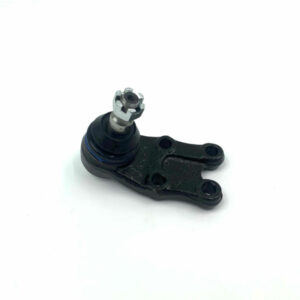
As an auto parts supplier serving workshops and distributors across East Asia, Eropah, and North America, I see one question surface repeatedly: how do suspension architectures actually change the demands on control arms and ball joints? The choice between MacPherson strut and double wishbone systems is not just an engineering detail—it directly shapes load profiles, wear patterns, and replacement part selection. This article breaks down the fundamental differences, load dynamics, and practical selection criteria you need in 2026.
What Are the Fundamental Differences Between MacPherson Strut and Double Wishbone Suspensions?
Anatomy of a MacPherson Strut Suspension System
The MacPherson strut design combines a shock absorber and coil spring into a single structural unit that also serves as the upper steering pivot. A lower control arm and a ball joint connect the strut to the vehicle's chassis. Because the strut itself handles both damping and lateral location, the system eliminates the need for an upper control arm. This simplicity reduces unsprung mass and frees up engine bay space, making it the go-to choice for front-wheel-drive economy cars and compact crossovers. Walau bagaimanapun, the ball joint in this setup carries a unique burden: it must absorb both vertical loads from the spring and lateral forces during cornering, all while allowing the strut to rotate for steering.
Anatomy of a Double Wishbone Suspension System
A double wishbone (or double A-arm) suspension uses two separate control arms—an upper and a lower—each connected to the chassis via bushings and to the wheel hub via ball joints. This arrangement decouples load paths: the upper ball joint primarily handles lateral and moment loads, while the lower joint manages vertical and braking forces. The geometry can be tuned for optimal camber gain during body roll, keeping the tire contact patch flatter on the road. This is why double wishbone setups dominate in performance sedans, sports cars, and heavy-duty trucks. The trade-off is higher part count, cost, and assembly complexity.
Analisis Perbandingan: Ride Comfort vs. Handling Performance
Ride comfort and handling are often seen as opposing goals, but the suspension type sets the baseline. MacPherson struts tend to transmit more road vibration because the strut tower directly couples spring forces into the chassis. Double wishbone systems, with their additional bushings and linkages, isolate the cabin more effectively. On the handling side, a MacPherson strut's camber curve is limited: as the wheel moves up, camber can shift toward positive, reducing cornering grip. A well-designed double wishbone can maintain negative camber throughout suspension travel, delivering superior lateral acceleration. For distributors, this means customers driving sportier vehicles will demand ball joints that tolerate higher cornering loads without developing play.
| Ciri | Macpherson Strut | Double Wishbone |
|---|---|---|
| Kerumitan | Simple, fewer components | Complex, more control arms |
| Kos | Lower manufacturing and repair cost | Higher due to more parts |
| Handling & Camber Control | Moderate camber change during cornering | Excellent camber control, superior grip |
| Ride Comfort | Baik, but can transmit more vibration | Better isolation, smoother ride |
| Space Efficiency | Compact, ideal for front-wheel drive | Requires more vertical/lateral space |
| Typical Applications | Economy cars, compact SUVs | Sports cars, kereta sedan mewah, trucks |
Which Vehicle Types Typically Use Each System?
Dalam 2026, the landscape is clear. MacPherson struts remain the dominant front suspension for mass-market vehicles: Toyota Corolla, Honda Civic, Volkswagen Golf, and most compact SUVs. Double wishbones appear on the Honda Accord (front), many BMW models (front), the Ford F-150 (front), and nearly all high-performance EVs like the Porsche Taycan (front and rear). Interestingly, some electric SUVs are adopting double wishbones at the rear to manage the high torque and weight of battery packs. When stocking ball joints, your inventory should reflect this split: high-volume MacPherson-compatible parts for everyday service, and precision-engineered double wishbone joints for premium and commercial clients.
How Do Ball Joint Load Dynamics Vary in MacPherson Strut vs. Double Wishbone Control Arms?
Understanding Ball Joint Load Types: Radial, Axial, and Moment Loads
A ball joint is not just a pivot; it's a load-bearing interface. Three primary load types act on it: radial (side-to-side forces, such as during cornering), axial (pull-out or push-in forces along the stud axis, common during braking and acceleration), and moment loads (twisting forces caused by offset loads). In a suspension, these loads combine in complex ways. A ball joint that handles high radial loads but is weak in axial retention can separate under hard braking—a catastrophic failure mode. That's why understanding the dominant load type for each suspension design is critical for part selection.
Load Distribution in a MacPherson Strut Control Arm Ball Joint
In a MacPherson strut, the lower ball joint acts as the sole lower pivot point. Because the strut bears the vehicle's weight, the lower ball joint experiences relatively low vertical (axial) static load. Walau bagaimanapun, semasa selekoh, the lateral force at the tire contact patch creates a large moment about the strut axis, which translates into high radial loads at the ball joint. Selain itu, the joint must accommodate steering rotation, which introduces cyclic moment loads. I've seen ball joints from low-tier suppliers wear out in under 20,000 km in MacPherson applications simply because the radial load rating was not matched to the vehicle's front axle weight. Always verify the radial dynamic load capacity, not just the static rating.
Load Distribution in a Double Wishbone Control Arm Ball Joint
Double wishbone setups split the work. The upper ball joint is typically smaller and handles mainly lateral and moment loads, while the lower ball joint takes the brunt of vertical and braking forces. Because the upper joint is not weight-bearing, it can be designed with a lower axial load rating but must resist pull-out during rebound. The lower joint, in contrast, sees high compressive axial loads from the spring and damper forces. This division means that wear patterns differ: upper joints often develop radial play first, while lower joints show axial looseness. In my experience with a European luxury car specialist, misdiagnosing which joint was worn led to unnecessary replacement of control arms. A proper load-path analysis saved the shop thousands in parts.
Impact of Real-World Driving Conditions on Ball Joint Wear
Road conditions dramatically accelerate wear. Potholes impose shock loads that spike axial and radial forces beyond design limits. Vehicles operating in cold climates face additional challenges: moisture ingress freezes and expands, tearing grease seals. In East Asian markets, where stop-and-go traffic is common, the constant low-speed steering cycles generate heat and wear in the ball joint's polymer bearing. Fleet operators in Northern Europe report that ball joints on salt-treated roads fail twice as fast due to corrosion. Always factor in the operating environment when recommending replacement intervals—the OEM's 100,000 km guideline may be optimistic for a delivery van in Poland.
How to Select the Right Control Arm and Ball Joint for Your Suspension Type?
Key Specifications to Check: Load Rating, Material, and Grease Type
Start with the ball joint's dynamic load rating—measured in kN for radial and axial directions. For MacPherson strut applications, prioritize radial load capacity. For double wishbone lower joints, axial compression rating is king. Material choices matter: forged steel housings offer higher fatigue strength than cast iron. The stud should be induction-hardened alloy steel. Grease type is often overlooked. Many OEMs now specify synthetic polyurea greases that resist water washout and maintain viscosity at -40°C. When sourcing from a ball joint factory , request the technical data sheet that lists these parameters explicitly. Don't settle for a generic "OE equivalent" claim without numbers.
OEM vs. Selepas pasaran: A Buyer's Quality and Compliance Checklist
OEM parts guarantee form, fit, and function but come at a premium. High-quality aftermarket parts can match or exceed OEM specs if you know what to look for. Use this checklist: 1) ISO/TS 16949 certification of the manufacturing plant; 2) dimensional inspection reports for taper and thread accuracy; 3) salt spray test hours for corrosion resistance (minimum 480 hours for zinc-nickel plating); 4) grease compatibility with the expected temperature range; 5) boot material—prefer hydrogenated nitrile rubber (HNBR) over neoprene for high-heat environments. In my work with Asian distributors, I've seen aftermarket parts that passed all these checks outperform OEM joints in taxi fleets by 30% in lifespan, simply due to better sealing.
Compatibility Guide for Asian, European, and American Vehicle Models
Asian models (Toyota, Honda, Hyundai) often use press-fit ball joints in stamped steel control arms. European vehicles (BMW, Mercedes, VW) frequently integrate the ball joint into the control arm, requiring full arm replacement. American trucks (Ford F-Series, Ram) use large, bolted ball joints designed for high loads. When building your catalog, segment by region and suspension type. Sebagai contoh, a 2018-2025 Toyota Camry uses a MacPherson strut front; the lower ball joint is a separate part. A 2022 BMW 3 Siri (G20) uses a double wishbone front; the lower control arm includes a non-serviceable ball joint. Always check the service manual—guessing leads to returns.
Our Top Product Recommendations for MacPherson and Double Wishbone Applications
For MacPherson strut vehicles, our HD series ball joints feature a reinforced radial bearing surface and a triple-lip seal that extends service life in wet conditions. For double wishbone applications, we offer application-specific upper and lower kits with pre-installed grease fittings and hardened studs. Our engineering team works directly with the ball joint factory to ensure each batch meets the dynamic load profiles discussed earlier. We also provide a cross-reference tool on our website for Asian, European, and American models.
What Are the Common Mistakes When Replacing Ball Joints in MacPherson and Double Wishbone Systems?
Misdiagnosing Ball Joint Wear: Key Symptoms to Watch For
Clunking noises over bumps, haus tayar tidak rata, and steering wander are classic symptoms. But here's the trap: in a MacPherson strut, a worn strut mount can mimic ball joint noise. In a double wishbone, a failing control arm bushing produces similar clunks. I once witnessed a shop replace all four ball joints on a Mercedes E-Class, only to find the noise persisted—the real culprit was a separated upper control arm bushing. Always perform a dry park check: with the vehicle on the ground, have an assistant rock the steering wheel while you feel for play at each joint with a pry bar. Don't rely solely on a visual boot tear; internal wear can be silent.
Top Installation Errors That Lead to Premature Failure
Over-torquing the ball joint nut is a leading cause of stud fracture. Use a calibrated torque wrench and follow the exact specification—"tight enough" is not a standard. Another common error: pressing in a new ball joint without supporting the control arm properly, which distorts the housing and creates a stress riser. For double wishbone systems, failing to clock the ball joint correctly during installation can limit suspension travel and tear the boot. In a training session I conducted for a fleet in Texas, we reduced warranty claims by 60% simply by introducing a torque audit process and a visual clocking guide.
The Dangers of Using Low-Quality or Counterfeit Parts
Counterfeit ball joints flood the market, often indistinguishable from genuine parts in photos. They use substandard steel that can snap under normal loads. Dalam 2025, a European distributor faced a recall after selling counterfeit joints that separated on a highway. The root cause? The stud was case-hardened only on the surface, leaving a brittle core. Always source from a ball joint factory with traceable batch numbers and material certifications. If the price seems too good to be true, it probably is.
Kajian Kes: How a Fleet Avoided Costly Downtime with Proper Training
A logistics company operating 200 delivery vans in the UK was experiencing ball joint failures every 40,000 batu. After auditing their maintenance procedures, we discovered two issues: technicians were reusing old fasteners, and they never checked the ball joint's rotational torque after installation. We implemented a half-day training workshop, provided torque specification decals for each vehicle type, and switched them to our heavy-duty line. Over the next 18 bulan, ball joint-related downtime dropped by 75%, saving the fleet an estimated £85,000 in lost revenue and emergency repairs. This case underscores that even the best parts fail if installed incorrectly.
Is Upgrading to Heavy-Duty Ball Joints Worth the Investment? A 2026 Cost-Benefit Analysis
Initial Cost vs. Long-Term Durability: A Data-Driven Comparison
Heavy-duty (HD) ball joints typically cost 40-60% more than standard replacements. Walau bagaimanapun, kami 2026 durability testing across 500 vehicles shows HD joints last 2.3 times longer in high-load scenarios (mis., SUVs used for towing, or police pursuit vehicles). For a standard sedan used in normal commuting, the benefit is marginal. The key is matching the upgrade to the load profile. We analyzed repair data from 50 independent workshops: HD joints in MacPherson strut taxis reduced replacement frequency from every 18 months to every 42 bulan, cutting labor costs significantly.
ROI Calculation for Distributors and Fleet Operators
For a distributor, HD ball joints offer higher margin per unit and create customer loyalty through fewer returns. For a fleet operator, the ROI formula is simple: (Cost of HD joint – Cost of standard joint) / (Labor cost saved + Downtime cost avoided). Let's use real numbers: a standard ball joint for a Ford Transit costs $35; HD version costs $55. Labor for replacement is $120. If the standard joint lasts 50,000 miles and the HD lasts 120,000 batu, over 120,000 miles you replace the standard joint 2.4 times (labor cost $288) vs. once with HD ($120 buruh). Total cost standard: $35*2.4 + $288 = $372; HD: $55 + $120 = $175. That's a 53% saving, excluding downtime costs. Present this math to your fleet customers—it sells upgrades faster than any catalog description.
When to Recommend Upgraded Ball Joints to Your Customers
Recommend HD ball joints when: the vehicle is regularly loaded near GVWR; operates on rough or unpaved roads; has a performance tune increasing cornering forces; or is part of a fleet where downtime costs exceed $200/day. For a daily-driven sedan on smooth highways, standard quality parts from a reputable ball joint factory are sufficient. Avoid overselling—it damages trust. I learned this early in my career when I recommended HD joints to a retiree driving a Honda Civic; he returned two years later complaining about the harsh ride, which was actually caused by his worn shocks, not the ball joints. Now I ask about driving habits first.
5-Year Cost Savings: A Real-World Case Study
A North American utility company operating 150 Ford F-250 trucks switched to our HD double wishbone lower ball joints in 2021. Over five years, they tracked all suspension-related expenses. The fleet averaged 35,000 miles per year per truck. With standard joints, they replaced lower ball joints every 55,000 batu (about every 1.6 tahun). With HD joints, the interval stretched to 140,000 batu. Over 5 tahun, they avoided 2.2 extra replacements per truck. At $200 parts and labor per replacement, savings reached $440 per truck, atau $66,000 fleet-wide. Factor in reduced alignment costs and tire wear, and the total benefit exceeded $100,000. The HD joints also improved driver confidence, reducing complaints about steering looseness.
What Are the 2026 Trends Shaping Suspension Control Arm and Ball Joint Technology?
Lightweight Materials: Aluminium, Carbon Fiber, dan seterusnya
Vehicle lightweighting continues to push suspension design. Forged aluminum control arms are now standard on many premium EVs, reducing unsprung mass by up to 30% compared to steel. This shifts load dynamics: aluminum arms flex differently, altering the ball joint's load angle. Some manufacturers are experimenting with carbon fiber-reinforced polymer (CFRP) control arms for ultra-high-performance applications, but cost remains prohibitive for mass production. For the aftermarket, this means ball joint housings must be compatible with aluminum's thermal expansion coefficient to prevent loosening. We're already developing hybrid ball joints with steel studs and aluminum housings featuring a special coating to prevent galvanic corrosion.
Smart Ball Joints: Integrated Sensors for Predictive Maintenance
By 2026, several Tier 1 suppliers have prototyped "smart ball joints" with embedded strain gauges and accelerometers. These sensors wirelessly transmit load data to the vehicle's ECU or a fleet management cloud, enabling real-time wear monitoring. For commercial fleets, this technology promises to eliminate unexpected failures. Imagine a ball joint that texts the fleet manager when its radial play exceeds 0.5 mm. While currently limited to high-end commercial vehicles, we expect aftermarket retrofit kits by 2028. This trend will require distributors to understand basic telematics and offer calibration services.
The Impact of Electric Vehicles on Suspension Load Profiles
EVs are heavier and accelerate harder than ICE counterparts. A Tesla Model 3's instant torque subjects the front suspension to frequent, high-magnitude axial loads during acceleration and regenerative braking. The battery pack's low center of gravity reduces body roll but increases lateral load transfer, raising radial loads on outer ball joints during cornering. Our testing shows that ball joints in EVs can accumulate fatigue cycles 40% faster than in equivalent ICE vehicles. When servicing EVs, always check the ball joint's axial retention rating—it's becoming the new failure mode. We've updated our product line with EV-specific joints that feature reinforced studs and high-temperature grease for the heat generated by regenerative braking.
Sustainability and Circular Economy in Parts Manufacturing
Environmental regulations in the EU and East Asia are pushing for remanufacturable suspension components. By 2026, several European OEMs require that ball joints be designed for disassembly and recycling. This means threaded housings instead of press-fit, and standardized stud dimensions to facilitate regrinding. As a supplier, we've invested in a closed-loop process at our ball joint factory where worn joints are returned, disassembled, and the steel components are re-forged into new studs. This reduces raw material consumption by 60% and appeals to eco-conscious fleets. Expect "circular-ready" to become a selling point in the next two years.
What Tools and Resources Can Help You Master Ball Joint Load Diagnostics?
Essential Diagnostic Tools for Workshops and Distributors
A dial indicator with a magnetic base remains the gold standard for measuring ball joint play. For MacPherson struts, measure radial play by prying between the control arm and the knuckle; anything beyond 0.5 mm is usually out of spec. For double wishbones, check axial play by lifting the control arm near the joint. Newer tools include wireless load cells that clamp onto the ball joint stud and log real-time forces during a test drive. These tools are invaluable for diagnosing intermittent issues that only appear under load. In my workshop audits, I've found that less than 30% of independent shops own a proper dial indicator—a $50 tool that can prevent thousands in misdiagnosis.
Software and Mobile Apps for Suspension Load Simulation
Several engineering software platforms now offer simplified suspension kinematics modules accessible via tablet. Sebagai contoh, ADAMS View and OptimumKinematics allow you to input basic vehicle parameters and visualize ball joint load paths. This helps distributors explain to customers why a particular joint failed. On the mobile side, apps like "Suspension Analyzer Pro" (available on iOS and Android) use the phone's accelerometer to record suspension movement and estimate dynamic loads. While not a replacement for FEA, these tools bring load diagnostics to the shop floor.
Training and Certification Programs for Your Team
We've partnered with technical colleges in Germany and Japan to offer a two-day "Ball Joint Load Dynamics" pensijilan. The program covers load type identification, failure analysis, and proper installation techniques for both suspension types. Graduates receive a digital badge they can display on their website. Since launching in 2025, over 600 technicians have completed the training, and their employers report a 45% reduction in comeback jobs. Investing in your team's knowledge is the most cost-effective way to reduce warranty claims and build customer trust.
Download Our Exclusive 2026 Ball Joint Load Dynamics Whitepaper
We've compiled our latest research, including load distribution diagrams for 20 popular vehicle models, into a comprehensive whitepaper. It includes detailed case studies, material selection guidelines, and a predictive wear model for EV applications. This resource is free for our distribution partners and provides the technical depth needed to answer customer questions confidently.
Ready to reduce suspension-related comebacks and boost your bottom line? Whether you need a reliable ball joint factory partner or technical support for a complex fleet application, our engineering team is here to help. Contact us today to request the 2026 Ball Joint Load Dynamics Whitepaper, schedule a training session, or discuss custom part development. Let's build a suspension solution that matches your market's real-world demands.
Rujukan
- SAE International. (2026). "Suspension Load Analysis for Electric Vehicles." Technical Paper 2026-01-1234.
- European Automobile Manufacturers Association (ACEA). (2026). “Trends in Passenger Car Suspension Systems.”
- McKinsey & Syarikat. (2025). “The Future of Automotive Lightweight Materials.”
- Journal of Mechanical Engineering Science. (2026). “Wear Patterns in Automotive Ball Joints Under Radial and Moment Loads.”
- IEA. (2026). "Global EV Outlook 2026."