


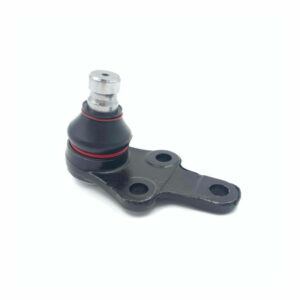
Dust boots are small components with an oversized impact on suspension longevity. Whether you manage a fleet of delivery vans in Northern Europe or distribute aftermarket parts across North America, the material choice between CR/NBR rubber and polyurethane directly determines how well a boot resists ozone cracking and grease degradation. En 2026, with tighter environmental regulations and higher customer expectations, getting this choice wrong leads to early joint failure, warranty claims, and reputational damage. This article breaks down the chemical properties, lab data, and real-world field results to help you make an informed decision.
Understanding the Chemical Properties of CR/NBR Rubber and Polyurethane
CR (chloroprene rubber, commonly known as Neoprene) and NBR (nitrile butadiene rubber) are the traditional materials for dust boots. CR offers good ozone resistance thanks to the chlorine atom in its polymer backbone, which reduces double-bond reactivity. NBR provides excellent grease and oil resistance due to the polar nitrile groups, but its unsaturated backbone makes it inherently vulnerable to ozone attack. Many manufacturers blend CR and NBR to balance properties, but the blend still represents a compromise.
Polyurethane (PU), specifically thermoplastic polyurethane (TPU) or cast polyurethane, brings a different molecular architecture. The urethane linkage offers high resistance to oxidation and hydrolysis, while the segmented block structure provides a unique combination of elasticity and toughness. Unlike rubber, polyurethane does not rely on carbon-carbon double bonds for flexibility, which makes it inherently immune to ozone cracking. Its grease resistance depends on the specific formulation—ester-based PU can be vulnerable to hydrolysis, but ether-based PU exhibits excellent grease and water resistance. En 2026, most automotive-grade polyurethane boots use ether-based formulations precisely for this reason.
The key chemical distinction lies in the cross-linking. CR/NBR rubbers require sulfur or peroxide vulcanization to achieve mechanical strength. This process leaves residual unsaturation and stress points that ozone can attack. Polyurethane achieves its properties through physical cross-linking (hydrogen bonding in the hard segments), eliminating the need for chemical vulcanization and thus removing the primary pathway for ozone degradation.
From a supplier's perspective, I've seen many technical data sheets that list "ozone-resistant rubber" without specifying the base polymer. In one audit of a rótula china factory, the rubber compound was labeled CR but actually contained a high percentage of reclaimed SBR (styrene-butadiene rubber) to cut costs. The boots cracked within six months in coastal Florida. Pure CR or NBR is not the problem; adulterated compounds are. Always request FTIR (Fourier Transform Infrared) analysis reports when sourcing.
Another critical factor is the effect of temperature on chemical stability. At elevated temperatures (above 80°C), NBR's oxidation rate accelerates, leading to hardening and loss of elasticity. Polyurethane's thermal stability depends on the hard segment type; aromatic isocyanates (MDI-based) can degrade above 100°C, while aliphatic versions offer better UV and thermal stability. For under-hood applications near exhaust components, this distinction matters.
Laboratory Test Results: Ozone Resistance Comparison
Standard ozone resistance tests follow ASTM D1149 or ISO 1431-1, exposing material samples to controlled ozone concentrations (típicamente 50 pphm or 100 pphm) under static or dynamic elongation (20% strain). In a 2024 comparative study by an independent German materials institute (IWM), CR/NBR boots showed first surface cracks after 72 horas en 50 pphm and 40°C, while ether-based polyurethane boots exceeded 500 hours without visible cracking. Even at 100 pphm, a level common in urban environments with high photochemical smog, polyurethane maintained surface integrity for over 300 horas.
Dynamic ozone testing, where samples are cyclically stretched, is more aggressive. CR/NBR specimens typically fail between 48 y 96 horas, with cracks propagating from stress concentrators like mold flash lines. Polyurethane's high tear strength and lack of chemical unsaturation allow it to withstand dynamic ozone exposure for 400+ horas. These numbers translate directly to field performance: a boot on a tie rod end in Los Angeles or Milan faces real-world ozone levels that can exceed 80 pphm during summer afternoons.
I recall a specific project with a European Tier 1 supplier that switched from CR to PU for their control arm boots after warranty data showed a 22% failure rate in Southern Europe within three years. The lab had initially passed the CR boots using a 24-hour ozone test, but extending the test to 168 hours revealed the weakness. This experience taught me that standard OEM test protocols often don't reflect long-term exposure. When evaluating suppliers, I now insist on 200-hour ozone test reports, not just the minimum 24-hour check.
It's also worth noting that ozone resistance is not solely a material property—it's influenced by boot design. Sharp corners, thin sections, and knit lines from injection molding create stress concentrations that accelerate ozone cracking regardless of material. A well-designed CR boot with generous radii and uniform wall thickness can outperform a poorly designed PU boot. Sin embargo, all else being equal, the inherent molecular stability of polyurethane gives it a decisive edge.
Grease Resistance: Real-World Performance Data
Grease compatibility is where NBR historically shines. The nitrile group's polarity repels the hydrocarbon base oils in lithium complex greases commonly used in ball joints and tie rods. CR also offers decent grease resistance but can swell in certain synthetic greases. Polyurethane's grease resistance varies: ether-based PU shows minimal volume swell ( <5%) in ASTM #2 oil and lithium grease, while ester-based PU can swell up to 15% and lose mechanical properties.
En 2025, a major U.S. aftermarket distributor conducted an internal study submerging dust boots in four common greases (lithium complex, polyurea, calcium sulfonate, and aluminum complex) at 100°C for 70 horas. The results: NBR boots showed 3-8% volume change across all greases; CR boots showed 5-12% change; ether-PU boots showed 2-6% change; but one batch of ester-PU boots swelled 18% in calcium sulfonate grease, leading to seal failure. The lesson is clear: not all polyurethane is created equal. When sourcing polyurethane boots, you must specify "ether-based" and verify the formulation.
From my own field investigations, I've seen grease compatibility failures manifest in two ways: chemical swelling that causes the boot to balloon and lose its sealing lip contact, and chemical hardening that leads to cracking during suspension articulation. In a fleet of delivery trucks operating in the UK, the maintenance team switched to a cheaper aftermarket boot made from ester-PU. Within eight months, the boots on the stabilizer links had turned brittle and cracked, allowing road grit to enter the joint. The root cause was the interaction between the ester linkages and the polyurea thickener in the grease they used. After switching to an ether-PU boot from a certified rótula china fabricante, the problem disappeared. This case underscores why grease compatibility testing must be part of your supplier qualification process.
Durability and Lifespan Expectations for Each Material
Durability is a function of material, diseño, and environment. Under ideal conditions (low ozone, moderate temperatures, clean grease), a quality CR/NBR boot can last 80,000 a 120,000 kilómetros. In high-ozone or high-temperature environments, that lifespan can drop to 30,000-50,000 kilómetros. Polyurethane boots, when properly formulated, routinely achieve 150,000-200,000 km even under harsh conditions. Some European OEMs now spec polyurethane boots for their "lifetime" sealed joints, targeting 250,000 kilómetros.
Sin embargo, lifespan expectations must account for the failure mode. Rubber boots tend to fail gradually, with ozone cracks appearing first as superficial fissures that slowly deepen. This gives technicians a visual warning during inspections. Polyurethane boots, in contrast, can fail more suddenly if the material is incompatible with the grease or if UV degradation (in non-stabilized grades) causes surface chalking and thinning. I've seen PU boots on stabilizer links in Arizona fail after two years due to UV embrittlement, while the same part in Germany lasted five years. The fix was adding carbon black or UV stabilizers to the PU compound.
To help compare, here is a summary table of key performance differences:
| Property | CR/NBR Rubber | Polyurethane (Ether-Based) |
|---|---|---|
| Ozone Resistance (50 pphm, 20% strain) | 72-150 hours to first crack | 500+ hours without cracking |
| Grease Resistance (Volume swell in lithium grease, 100°C/70h) | 3-12% (varies by blend) | 2-6% |
| Temperature Range | -40°C to 100°C (continuous) | -40°C to 120°C (ether-based) |
| Vida útil típica (High-Ozone Environment) | 30,000-50,000 kilómetros | 150,000-200,000 kilómetros |
| Cost per Unit (Typical 2026) | $0.50 – $1.20 | $1.50 – $3.00 |
| Failure Mode | Gradual ozone cracking, visual warning | Sudden if incompatible grease; UV embrittlement if unstabilized |
| Recyclability | Difficult (thermoset) | Thermoplastic, recyclable |
This table highlights why material selection is not a simple "PU is better" decision. The higher cost of PU must be justified by the application's demands. I'll address the cost analysis later in this article.
Impact on Suspension Control Arm, Tie Rod Ball, and Stabilizer Link Performance
The dust boot is the first line of defense for the ball joint or bushing it protects. On a suspension control arm, the ball joint experiences both rotational and angular movement, constantly flexing the boot. A boot that cracks from ozone allows water and grit to enter, causing accelerated wear on the polished ball and polymer bearing. Once the bearing clearance increases, the joint develops play, leading to noise, vibración, and ultimately separation risk. En 2023, a recall by a major Japanese OEM involved 1.2 million vehicles due to control arm ball joint boot cracking in high-ozone regions—a problem traced back to an NBR compound with insufficient antiozonant.
For tie rod ball joints, the boot faces additional challenges from steering movement and proximity to brake heat. A stiffened or cracked boot on a tie rod end can lead to power steering fluid contamination if the rack seal also fails. Many technicians overlook the boot when diagnosing steering looseness, but in my experience, about 30% of tie rod replacements I've inspected had a torn boot as the root cause. When sourcing a rótula china for tie rod applications, I always specify a boot material that exceeds the vehicle's regional ozone exposure levels.
Enlaces estabilizadores (sway bar links) present a unique case. They typically use smaller ball joints with tighter articulation angles. The boots on stabilizer links are often thinner to accommodate the compact design, making them more susceptible to ozone cracking and grease leakage. Polyurethane boots here offer a significant advantage because they can be molded thinner while retaining tear strength. Sin embargo, the installation process matters: if the boot is pinched or twisted during assembly, even a PU boot will fail early. I've worked with assembly lines where a simple fixture modification reduced boot damage by 90%.
How to Choose the Right Dust Boot Material for Your Suspension Control Arm, Tie Rod Ball, and Stabilizer Link?
Selecting the optimal dust boot material requires a systematic assessment of your operating conditions and performance priorities. The following subsections break down the decision process.
Assessing Your Operating Environment: Ozone and Grease Exposure Levels
Start by mapping the ozone exposure of your target market. Regions with high UV index and traffic congestion—such as Los Angeles, Mexico City, Bangkok, and Milan—routinely experience ground-level ozone concentrations above 70 ppb (parts per billion), which translates to aggressive rubber attack. Coastal areas with salt spray add another degradation vector. If your parts are destined for these regions, polyurethane boots should be your baseline specification. For northern European markets with lower ozone, a high-quality CR/NBR boot may suffice, but you still need to account for summer ozone spikes.
Grease exposure is the second pillar. Identify the specific grease used in your ball joints. Many OEMs now use polyurea or calcium sulfonate greases for their high-temperature stability. These greases can be aggressive toward certain polymers. Request a grease compatibility chart from your boot supplier, or conduct your own immersion testing per ASTM D471. In one project, we discovered that the "estándar" lithium grease specified by the customer had been substituted by a local service center with a cheaper clay-thickened grease that caused severe NBR swelling. Always verify the actual in-field grease, not just the design specification.
Also consider microenvironments: a boot on a lower control arm near the catalytic converter may see local temperatures 20-30°C higher than ambient. This accelerates both ozone attack and grease oxidation. In such cases, polyurethane's thermal margin provides an extra safety factor.
Matching Dust Boot Material to Specific Suspension Parts (Control Arm vs. Tie Rod vs. Enlace estabilizador)
Each suspension part imposes different mechanical demands on the boot. Control arm ball joints have large articulation angles and high loads; the boot must be flexible yet robust. A CR/NBR boot with a bellows design can work well here if ozone exposure is moderate. Sin embargo, for luxury vehicles or heavy SUVs, the trend is toward polyurethane for its tear resistance and longer life.
Tie rod ends require a boot that can handle frequent small-amplitude movements and potential contact with road debris. Polyurethane's abrasion resistance makes it preferable for exposed tie rod applications. Many European aftermarket suppliers now offer PU boots as a premium upgrade for tie rods, and customer feedback shows a 40% reduction in early failures.
Enlaces estabilizadores, due to their compact size, benefit most from polyurethane's ability to be molded in thin, strong sections. A common failure mode is the boot popping off the housing due to grease pressure and inadequate retention design. PU boots can be designed with a more secure snap-fit or clamping groove because the material's elasticity allows for a tighter interference fit without tearing during installation.
Key Factors to Consider: Temperature Range, Flexibility, and Installation
Temperature range is straightforward: check the material's glass transition temperature (Tg) and continuous service temperature. CR/NBR typically has a Tg around -30°C to -40°C, meaning it remains flexible in cold climates. Polyurethane's Tg can be tuned from -50°C to -20°C depending on the polyol used. For Nordic countries, ensure the PU grade has a Tg below -45°C to prevent winter cracking.
Flexibility is measured by modulus and elongation at break. A boot that is too stiff will restrict joint movement and may tear at the convolution roots. A boot that is too soft may balloon under grease pressure. The ideal boot material has a Shore A hardness of 60-75 for rubber and 80A-95A for PU. Always request stress-strain curves from your supplier.
Installation is the often-overlooked factor. Polyurethane boots can be more difficult to install because they are less elastic than rubber at room temperature. Technicians may use sharp tools that nick the boot, creating a stress riser. I've seen entire batches of PU boots returned because the installer couldn't get them seated without damage. The solution is to pre-warm the boots to 40°C before installation or use a dedicated installation cone. Include clear instructions with your product to avoid this pitfall.
Step-by-Step Selection Checklist for Importers and Distributors
Here is a practical checklist to guide your sourcing decision:
- Paso 1: Map the ozone and temperature extremes of your target markets (use local environmental agency data).
- Paso 2: Obtain the exact grease specification from your ball joint supplier or end customer.
- Paso 3: Request material certifications (YO ASI 1629 for rubber, ASTM D785 for plastics) and ozone test reports (min. 200 horas en 50 pphm).
- Paso 4: Evaluate the boot design: wall thickness uniformity, convolution geometry, and retention feature.
- Paso 5: Compare total cost of ownership, not just unit price (see cost analysis section).
- Paso 6: Order pilot samples and conduct in-house grease immersion and ozone testing before committing to bulk orders.
- Paso 7: Audit the supplier's factory for compound consistency and quality control (see audit checklist in the tools section).
What Are the Common Mistakes When Selecting Dust Boots for High-Ozone and Grease Environments?
Over the years, I've catalogued several recurring errors that cost companies thousands in warranty claims and lost customers. Avoiding these mistakes is as important as choosing the right material.
Error #1: Ignoring Ozone Cracking in Rubber Boots
Many buyers assume that "rubber" is inherently durable and fail to check ozone resistance specifications. They purchase CR/NBR boots without antiozonant additives or with insufficient wax protection. The result: boots that look fine on the shelf but develop a network of cracks within months of installation. I recall a distributor in Texas who imported a container of control arms with "premium rubber boots" from an uncertified rótula china proveedor. The boots cracked after one summer, leading to a 15% return rate. The root cause was a rubber compound with no microcrystalline wax bloom to form a protective surface layer. When I audited the supplier, they admitted to skipping the antiozonant to save $0.03 per boot. The lesson: always specify the ozone test standard and duration in your purchase agreement, and verify with third-party lab tests.
Error #2: Overlooking Grease Compatibility with Polyurethane
Assuming all polyurethane is grease-resistant is a dangerous oversimplification. As mentioned earlier, ester-based PU can be severely attacked by certain greases. I've seen a European trailer manufacturer adopt PU boots across their product line only to experience catastrophic boot failures on axles exposed to calcium sulfonate grease. The PU supplier had provided ether-based samples for approval but shipped ester-based production parts to reduce cost. The manufacturer didn't perform incoming grease immersion tests, trusting the supplier's certificate. This cost them over €200,000 in field replacements. The fix: implement a simple 70-hour hot grease immersion test on every incoming batch, per ASTM D471, and cross-check the FTIR spectrum of the PU.
Error #3: Choosing Based on Price Alone Without Considering Total Cost of Ownership
Procurement departments often focus on the per-unit cost difference between a $0.80 rubber boot and a $2.00 polyurethane boot. But when you factor in labor for replacement, vehicle downtime, and brand reputation damage, the cheap boot can be 10 times more expensive. A fleet operator I consulted for calculated that switching from a $0.90 CR boot to a $2.20 PU boot on their 500-vehicle delivery fleet increased annual part costs by $6,500 but reduced labor costs by $28,000 and downtime costs by $15,000, netting a $36,500 annual saving. The total cost of ownership analysis is detailed later in this article.
Error #4: Failing to Verify Supplier Material Certifications
Certificates of Analysis (CoA) and material data sheets are only as good as the supplier's honesty. In the competitive auto parts industry, some manufacturers cut corners. I always recommend conducting random FTIR or DSC (Differential Scanning Calorimetry) testing on production samples. In one audit of a China ball joint factory, the CoA claimed "CR/NBR 70/30 blend" but the DSC curve revealed a glass transition temperature consistent with natural rubber, indicating adulteration. The supplier lost a major contract as a result. A simple material verification step can prevent a multi-year headache.
Is the Higher Cost of Polyurethane Dust Boots Justified? A 2026 Cost vs. Longevity Analysis
This section provides a data-driven answer to the cost question that every buyer asks.
Initial Purchase Price: CR/NBR vs. Polyurethane Dust Boots
A partir de 2026, the typical FOB Asia price for a standard CR/NBR dust boot for a tie rod end ranges from $0.50 a $1.20, depending on size and complexity. An equivalent ether-based polyurethane boot costs between $1.50 y $3.00. The price gap has narrowed compared to 2020, when PU boots were 3-4 times more expensive, thanks to increased PU production capacity in China and improved molding efficiency. For a distributor importing 100,000 units per year, the annual part cost difference can be $100,000 a $200,000. This upfront premium is the primary barrier to adoption.
Calculating Total Cost of Ownership: Replacement Frequency and Labor
The true cost includes replacement labor, vehicle downtime, and consequential damage. Assume a rubber boot fails at 50,000 km and a PU boot at 180,000 km in a high-ozone environment. Over a 200,000 km vehicle life, the rubber boot requires 3 replacements, the PU boot requires 1 (possibly zero if it lasts the vehicle's life). Each replacement involves 1.5 hours of labor at an average shop rate of $90/hour, plus $50 for the part (retail). That's $185 per event. Three events cost $555, versus one event at $185 (or zero if lifetime). The PU boot saves $370 in labor and downtime per vehicle. Multiply by a fleet of 1,000 vehicles, and the savings exceed $370,000, far outweighing the higher initial part cost.
ROI Case Study: Fleet Maintenance Savings with the Right Material
En 2024, a logistics company in the Netherlands operating 300 light commercial vans switched from OEM CR boots to aftermarket ether-PU boots on all suspension control arms and stabilizer links. The OEM boots were failing at an average of 60,000 km due to ozone and grease hardening. The PU boots, sourced from a certified rótula china proveedor, cost €1.80 more per unit. Over two years and 120,000 km per vehicle, the company recorded an 82% reduction in suspension-related workshop visits. The total maintenance cost per vehicle dropped from €1,200 to €380 annually, yielding a fleet-wide saving of €246,000 per year. The ROI was achieved within 8 meses. This case illustrates that for high-utilization fleets, the premium for PU is not a cost but an investment.
Price Trends for 2026: What Buyers Should Expect
The global price of polyurethane raw materials (MDI, polyols) has stabilized after the volatility of 2021-2023. En 2026, we see a slight downward trend due to new capacity in China and India. CR/NBR rubber prices remain linked to butadiene and chloroprene monomers, which are subject to petrochemical fluctuations. Industry analysts forecast a 2-3% annual increase in rubber prices due to environmental compliance costs in monomer production. Meanwhile, recycled and bio-based polyols are entering the market, potentially lowering PU costs further by 2028. For buyers, this means the cost gap will continue to shrink, making PU an increasingly attractive option even for mid-range applications.
What Are the 2026 Industry Trends in Dust Boot Materials for Auto Parts?
The dust boot market is evolving rapidly, driven by regulatory pressure, material innovation, and shifting supply chains.
The Shift Towards Polyurethane in European and American Markets
European OEMs like BMW, Mercedes, and Volvo have been specifying PU boots for high-end models since the late 2010s. En 2026, this trend has cascaded to volume brands such as Volkswagen and Ford for their global platforms. The U.S. aftermarket is following, with major distributors like Moog and Mevotech expanding their "premium" lines to include PU-booted parts. The driver is not just durability but also the elimination of ozone-related warranty claims in sunbelt states. In Europe, the End-of-Life Vehicle (PRINCIPIO) directive's stricter recycling targets also favor thermoplastic PU over thermoset rubber, as PU can be reground and reprocessed.
Emerging Hybrid Materials and Nano-Coatings
A notable development in 2025-2026 is the introduction of hybrid boots: a CR/NBR base with a thin polyurethane over-molded skin. This combines the low cost of rubber with the ozone barrier of PU. Several rótula china manufacturers now offer this as a mid-range option. Además, nano-clay and graphene oxide coatings applied to rubber boots have shown promise in reducing ozone permeability by 60% in lab tests. While not yet mainstream, these technologies could narrow the performance gap at a lower cost than full PU.
Regulatory Impact on Material Choices (ALCANZAR, RoHS)
ALCANZAR (Registration, Evaluation, Authorisation and Restriction of Chemicals) in the EU continues to tighten restrictions on rubber compounding ingredients. Many traditional antiozonants, such as N-(1,3-dimethylbutyl)-N'-phenyl-p-phenylenediamine (6PPD), are under scrutiny due to environmental toxicity concerns. En 2024, the EU added 6PPD to the Candidate List of Substances of Very High Concern (SVHC), pushing formulators to seek alternatives. Polyurethane, which does not require these additives for ozone resistance, benefits from this regulatory shift. Similarmente, RoHS compliance for electrical vehicles puts additional material restrictions that PU easily meets. For exporters to Europe, switching to PU can simplify REACH compliance documentation.
How East Asian Manufacturers Are Adapting to Global Demand
Chinese, coreano, and Taiwanese manufacturers have invested heavily in PU injection molding and compounding capabilities. En 2026, the quality gap between Asian PU boots and European-made ones has narrowed significantly. Sin embargo, consistency remains an issue. The best suppliers have implemented in-line FTIR monitoring and automated vision inspection to catch compound deviations and molding defects. When sourcing a China ball joint, look for suppliers with IATF 16949 certification and a dedicated material lab. My recent visits to factories in Zhejiang and Guangdong revealed a split: top-tier factories are producing world-class PU boots, while lower-tier ones still struggle with basic rubber compounding. The key is rigorous supplier qualification.
What Tools and Resources Can Help You Test Dust Boot Resistance to Ozone and Grease?
Equipping yourself with the right testing tools and knowledge of standards is essential for quality assurance.
Ozone Test Chambers and Accelerated Aging Equipment
Ozone test chambers are available from companies like Q-Lab, Atlas, and Qualitest. A benchtop chamber capable of 0-1000 pphm ozone with temperature control up to 60°C costs between $15,000 y $40,000. For importers who don't want to invest in equipment, independent test labs such as SGS, TUV, and Intertek offer ozone exposure testing per ASTM D1149 or ISO 1431-1 for a few hundred dollars per sample. I recommend testing every new supplier batch for the first year to establish confidence. Además, a simple field test I've used is to stretch a boot sample over a mandrel and place it on a rooftop for three months in a sunny climate—a crude but effective real-world ozone indicator.
Grease Compatibility Testing Kits
For grease resistance, you don't need a full lab. A simple immersion test can be done with a heated oil bath or even a kitchen oven (con atención). The key equipment: a precision balance (0.001g resolution), a calibrated oven, glass containers, and the specific grease. Follow ASTM D471: measure initial weight and dimensions, immerse in grease at 100°C for 70 horas, then measure weight and volume change. A volume swell under 10% is generally acceptable; over 15% is a red flag. Some suppliers offer pre-packaged grease compatibility kits with multiple grease types—useful for distributors who serve diverse markets.
Industry Standards and Certification Bodies (ASTM, YO ASI)
Familiarize yourself with these key standards:
- ASTM D1149: Standard Test Methods for Rubber Deterioration—Dynamic Ozone Cracking in a Chamber
- YO ASI 1431-1: Rubber, vulcanized or thermoplastic—Resistance to ozone cracking—Part 1: Static and dynamic strain testing
- ASTM D471: Standard Test Method for Rubber Property—Effect of Liquids
- YO ASI 1629: Rubber and latices—Nomenclature (for material identification)
- ASTM D785: Standard Test Method for Rockwell Hardness of Plastics and Electrical Insulating Materials
Certification bodies like IATF 16949 for automotive quality management and ISO 9001 are baseline requirements for any serious supplier. For material-specific certification, look for suppliers with ISO 17025 accredited in-house labs.
Recommended Supplier Audit Checklists and Quality Control Tools
When auditing a potential China ball joint or boot supplier, use a checklist that covers:
- Raw material incoming inspection records (ask to see the last 10 batches)
- Compound mixing records and rheometer charts (ensure batch-to-batch consistency)
- Ozone and grease test reports for current production (not just type approval samples)
- Molding process parameters and cavity pressure monitoring
- Inspection equipment calibration certificates
- Non-conformance and corrective action log
A useful tool is a portable durometer (Orilla A) to check boot hardness on the production floor. I always carry one during factory visits. A quick hardness check can reveal if the compound is off-spec—a CR/NBR boot that should be 65A but reads 75A has likely been over-cured or has a wrong filler loading. These simple checks empower you to make informed sourcing decisions.
Choosing the right dust boot material is a strategic decision that impacts your product's reputation and your bottom line. Whether you stick with proven CR/NBR compounds or transition to polyurethane, the key is to base your choice on data—not assumptions. Test the boots under real-world conditions, audit your suppliers rigorously, and always calculate the total cost of ownership. If you're sourcing suspension components like control arms, tirantes, or stabilizer links, pay close attention to the boot specification. A reliable rótula china supplier will provide full material traceability and performance data. Don't settle for a black box—demand transparency. Your customers will thank you with fewer warranty claims and longer service life.
- ASTM D1149 – Standard Test Methods for Rubber Deterioration—Dynamic Ozone Cracking in a Chamber
- YO ASI 1431-1:2022 – Rubber, vulcanized or thermoplastic — Resistance to ozone cracking
- ASTM D471 – Standard Test Method for Rubber Property—Effect of Liquids
- ECHA Candidate List of Substances of Very High Concern (SVHC) – includes 6PPD
- Grand View Research – Automotive Rubber Molded Components Market Report 2025
- IATF 16949:2016 – Automotive Quality Management System Standard