


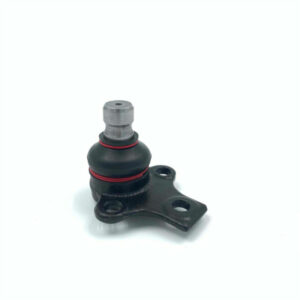
What Is OE Matching and Why Is It Critical for Chassis Parts Suppliers?
Defining OE Matching: More Than Just Dimensions
OE matching refers to the process of ensuring that a replacement part conforms exactly to the specifications of the Original Equipment component. For chassis parts like control arms, extremos de la barra de dirección, and stabilizer links, this goes far beyond simple dimensional accuracy. True OE matching encompasses material composition, heat treatment processes, surface coatings, and even the durometer of rubber bushings. A part that measures correctly but uses inferior steel will fail prematurely under load. Suppliers who treat OE matching as a box-ticking exercise risk catastrophic failures in the field—and the reputational damage that follows.
In the suspension system, every millimeter and every grade of steel matters. A ball joint with a slightly undersized ball stud or inadequate grease retention can lead to excessive play, ruido, y finalmente, separation. That’s why leading buyers now demand full material certifications and production process documentation, not just dimensional reports.
The Impact of OE Standards on Suspension Control Arms, Bolas de barra de acoplamiento, and Stabilizer Links
Control arms must withstand lateral and longitudinal forces while maintaining precise wheel alignment. OE standards specify not only the geometry but also the fatigue life under cyclic loading. For tie rod ends, the articulation angle and torque specifications are critical for steering responsiveness and safety. Enlaces estabilizadores, though seemingly simple, require exact bushing compounds to prevent squeaks and premature wear. When sourcing from China ball joint suppliers , verifying that their internal standards align with OE requirements is a non-negotiable step.
I’ve observed that many aftermarket failures trace back to deviations in heat treatment. A control arm that meets dimensional specs but hasn’t been properly induction-hardened will bend under impact. OE matching means replicating the entire manufacturing process, not just the final shape.
Why Top Buyers Prioritize OE Matching in Their Supplier Selection
For distributors and retailers, the cost of a single recall can wipe out months of profit. That’s why procurement teams at leading automotive chains now rank OE matching capability above price in their supplier scorecards. They look for ISO/TS 16949 proceso de dar un título, in-house testing labs, and a track record of zero-defect deliveries. A supplier that can provide first-article inspection reports and PPAP (Proceso de aprobación de piezas de producción) documentation immediately gains a competitive edge.
Beyond risk mitigation, OE-matched parts command higher margins and foster customer loyalty. When a workshop installs a control arm that fits perfectly and lasts as long as the original, they’re likely to reorder from the same brand. This repeat business is the lifeblood of the aftermarket.
Case Examples: Success and Failure Stories in OE Matching
Consider a European distributor that switched to a low-cost stabilizer link supplier without auditing their OE matching process. Within six months, warranty returns spiked to 12% due to bushing degradation. The distributor not only lost money on replacements but also damaged relationships with key workshops. En contraste, a North American importer that invested in rigorous sample testing and on-site audits of their Asian partners saw their return rate drop below 0.5% and gained exclusive contracts with major retail chains.
These stories underscore a simple truth: in chassis components, OE matching isn’t a luxury—it’s the foundation of a sustainable supply chain.
How to Cross-Reference Chassis Parts Like a Pro: A Step-by-Step Tutorial
Decoding Part Numbers: OEM, OES, and Aftermarket Codes
Before diving into databases, you need to understand the language of part numbers. OEM (Fabricante de equipos originales) numbers are assigned by the vehicle maker (p.ej., Vado, Toyota). OES (Original Equipment Supplier) numbers come from the actual component manufacturer (p.ej., TRW, Lemförder). Aftermarket brands then create their own cross-reference codes. A single OEM number can map to dozens of aftermarket numbers, but not all are true OE matches. Learning to distinguish between a direct replacement and a “will-fit” is the first skill every buyer must master.
I always start by collecting the OEM number from the vehicle’s VIN or the part itself. Then I cross-check the OES number to identify the original supplier. This two-step approach filters out low-quality alternatives that only match by dimension.
Paso 1: Gathering Accurate Vehicle and Part Data
Accurate cross-referencing begins with precise inputs. You need the vehicle’s make, modelo, año, engine type, and sometimes the chassis code. For suspension parts, factors like drive configuration (FWD vs RWD) and suspension package (standard vs sport) can change the part specification. I’ve seen countless errors stem from assuming all variants of a model use the same control arm. Always verify using the VIN or the original part’s stamped number.
Take clear photos of the old part, including any casting numbers or labels. These details become invaluable when manufacturer catalogs have ambiguous listings.
Paso 2: Using Online Cross-Reference Databases Effectively
Platforms like TecDoc, PartsLink24, and WHI Solutions aggregate millions of cross-references. But they’re not infallible. In my experience, about 5% of entries contain errors or omissions, especially for newer models or regional variants. I always use at least two independent databases and compare results. If discrepancies arise, I dig deeper into the manufacturer’s technical bulletins.
One trick I’ve learned: search by the OES number rather than the OEM number. OES numbers tend to be more stable across regions and less prone to supersession confusion. Por ejemplo, when cross-referencing a BMW control arm, the Lemförder number often yields more accurate aftermarket matches than the BMW part number alone.
Paso 3: Verifying Specifications with Manufacturer Catalogs
Online databases should be your starting point, not your final answer. Download the latest PDF catalogs from the aftermarket brand’s official website. Check the dimensional drawings, especificaciones de materiales, and application notes. Look for footnotes about regional restrictions or production date breaks. I once missed a note about a mid-year design change on a Honda Civic control arm, resulting in a 20% return rate until I corrected the listing.
Many top-tier suppliers now offer interactive catalogs with VIN decoding. These tools reduce human error but still require a knowledgeable eye to spot inconsistencies.
Paso 4: Physical Sample Validation and Quality Checks
Even after all digital checks, nothing replaces a physical sample. Order one piece and measure critical dimensions with calibrated tools. Check ball joint articulation, bushing hardness, and weld integrity. For rubber components, a simple durometer test can reveal whether the compound meets OE specs. I’ve rejected samples that passed visual inspection but failed on durometer by 5 points—enough to cause early failure.
This step is especially crucial when dealing with new suppliers or unfamiliar brands. The cost of a sample and an hour of inspection can save thousands in warranty claims down the line.
OE vs Aftermarket Chassis Parts: Which One Should You Choose?
Quality and Durability Face-Off: Lab Tests and Field Data
Independent studies by organizations like the Auto Care Association have shown that premium aftermarket chassis parts can match or exceed OE durability when manufactured to OE specs. Sin embargo, the market is flooded with economy-grade parts that cut corners. In lab fatigue tests, OE control arms typically withstand over 500,000 cycles without cracking, while low-tier aftermarket units may fail at 150,000 ciclos. The difference lies in material grade and heat treatment.
Field data from fleet operators reveals that OE-matched aftermarket parts (often called “OE-Spec”) deliver comparable longevity to genuine dealer parts, en 30-50% lower cost. This segment is growing rapidly as buyers become more discerning.
Desglose de precios: Is OE Matching Worth the Extra Cost?
Genuine OE parts from dealerships carry a significant markup, often 2-3 times the price of an equivalent aftermarket part. But the cheapest aftermarket options can cost more in the long run due to premature failure and labor charges. The sweet spot is the mid-to-premium aftermarket range, where suppliers adhere to OE matching standards without the branding premium.
| Aspecto | Genuine OE Parts | OE-Spec Aftermarket | Economy Aftermarket |
|---|---|---|---|
| Material Grade | Exact OE spec | Matches or exceeds OE | Often lower grade |
| Durability (avg. ciclos) | 500,000+ | 450,000+ | 150,000-300,000 |
| Price Index | 100% | 50-70% | 20-40% |
| Garantía | 2-3 años (limitado) | 2-5 años (often better) | 1 year or less |
| Compatibility | Garantizado | Requires verification | Risk of fitment issues |
This table highlights why more workshops are switching to OE-Spec aftermarket parts. The initial savings are substantial, and the risk is minimal when you source from reputable suppliers with proven OE matching processes.
Compatibility and Warranty: What Buyers Need to Know
Warranty terms often reveal a supplier’s confidence in their OE matching. Brands offering 3-year or 36,000-mile warranties on chassis parts have usually invested in rigorous testing. Always read the fine print: some warranties exclude commercial vehicles or require professional installation. En contraste, genuine OE parts typically come with a 2-year warranty but at a much higher replacement cost if something goes wrong after expiration.
The Rise of OE-Spec Aftermarket Parts: A Middle Ground?
The term “OE-Spec” is not regulated, so buyers must verify claims. Look for suppliers that publish their testing protocols and material certifications. The best ones provide batch-specific test reports. This transparency is reshaping the industry, pushing economy players to improve or exit. For chassis parts, the future belongs to those who can prove their OE matching, not just claim it.
What Are the Common Mistakes in Cross-Referencing Suspension Components?
Error #1: Trusting Visual Similarity Over Spec Sheets
I’ve seen buyers place bulk orders based on a smartphone photo comparison. A control arm may look identical but have a different ball joint taper angle or bushing inner diameter. en un caso, a client imported 500 pieces that visually matched the sample but had a 0.5mm difference in the bushing sleeve, causing installation failures across multiple vehicle trims. Always overlay the manufacturer’s 2D drawing with your measurements.
Error #2: Ignoring Regional OE Variations (EU vs US vs Asia)
Vehicle manufacturers often tune suspension components for regional markets. A Toyota Camry sold in Europe may have stiffer bushings than the US version. Similarmente, Asian-market Honda models sometimes use different ball joint designs than their North American counterparts. I learned this lesson when a batch of tie rod ends sourced for the European market turned out to be for Middle East spec vehicles—the thread pitch was different, leading to a 100% return.
Always check the market code in the parts catalog. Don’t assume that a single OEM number covers all regions.
Error #3: Overlooking Material Grades and Heat Treatment
Material specs like 40Cr steel vs 45# steel can make or break a suspension part. Some suppliers substitute materials to cut costs, relying on the fact that visual inspection won’t catch it. I now require a spectrometer analysis report for every new SKU. In one audit, we found that a stabilizer link batch had lower carbon content than specified, reducing fatigue strength by 30%. Without that check, those parts would have failed in the field within months.
Error #4: Using Outdated or Unverified Cross-Reference Data
Cross-reference databases are living documents. Part numbers get superseded, and new applications are added. Relying on a 2018 catalog for a 2025 vehicle is asking for trouble. I’ve made it a habit to check for updates quarterly and to verify any cross-reference that hasn’t been confirmed by at least three independent sources. When in doubt, contact the manufacturer directly.
Error #5: Skipping Physical Sample Testing Before Bulk Orders
This is the most expensive mistake. Even if all digital checks pass, manufacturing variances can occur. A pre-production sample might be perfect, but the mass production batch could drift. I always request a random sample from the first production run and perform a full dimensional and material inspection. Only after that do I release the balance payment. This practice has saved my clients tens of thousands in potential losses.
How Much Does Poor OE Matching Cost Your Business? An ROI Analysis
The Hidden Costs: Returns, Warranty Claims, and Legal Issues
A 2% return rate on a $100,000 order might seem manageable—$2,000 in refunds. But when you factor in shipping, restocking, customer service time, and lost future sales, the true cost can exceed 10% of revenue. For chassis parts, a single catastrophic failure can lead to legal liability if an accident occurs. The average cost of a product liability lawsuit in the automotive sector exceeds $500,000, not including reputational damage.
Warranty claims also erode margins. A part sold for $50 with a 10% margin yields $5 profit. One warranty replacement wipes out the profit from 10 unidades. If your return rate is 5%, you’re essentially breaking even or losing money on that SKU.
Calculating ROI: Investing in Quality OE-Matched Parts
Let’s compare two scenarios: Supplier A offers a control arm at $30 with an estimated return rate of 8%. Supplier B offers an OE-matched control arm at $45 with a 0.5% return rate. Encima 1,000 unidades, Supplier A costs $30,000 upfront but incurs $4,800 in direct return costs plus $10,000 in lost customer goodwill (estimated). Total: $44,800. Supplier B costs $45,000 upfront with $450 in returns. Total: $45,450. The difference is just $650, but Supplier B’s parts build a reputation for reliability, leading to repeat orders and higher lifetime value. The ROI of quality becomes clear when you look beyond the invoice price.
How to Evaluate a Supplier’s OE Matching Capability to Reduce Risk
When I assess a new supplier, I look for five things: 1) In-house testing lab with fatigue and material analysis equipment, 2) Documented PPAP submissions for previous clients, 3) YO ASI 9001 or IATF 16949 proceso de dar un título, 4) A clear process for handling engineering changes, y 5) Willingness to share first-article inspection reports. A supplier that hesitates on any of these points is a red flag.
I also recommend a trial order with 100% inspection before scaling up. The cost of inspection is a fraction of the potential loss from a bad batch.
Long-Term Gains: Customer Loyalty and Brand Reputation
Workshops remember which parts fit right the first time and which ones cause comebacks. A reputation for quality OE-matched chassis parts can command premium pricing and secure long-term contracts. In a market where online reviews can make or break a brand, investing in OE matching is not an expense—it’s the most cost-effective marketing strategy you can have.
What Are the 2026 Trends in Chassis Parts Sourcing and Cross-Referencing?
AI and Machine Learning in Automated Cross-Referencing
By 2026, AI-powered platforms are transforming cross-referencing. These systems analyze millions of data points—including warranty claims, fitment feedback, and material specs—to predict the most accurate matches. Some tools now offer image recognition: snap a photo of a part, and the AI suggests possible OEM numbers. While still in early stages, these technologies reduce human error significantly. Sin embargo, they’re not foolproof; human oversight remains essential for critical chassis components.
Blockchain for Traceability: Ensuring Authentic OE-Matched Parts
Counterfeit parts are a growing problem, especially in the chassis segment where failures can be deadly. Blockchain-based traceability systems allow buyers to verify a part’s entire journey from raw material to finished product. Several leading suppliers are piloting “digital passports” for each batch, recording material certifications, production dates, and test results on an immutable ledger. This trend will accelerate as electric vehicles demand even tighter tolerances.
Electric Vehicles and Their Impact on Chassis Part Specifications
EVs are heavier and have different weight distributions than ICE vehicles, placing new demands on suspension components. Control arms and ball joints must handle higher static loads and instant torque. OE matching for EV chassis parts requires updated testing protocols. Cross-referencing becomes trickier because many EV models share platforms with ICE variants but use unique suspension part numbers. Buyers must be extra vigilant to avoid mismatches.
Sustainability Trends: New Materials and Their Cross-Referencing Challenges
Lightweighting trends are introducing materials like aluminum alloys, composites, and even recycled plastics into chassis parts. These materials have different fatigue characteristics and corrosion behaviors. Cross-referencing a traditional steel part to an aluminum equivalent is not straightforward—dimensional identity does not guarantee performance equivalence. Suppliers and buyers must collaborate closely to validate these new materials under real-world conditions.
What Are the Best Tools and Resources for Chassis Parts Cross-Referencing?
Arriba 5 Online Databases for Chassis Parts
1. TecDoc – The global standard for automotive aftermarket data, covering over 100,000 chassis part numbers. Its strength lies in its detailed attribute filters.
2. PartsLink24 – A web-based platform that aggregates data from multiple manufacturers, offering real-time cross-references and VIN decoding.
3. WHI Solutions (now part of Epicor) – Popular in North America, with extensive coverage of domestic and Asian vehicles.
4. MAM Software – Provides cataloging and cross-referencing tools tailored for distributors.
5. AutoCare Association’s VIP Portal – Offers access to standardized part data and cross-references for members.
When using these databases, always note the last update date. I’ve found that TecDoc tends to be most reliable for European applications, while WHI excels for US domestic models. For Asian vehicles, combining TecDoc with the manufacturer’s own EPC (Electronic Parts Catalog) yields the best results.
Mobile Apps Every Buyer Should Have for On-the-Go Cross-Referencing
Several mobile apps now put cross-referencing power in your pocket. PartCat y Auto Parts Finder allow barcode scanning and instant OEM number lookup. TecDoc Mobile gives access to their database offline after a one-time download. I use these apps during supplier visits or when inspecting samples in a warehouse—they save time and reduce reliance on memory.
Leveraging Industry Forums and Expert Networks for Verification
Online communities like Automotive Aftermarket Professionals on LinkedIn or specialized forums on ImportPartsPro can be goldmines for real-world cross-reference validation. When I encounter a questionable match, I post the details and often get feedback from technicians who have hands-on experience. This peer verification adds a layer of confidence that databases alone cannot provide.
Building Your Own Cross-Reference Database: Tips and Best Practices
For high-volume buyers, maintaining an internal cross-reference database is a strategic asset. Start by consolidating data from your top suppliers, adding your own verified notes on regional variations and quality observations. Use a cloud-based spreadsheet or a simple SQL database with fields for OEM, OES, aftermarket numbers, and validation status. Regularly audit and clean the data. Con el tiempo, this proprietary resource will speed up sourcing and reduce errors dramatically.
Mastering OE matching and cross-referencing is a continuous journey. The tools and practices outlined here can dramatically reduce your risk and increase your profitability. Start by auditing your current supplier base against the criteria discussed, and don’t hesitate to invest in sample testing and database verification. For buyers seeking reliable chassis parts partners, exploring verified networks and requesting documentation upfront pays dividends. The difference between a thriving parts business and one plagued by returns often comes down to the rigor you apply today. Take the next step—review your latest cross-reference, order that physical sample, or reach out to a supplier for their PPAP documentation. Your customers, and your bottom line, will thank you.
References and Further Reading
- TecDoc – The Global Automotive Aftermarket Data Standard
- Auto Care Association – Industry Research and Standards
- SAE International – Mobility Engineering Standards
- MEMA – Motor & Equipment Manufacturers Association
- Aftermarket News – Industry Trends and Analysis
- PartsLink24 – Online Cross-Reference Platform
- Epicor – Automotive Aftermarket Solutions (WHI Solutions)