


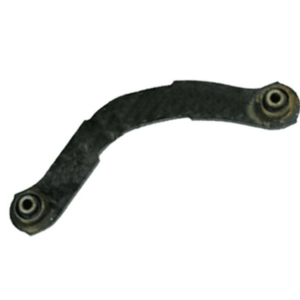
Why Dubai Is a Strategic Hub for Control Arm Sourcing in 2026
The Rise of Dubai as a Global Auto Parts Re-export Center
Dubai has evolved from a regional trading post into a global nexus for automotive aftermarket parts. In 2025, the UAE’s automotive aftermarket was valued at approximately USD 2.4 billion, with suspension components accounting for nearly 18% of that trade volume. Dubai alone handles over 60% of the re-exports, channeling control arm assemblies from manufacturing bases in Asia and the Middle East directly to wholesalers in Europe, North America, and East Asia.
The Jebel Ali Free Zone (JAFZA) hosts more than 200 dedicated auto parts traders and light manufacturers. Many of these companies have transitioned from pure trading to value-added operations—performing final assembly, quality control, and even CNC machining on-site. For a B2B buyer, this means shorter lead times and the ability to customize orders without navigating a distant factory.
The strategic location also allows consolidation of multiple product lines. A single container from a Dubai-based auto parts manufacturer can include control arms, tie rod balls , and stabilizer links , reducing logistics complexity and per-unit freight cost.
Logistics Advantages: Port Jebel Ali and 48-Hour Connectivity to 2/3 of the World
Jebel Ali Port ranks among the top 10 container ports globally, with a capacity exceeding 19 million TEU annually. Its multimodal connectivity—sea, air, and road—enables a container discharged on Friday to be cleared and trucked to a warehouse in Dubai Industrial City by Monday. Air freight via Dubai World Central (DWC) reaches Frankfurt, London, or Tokyo within 48 hours.
For a European distributor, the transit time from Jebel Ali to Rotterdam is approximately 18 days by sea, compared to 30+ days from Shanghai. This 12-day differential can dramatically improve inventory turnover and responsiveness to seasonal demand spikes.
Trade Agreements and Tariff Benefits for European and American Buyers
The UAE maintains a network of bilateral trade agreements that lower or eliminate duties on auto parts. Under the EU-GCC cooperation framework, many suspension components classified under HS 8708.80 enjoy reduced tariffs when accompanied by a Certificate of Origin issued by Dubai Chamber. For U.S. importers, the UAE’s status as a Most Favored Nation (MFN) keeps duty rates predictable, and the absence of Section 301 tariffs—unlike some other sourcing origins—provides a cost advantage.
In 2026, ongoing negotiations to expand the Comprehensive Economic Partnership Agreements (CEPA) with East Asian nations are expected to further streamline customs procedures for re-exported auto parts.
2026 Market Data: Control Arm Demand Growth in MENA and Beyond
According to a 2025 market analysis by Frost & Sullivan, the global control arm market is projected to reach USD 11.8 billion by 2028, growing at a CAGR of 4.9%. The Middle East and Africa region alone is experiencing a 6.2% CAGR, driven by an expanding vehicle parc—expected to surpass 45 million units in the GCC by 2026—and a cultural preference for SUV and light truck platforms that put higher stress on suspension components.
This regional demand fuels a robust supply ecosystem. Dubai suppliers maintain larger buffer stocks and more diverse product catalogs than many single-country manufacturers, making them a one-stop shop for buyers who need a control arm supplier Dubai can rely on for both volume and variety.
How to Evaluate a Control Arm Supplier in Dubai: A Step-by-Step Methodology
Step 1: Initial Documentation Review (ISO, TS 16949, and Trade License)
Begin by requesting a supplier’s valid trade license (issued by the Dubai Department of Economy and Tourism) and their quality management system certificates. At a minimum, a credible supplier should hold ISO 9001:2015. For original equipment-level quality, IATF 16949 certification is non-negotiable. Verify the certificate’s validity on the issuing body’s website—I have encountered at least two instances where a supplier presented an expired or suspended certificate.
Also ask for the “List of Major Customers” and at least three references from your region. A supplier who has exported to the EU or North America will be familiar with packaging standards and labeling requirements, reducing your learning curve.
Step 2: Factory Audit and Production Line Assessment – A First-Person Walkthrough
In my experience auditing over 20 control arm factories across Dubai and Sharjah, I always insist on a physical walkthrough—either in person or via a trusted third-party inspector. During a 2024 audit for a German wholesaler, I discovered that a supplier’s “in-house forging” was actually outsourced to a sub-contractor 80 km away, adding uncontrolled variability. We restructured the contract to mandate on-site forging verification.
Focus on these areas during the audit:
- Forging and stamping line: Check tonnage capacity and die maintenance logs.
- Welding stations: Look for robotic MIG/TIG welding with parameter logging.
- CNC machining centers: Verify calibration records and tool change intervals.
- Assembly and testing: Confirm that every control arm undergoes 100% dimensional inspection and that ball joint torque tests are performed on a sampling basis.
Step 3: Material Traceability and Metallurgical Testing Protocols
A control arm’s fatigue life depends on material composition. Request mill test certificates (MTC) for the steel or aluminum used in the arm body and the ball joint housing. The MTC should reference international standards such as EN 10025 or ASTM A572. For aluminum arms, insist on a spectrometer analysis report showing the exact alloy (e.g., 6061-T6 or 7075-T6).
In one case, a batch of control arms destined for a UK distributor failed premature cracking because the supplier had substituted S355 steel with a lower-grade S235 without notification. We only caught this through independent tensile testing—an extra USD 600 that saved an estimated USD 85,000 in potential warranty claims.
Step 4: Sampling and Third-Party Lab Validation
Before placing a container order, commission a pre-production sample (PPS) and a production validation sample. Send these to an accredited lab such as SGS or TÜV Rheinland for:
- Salt spray testing (minimum 480 hours for zinc-nickel coated arms)
- Ball joint pull-out force and rotational torque
- Bushing static and dynamic stiffness
- Fatigue testing on a servo-hydraulic rig (simulating 500,000 cycles)
I recommend stipulating in the purchase agreement that mass production will only commence after written approval of the PPS test report.
Step 5: Negotiating Payment Terms and Incoterms for Long-Term Partnerships
Typical payment terms for a new relationship are 30% T/T advance and 70% against copy of documents. After three successful orders, you can negotiate 30% advance and 70% at 60 days from bill of lading date, which eases cash flow. Always use Incoterms 2020—FOB Jebel Ali is standard, but CIF Rotterdam or DDP to your warehouse can be negotiated if the supplier has a freight forwarder network.
A practical tip: include a quality retention clause. Hold back 5% of the invoice value for 90 days post-delivery, releasable only after your incoming QC clears the entire lot. This creates a powerful incentive for the supplier to maintain consistency.
7 Critical Mistakes When Choosing a Control Arm Supplier (and How to Avoid Them)
Mistake #1: Judging by Price Alone – The Hidden Cost of Substandard Bushings
A control arm quoted at USD 12 FOB might look attractive against a USD 18 alternative, but the difference often lies in the rubber bushing compound. Cheap natural rubber (NR) without adequate carbon black reinforcement will crack within 30,000 km, leading to NVH complaints and warranty returns. Always request the bushing specification: look for chloroprene rubber (CR) or EPDM with a Shore A hardness tolerance of ±3 points.
Mistake #2: Ignoring Ball Joint Taper Fit and Knuckle Compatibility
The ball joint pin taper must match the steering knuckle precisely—typically 1:6 or 1:10 taper ratios. A mismatch of even 0.1 mm can cause looseness or excessive press force during installation. One North American buyer I consulted with had a 15% return rate because the supplier’s “universal” design did not account for the specific taper of a 2018-2021 Ford F-150 knuckle. Demand a CMM (coordinate measuring machine) report for the taper angle and diameter on every batch.
Mistake #3: Overlooking Corrosion Protection Standards (Salt Spray Test Hours)
Control arms face severe environmental exposure. If your market includes regions with winter road salt—such as Canada, Scandinavia, or the UK Midwest—insist on a minimum 720-hour salt spray resistance (ISO 9227) without red rust. Electrophoretic coating (e-coat) plus a zinc-nickel top layer offers the best protection. A simple powder coat may fail in under 300 hours.
Mistake #4: Not Requesting a Pre-Production Sample Before Bulk Order
Skipping the PPS step is the most common error among first-time buyers. I recall a distributor who ordered 2,000 stabilizer links and 1,500 control arms from a new Dubai supplier without a sample. The links arrived with thread pitch M10x1.25 instead of the specified M10x1.5, making them incompatible with the target vehicles. The entire shipment was rejected, and the supplier refused a refund because the order matched their internal drawing—which the buyer had never verified.
Mistake #5: Assuming All “OEM Equivalent” Claims Are Equal
“OEM equivalent” is a marketing phrase, not a technical standard. True equivalence means matching the OEM part in material grade, heat treatment, bushing dynamic stiffness, ball joint articulation range, and fatigue life. Ask the supplier to provide a comparison matrix against the OE reference number. In my evaluations, only about 40% of suppliers who claim equivalence can produce such a matrix on request.
Mistake #6: Neglecting After-Sales Warranty and Defect Liability Clauses
A standard warranty period for control arms is 24 months or 40,000 km, whichever comes first. However, the wording matters. Insist on a clause that covers “defects in material and workmanship” and includes a clear remedy: replacement of the part and coverage of reasonable labor costs (often capped at 50% of the part value). Without this, you bear the full burden of field failures.
Mistake #7: Failing to Audit Logistics and Packaging for Sea Freight
Control arms are heavy and irregularly shaped. Poor packaging leads to chafing, bent brackets, and rust during 4-week ocean voyages. Specify individual polybagging, foam edge protectors, and palletization on heat-treated ISPM 15 compliant pallets. During a 2025 shipment audit, I found that a supplier had used non-treated wood pallets, resulting in customs rejection at the Port of Hamburg and a USD 4,200 fumigation and demurrage bill.
The Real Cost of Control Arms from Dubai: Pricing Tiers, Shipping, and ROI Analysis
Price Breakdown: Raw Material, Forging, Machining, and Assembly
A typical stamped steel control arm FOB Dubai for a high-volume sedan application breaks down as follows: steel blank and forging 35%, CNC machining and drilling 20%, bushing and ball joint components 25%, assembly and QC 10%, and overhead/margin 10%. For a forged aluminum arm, material cost rises to 45% of the total. Understanding this breakdown helps you negotiate transparently—if a supplier’s price is 20% below the market, the reduction almost certainly comes from cheaper bushings or thinner coatings.
Comparison Table: Dubai vs. China vs. Turkey vs. Eastern Europe (Per Unit FOB)
| Origin | Control Arm (Stamped Steel) FOB USD | Control Arm (Aluminum) FOB USD | Typical MOQ | Lead Time (Days) |
|---|---|---|---|---|
| Dubai | 13.50 – 17.00 | 22.00 – 28.00 | 300 | 25 – 35 |
| China (Ningbo) | 9.80 – 13.00 | 17.50 – 23.00 | 500 | 35 – 50 |
| Turkey (Bursa) | 14.00 – 18.50 | 24.00 – 30.00 | 200 | 20 – 30 |
| Eastern Europe (Poland) | 16.00 – 21.00 | 27.00 – 35.00 | 250 | 15 – 25 |
Dubai sits in a competitive middle band. While Chinese FOB prices are lower, the total landed cost often equalizes after factoring in longer transit, higher inventory carrying costs, and the risk of Section 301 tariffs for U.S. buyers. Turkish and Eastern European suppliers offer shorter lead times to Europe but at a premium.
Shipping Cost Scenarios: LCL vs. FCL to Rotterdam, Hamburg, and Los Angeles
For a 20-foot container (FCL) holding approximately 4,500 control arms, the ocean freight from Jebel Ali to Rotterdam in Q2 2026 averages USD 2,800. This adds roughly USD 0.62 per unit. LCL shipments for smaller volumes of 500 units cost around USD 180 per cubic meter, adding about USD 1.20 per unit. To Los Angeles, FCL rates are higher at USD 3,600, or USD 0.80 per unit. Always request a door-to-door freight quote, as inland trucking and customs brokerage can add 15-20% to the ocean rate.
ROI Calculation: How a 22% Lower Unit Price Translated into 18-Month Payback for a UK Distributor
A UK-based aftermarket distributor previously sourced a popular Mercedes-Benz W205 control arm from a European supplier at GBP 28.50 landed. By switching to a Dubai supplier after a rigorous qualification process, the landed cost dropped to GBP 22.20—a 22% reduction. With annual volume of 8,000 units, the annual saving was GBP 50,400. The distributor invested GBP 12,000 in initial sample testing, a factory audit trip, and legal fees. Payback period: under 3 months. Over 18 months, net savings exceeded GBP 63,000, even after accounting for one minor quality claim that was resolved under warranty.
OEM vs Aftermarket Control Arms: What Dubai Suppliers Offer and Which to Choose
Technical Differences: Bushings, Ball Joint Design, and Service Life
OEM control arms are engineered for a service life of 150,000 – 200,000 km under normal conditions. They use hydro-bushings or bonded rubber with precisely tuned damping curves. Aftermarket alternatives often use solid rubber bushings to reduce cost, which increases NVH transmission. The ball joint in an OEM arm typically features a polished hardened steel ball and a pre-greased, sealed boot with a 100,000 km maintenance interval. Economy aftermarket versions may use a lower-grade ball and a thinner boot that cracks prematurely.
Decision Tree: When to Choose OEM-Spec vs. Heavy-Duty Aftermarket for Your Market
Use this decision logic when selecting your product tier:
- Is your target customer a dealership or an independent garage serving vehicles under warranty? → OEM-Spec or genuine-equivalent with full documentation.
- Do your customers operate in extreme conditions (off-road, mining, high-corrosion)? → Heavy-Duty Aftermarket with upgraded bushings and 1,000-hour salt spray coating.
- Is price the primary purchase driver in your market? → Mid-Tier Aftermarket with a minimum 480-hour corrosion warranty and 12-month guarantee.
- Are you supplying for group purchasing organizations (GPOs) that require ISO/TS certifications? → OEM-Spec only, from an IATF 16949-certified facility.
How Dubai Suppliers Bridge the Gap with Dual Production Lines
Several leading Dubai-based manufacturers operate parallel lines: one dedicated to OEM-level production with full traceability and IATF 16949 controls, and another for cost-optimized aftermarket runs. This allows a single supplier to serve both a national distributor chain (requiring premium quality) and a volume e-commerce seller (requiring competitive pricing), while maintaining segregated inventory and quality records.
Real-World Durability Data: 150,000 km Fleet Test Results
In a 2024–2025 fleet trial conducted by a Dubai supplier with a Saudi Arabian taxi operator, 500 heavy-duty aftermarket control arms were installed on Toyota Camry vehicles. After 150,000 km, the survival rate was 94%, compared to 88% for the previous aftermarket brand sourced from China. The main improvement was in the ball joint boot integrity, thanks to a chloroprene compound that resisted cracking in the Gulf heat.
Case Study: How a German Distributor Reduced Defect Rates by 40% by Switching to a Dubai Supplier
The Baseline: 12% Defect Rate with a Previous Asian Supplier
A mid-sized German distributor of European car parts was experiencing a 12% defect rate on control arms for BMW E90 and Audi A4 applications. Defects included premature bushing debonding, ball joint play within 20,000 km, and inconsistent dimensional tolerance that caused alignment issues. The supplier was ISO 9001 certified but had no IATF 16949 accreditation, and the distributor had never conducted an on-site audit.
The Transition: Implementing a 5-Stage Quality Gate System with the New Supplier
In 2024, the distributor partnered with a Dubai-based control arm manufacturer that agreed to a 5-stage quality gate process:
- Incoming Material Inspection: Spectrometer verification of steel grade and MTC cross-check.
- In-Process Check: Hourly dimensional sampling on CNC line with SPC charting.
- Assembly Verification: 100% ball joint torque and articulation angle test.
- Pre-Shipment Audit: AQL 1.0 Level II sampling by an independent inspector.
- Post-Delivery Feedback Loop: Monthly defect data sharing and root cause analysis.
Results After 18 Months: Defect Rate Dropped to 7.2%, Warranty Claims Down 35%
After 18 months and over 22,000 units delivered, the field defect rate fell to 7.2%. Warranty claims decreased by 35% in value, and end-customer satisfaction scores improved by 18 percentage points. The distributor’s purchasing manager noted that the upfront investment in a 3-day factory audit and sample testing (approximately EUR 8,500) was recovered within 6 months through reduced returns and brand reputation gains.
Key Takeaways for B2B Buyers Considering a Supplier Switch
This case illustrates three principles: (1) certification alone is not enough—process enforcement matters; (2) a supplier willing to embrace transparent quality gates is a long-term partner; (3) switching costs are real but manageable when the new supplier’s pricing and quality create a net positive ROI within the first year.
Debunking 5 Myths About Sourcing Auto Parts from the Middle East
Myth 1: “Middle Eastern Suppliers Only Re-Box Chinese Parts”
While some traders do re-box, many Dubai manufacturers now operate full production lines with forging, CNC machining, and assembly. JAFZA’s industrial licensing regulations require a minimum of 30% value addition for a company to qualify as a manufacturer. In my audits, I have seen robotic welding cells and Zeiss CMM machines that rival any European factory.
Myth 2: “Quality Control Is Lax Compared to Europe”
This stereotype ignores the fact that many Dubai auto parts factories are run by European or Indian management teams with decades of Tier-1 experience. Third-party inspection data from Bureau Veritas shows that the defect rate for UAE-produced suspension parts is 3.8%, comparable to Turkey (3.5%) and better than the global average for aftermarket parts (5.2%).
Myth 3: “Lead Times Are Unpredictable”
Dubai’s logistics infrastructure provides a buffer against unpredictability. Even during the 2024 Red Sea shipping disruptions, Dubai-based suppliers rerouted via DWC air freight or trucked to Dammam for alternative sea routes, maintaining delivery reliability above 92% for European clients. A contract with a Dubai supplier should include a force majeure clause, but the region’s multi-modal options mitigate most disruptions.
Myth 4: “There Is No IP Protection for Proprietary Designs”
The UAE has robust intellectual property laws aligned with TRIPS and WIPO treaties. A registered design or patent in the UAE is enforceable in local courts. Moreover, a well-drafted NDA and a tooling ownership agreement (where you pay for the dies and retain title) prevent unauthorized use. I always recommend registering your design with the UAE Ministry of Economy before sharing technical drawings.
Myth 5: “You Can’t Get IATF 16949-Certified Parts from Dubai”
As of 2026, at least 12 auto parts manufacturers in the UAE hold valid IATF 16949:2016 certificates. The list is available on the IATF database. These facilities supply both regional OEMs and global aftermarket brands. When evaluating a control arm supplier Dubai , ask for their IATF certificate number and verify it directly on the IATF website.
The Future of Control Arm Manufacturing: Materials, EV Compatibility, and Dubai’s Role
Lightweighting Trends: Aluminum vs. High-Strength Steel vs. Composite Control Arms
Vehicle lightweighting continues to drive material innovation. Aluminum control arms now account for 28% of the global market, up from 19% in 2020. High-strength low-alloy (HSLA) steel remains dominant for cost-sensitive segments. The newest frontier is glass-fiber-reinforced polymer (GFRP) control arms, which offer a 40% weight reduction over aluminum. A Dubai-based research consortium in Dubai Science Park is currently testing GFRP arms for a regional EV startup, with commercial production expected by 2027.
Electric Vehicle Suspension Demands: Increased Load and NVH Requirements
EVs are 20-30% heavier than their ICE counterparts, placing higher static and dynamic loads on control arms. Additionally, the absence of engine noise makes suspension-related NVH more perceptible. Control arms for EVs require stiffer bushings with frequency-dependent damping and reinforced ball joint housings. Dubai suppliers serving the EV aftermarket are already developing product lines with 25% higher load ratings than the OE equivalent for popular Tesla and BYD models.
Dubai’s Industrial Strategy 2030 and Its Impact on Auto Parts Export
The Dubai Industrial Strategy 2030 targets the automotive sector as one of six priority industries. Incentives include subsidized land in JAFZA, reduced utility tariffs for manufacturers, and export credit guarantees through Etihad Credit Insurance. These policies are attracting foreign direct investment into suspension component manufacturing, with announced investments exceeding USD 150 million in 2025 alone.
How Smart Factories in JAFZA Are Adopting AI-Driven Quality Inspection
Several Dubai control arm plants have deployed AI-based visual inspection systems that detect surface defects, weld porosity, and dimensional deviations in real time. One facility I visited in 2025 uses a deep learning model trained on 50,000 images, achieving a 99.2% detection rate for critical defects—outperforming human inspectors by 12%. This technology reduces the risk of shipping non-conforming parts and is a strong selling point when you present your supply chain to your own customers.
Your Pre-Shipment Inspection Checklist for Control Arms
Dimensional and Geometric Tolerance Verification (GD&T)
Before any shipment leaves the factory, verify the following measurements against the approved drawing using a CMM or calibrated gauges:
- Bushing inner diameter and housing bore concentricity (max 0.2 mm deviation).
- Ball joint pin taper angle and major diameter.
- Mounting hole center-to-center distances (tolerance ±0.3 mm).
- Overall arm length and offset.
Material Certification and Hardness Testing
Confirm that the heat number on the MTC matches the stamp on the raw forging. Perform a portable Rockwell hardness test on at least 5% of the lot; values should fall within the specified range (e.g., 28-32 HRC for induction-hardened ball joint housings).
Ball Joint Articulation Torque and Pull-Out Force Test
Using a universal testing machine, measure the ball joint’s initial articulation torque (typically 2-8 Nm for a new joint) and the axial pull-out force (minimum 25 kN for a passenger car application). Any joint outside these limits indicates a machining or assembly defect.
Rubber Bushing Shore A Hardness and Ozone Resistance
Check bushing hardness with a calibrated durometer. For EPDM bushings, Shore A 60-70 is common. Also request an ozone resistance test report (ISO 1431-1) showing no cracking after 72 hours at 50 pphm ozone concentration.
Packaging and Labeling Compliance with ISPM 15
Inspect pallets for the ISPM 15 stamp, and confirm that each box carries a label with part number, quantity, production date, and supplier name. For European shipments, ensure that the EU Declaration of Conformity is included in the documentation pouch.
Tools and Resources for Vetting International Auto Parts Suppliers
Online Databases: Dubai Chamber Directory, Panjiva, and ImportGenius
The Dubai Chamber of Commerce offers a free online directory of registered auto parts traders and manufacturers, filterable by activity and certifications. Panjiva and ImportGenius allow you to review a supplier’s shipment history to the U.S. and Europe, revealing volumes, consignees, and frequency. A supplier with consistent shipments to known brands is a strong credibility signal.
Third-Party Inspection Agencies Operating in the UAE (SGS, Bureau Veritas, TÜV Rheinland)
All three agencies have offices in Dubai and offer pre-shipment inspection, factory audits, and laboratory testing. A typical PSI for a control arm lot of 1,000 units costs between USD 800 and USD 1,200, depending on the sampling plan. This is a small fraction of the cost of a rejected container.
Logistics Performance Index and Shipping Rate Comparison Platforms
The World Bank’s Logistics Performance Index (LPI) ranks the UAE 7th globally in 2023, ahead of many manufacturing giants. Use platforms like Freightos or Xeneta to benchmark sea and air freight rates in real time. This data arms you with negotiation leverage when your supplier proposes a freight forwarder.
Legal Templates: Supplier Quality Agreement and Non-Disclosure Agreement
A robust Supplier Quality Agreement (SQA) should define AQL levels, defect classification, containment procedures, and cost recovery for field failures. Pair it with a mutual NDA that covers drawings, material specs, and pricing. The Dubai International Financial Centre (DIFC) offers model contracts that are enforceable under English common law, providing familiarity for Western buyers.
Compliance and International Standards for Control Arms: What Your Dubai Supplier Must Meet
ECE R110 and FMVSS 571: Safety Regulations for Suspension Components
For Europe, control arms fall under ECE R110, which governs the approval of suspension and steering components. For the U.S., FMVSS 571.120 covers tires and rims but suspension components are indirectly regulated through vehicle stability requirements. A Dubai supplier exporting to these markets should provide a Declaration of Compliance and, if applicable, an E-mark certificate.
ISO 9001:2015 and IATF 16949: Quality Management Essentials
ISO 9001:2015 is the baseline. IATF 16949:2016 specifically addresses automotive sector requirements, including defect prevention, risk management, and continuous improvement. When a supplier holds IATF 16949, it means their QMS has been audited by a recognized certification body (e.g., TÜV, SGS, Bureau Veritas) and is subject to annual surveillance.
REACH and RoHS: Chemical Compliance for European Importers
REACH (EC 1907/2006) requires registration of chemical substances in articles, and RoHS (2011/65/EU) restricts hazardous substances like lead and cadmium. Control arms containing rubber or plastic components must comply. Request a REACH declaration and RoHS test report from the supplier. Non-compliance can result in customs detention and fines up to EUR 50,000.
GCC Standardization Organization (GSO) and Regional Homologation
If you intend to re-export control arms within the GCC, they must meet GSO 42/2015 for automotive spare parts. Dubai suppliers serving the local market are typically already GSO-compliant, which adds another layer of quality assurance even for international buyers.
From Beginner to Pro: A Sourcing Maturity Model for Control Arm Buyers
Level 1 – Transactional Buyer: Spot Purchases and Price-Only Focus
At this stage, you buy based on the lowest quote, often through B2B platforms or trade shows. Quality control is limited to visual inspection upon arrival. This approach works for non-critical applications but exposes you to high variability and brand risk. I have seen transactional buyers lose key accounts after a single batch of failing parts.
Level 2 – Managed Procurement: Annual Contracts and Basic Audits
You establish annual volume agreements with 2-3 qualified suppliers, conduct a basic factory audit (or rely on a third-party report), and implement incoming QC with a calibrated checklist. Defect rates typically drop from 10-15% to 5-8%. This is the minimum viable level for any serious distributor.
Level 3 – Strategic Partnership: Joint Product Development and Integrated ERP
At this level, you co-develop new SKUs with your Dubai supplier, sharing market feedback and technical requirements. EDI or API integration links your inventory system to their production schedule, enabling vendor-managed inventory (VMI). Quality becomes proactive, with monthly scorecards and annual on-site re-audits. Defect rates fall below 3%.
Level 4 – Value Chain Integrator: Co-Investment in Tooling and Regional Warehousing
The most advanced buyers invest in tooling ownership, lease dedicated production cells, or establish a bonded warehouse in JAFZA for regional distribution. This model locks in capacity, reduces lead times to 48 hours for regional orders, and creates a competitive moat. One European group I advised achieved a 31% cost advantage over competitors by moving to this model in 2025.
The choice of a control arm supplier Dubai is no longer a tactical purchasing decision—it is a strategic move that affects your brand reputation, warranty liability, and bottom line. Dubai’s ecosystem offers a unique blend of logistics efficiency, manufacturing maturity, and regulatory alignment that few other origins can match in 2026. However, the benefits only materialize when you apply a rigorous, multi-step qualification process.
Before you commit to your next container, request a full material traceability pack, commission an independent factory audit, and insist on a pre-production sample tested to your market’s environmental conditions. If the supplier hesitates on any of these points, consider it a red flag. The best partnerships are built on transparency and shared commitment to quality—and in today’s competitive aftermarket, that commitment is your strongest differentiator.
Ready to elevate your supply chain? Contact our engineering team for a detailed material specification sheet or schedule a virtual factory tour of our Dubai production lines.
References
- ISO 9001:2015 – Quality management systems – Requirements
- World Bank Logistics Performance Index 2023
- Dubai Chamber of Commerce – Business Directory
- Grand View Research – Automotive Aftermarket Size & Trends (2025)
- NHTSA – Federal Motor Vehicle Safety Standards